
LEGO Technic Integration: Adding Functions to System Builds
Supporting Free Content
When you purchase through our links, we earn a small commission at no extra cost to you. As an Amazon Associate and eBay Partner, this helps us keep bringing you expert LEGO® reviews and guides. Thank you for your support!
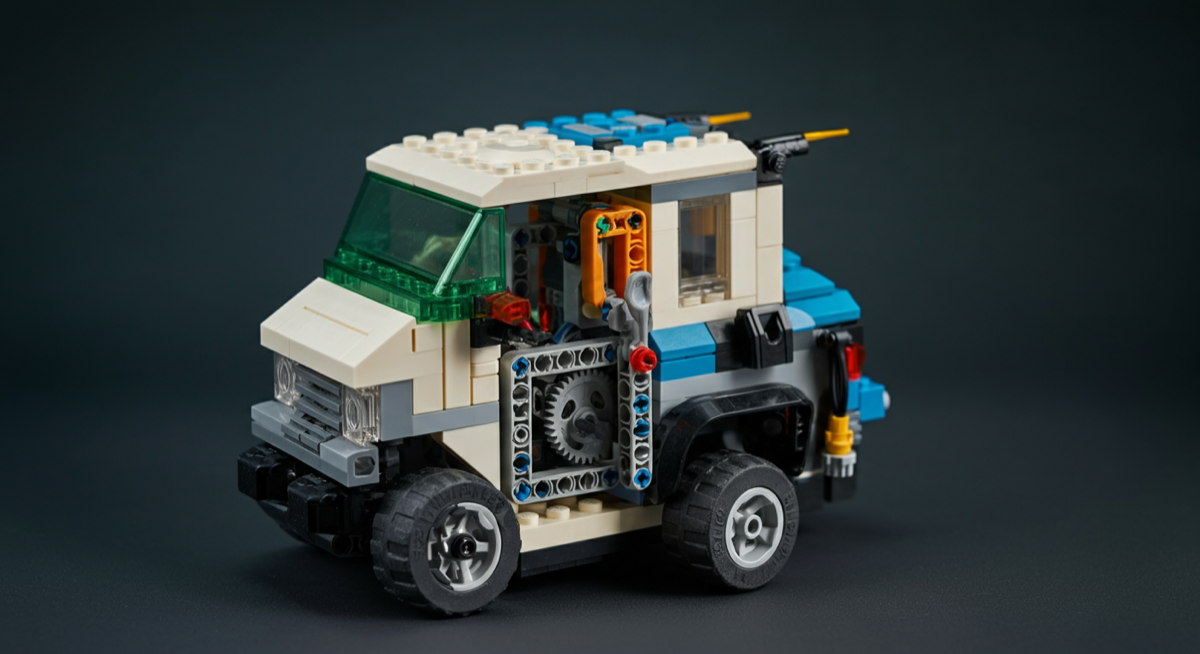
Combining LEGO System and Technic offers unparalleled creative potential, allowing builders to add realistic motion, complex mechanisms, and interactive features to their static System models, transforming static displays into dynamic, playable creations. This guide will explore the fascinating world of LEGO Technic integration, providing insights, techniques, and product recommendations to help you bring your wildest LEGO MOCs (My Own Creations) to life with functional elegance.
The LEGO universe is vast and diverse, offering everything from intricate architectural replicas to fantastical starships. But for many builders, the ultimate joy comes from seeing their creations not just stand still, but move, operate, and interact with the world around them. This is where the powerful synergy of LEGO System and LEGO Technic truly shines. While System bricks excel at aesthetics, detailed shaping, and imaginative storytelling, Technic elements provide the structural integrity, mechanical components, and power solutions needed to imbue models with authentic movement and functionality.
Whether you dream of a castle with a working drawbridge, a city building with an operational elevator, or a meticulously detailed vehicle with realistic suspension and steering, integrating Technic into your System builds unlocks a new dimension of creativity. This article will delve into the "what," "why," and "how" of this exciting cross-theme building approach, guiding you through essential components, integration techniques, and highly recommended sets that will kickstart your journey into functional LEGO mastery.
The Synergy of System and Technic: Why Integrate?
At its core, LEGO building is about imagination and construction. The traditional "System" of LEGO bricks, characterized by studs and tubes, is excellent for creating detailed exteriors, figures, and environments. Technic, on the other hand, is a specialized system built around beams, pins, gears, axles, and motors, designed for creating functional mechanisms. When these two worlds collide, the possibilities are truly limitless.
What are LEGO System and Technic?
- LEGO System: This is the classic LEGO building experience, using studded bricks, plates, and tiles to construct models with a focus on aesthetics, detail, and often minifigure scale. Think of themes like LEGO City, Creator Expert, Star Wars, or Friends.
- LEGO Technic: This sub-theme focuses on recreating advanced vehicles and machinery with realistic functions. Instead of studs, Technic uses pin connectors, beams, and axles, allowing for complex gearboxes, suspension systems, and motorized movements.
Why Integrate Technic into System Builds?
The reasons to combine these two powerful systems are compelling and diverse:
- Enhanced Realism and Playability: A static model is impressive, but one that moves, lifts, or rotates is captivating. Integrating Technic allows you to add working doors, steering, suspension, engine functions, or even complex robotic arms to your System creations, vastly increasing their play value and authenticity.
- Educational Value: Dive into the principles of engineering, physics, and mechanics. Understand gear ratios, leverage, power transmission, and structural integrity firsthand as you design and build your functional models.
- Unique MOCs (My Own Creations): Stand out from the crowd! By combining the best of both worlds, you can create truly original and innovative models that are both visually stunning and mechanically impressive. A MOC is any LEGO model designed by a builder, rather than following official instructions.
- Problem-Solving and Innovation: Integrating Technic often requires creative problem-solving to merge different connection types, conceal mechanisms, and ensure smooth operation without compromising aesthetics.
- Expanded Creative Horizons: Break free from the limitations of purely aesthetic builds and explore the exciting challenge of designing functional machines.
Key Takeaways:
Integrating Technic means:
- Adding motion and interactive features.
- Learning mechanical principles.
- Creating unique, functional models.
- Solving complex building challenges.
Essential LEGO Technic Components for Integration
To successfully integrate Technic into your System builds, you need to understand the core components and how they function. Think of these as your functional toolkit.
1. Structural Elements: Beams and Pins
- Technic Beams (Liftarms): These are the fundamental structural components of Technic. They come in various lengths and shapes, with holes at specific intervals. They are incredibly strong and form the skeleton for any mechanism.
- Technic Pins: Pins are used to connect beams, axles, and other Technic elements. They allow for both fixed and rotating connections, crucial for linkages and joints.
- Cross Axles: These allow for rotation and the transmission of power through gears. They come in specific stud-lengths, such as 2-stud, 4-stud, 8-stud, and so on.
2. Power Transmission: Gears and Axles
Gears are the heart of most mechanical functions in Technic. They allow you to change speed, torque, and direction of rotation.
- Spur Gears: The most common type, used for parallel shafts. Come in various tooth counts (e.g., 8-tooth, 16-tooth, 24-tooth, 40-tooth) to create different gear ratios.
- Bevel Gears: Used to transmit power at an angle, typically 90 degrees.
- Worm Gears: Provide high gear reduction and prevent back-driving, useful for locking mechanisms in place.
- Rack and Pinion: Converts rotational motion into linear motion, perfect for steering systems or sliding doors.
- Universal Joints: Allow power transmission between misaligned axles.
Understanding gear ratios is crucial. A small gear driving a large gear reduces speed but increases torque, while a large gear driving a small gear increases speed but reduces torque.
3. Automation and Control: Motors and Power Systems
Bringing your models to life often involves automation. LEGO has evolved its power systems over the years:
- LEGO Power Functions (PF): The previous generation, using infrared (IR) receivers for remote control. Components include motors (M, L, XL), battery boxes, IR receivers, and lights. While still functional, these are now largely superseded. You can find many of these components on the secondary market.
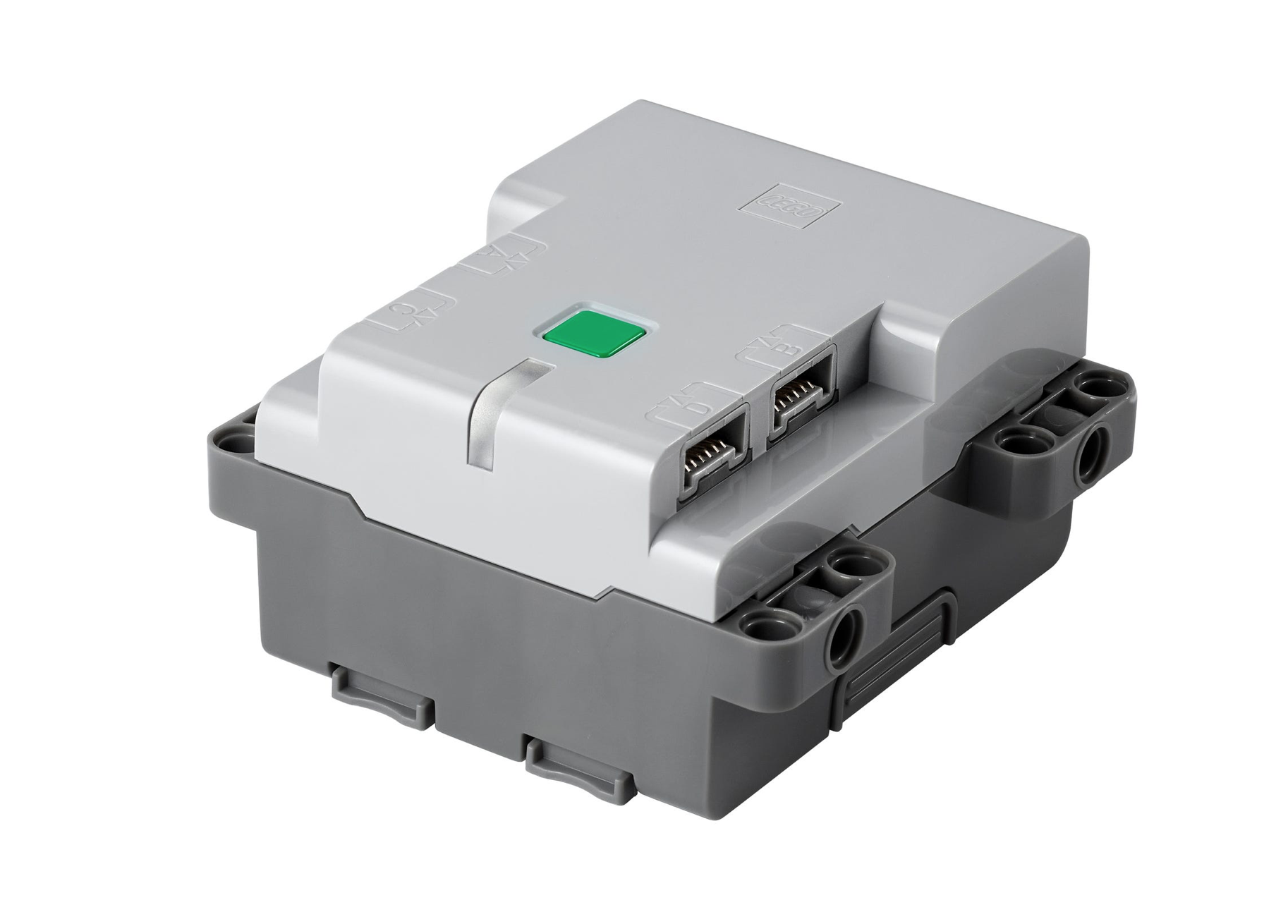
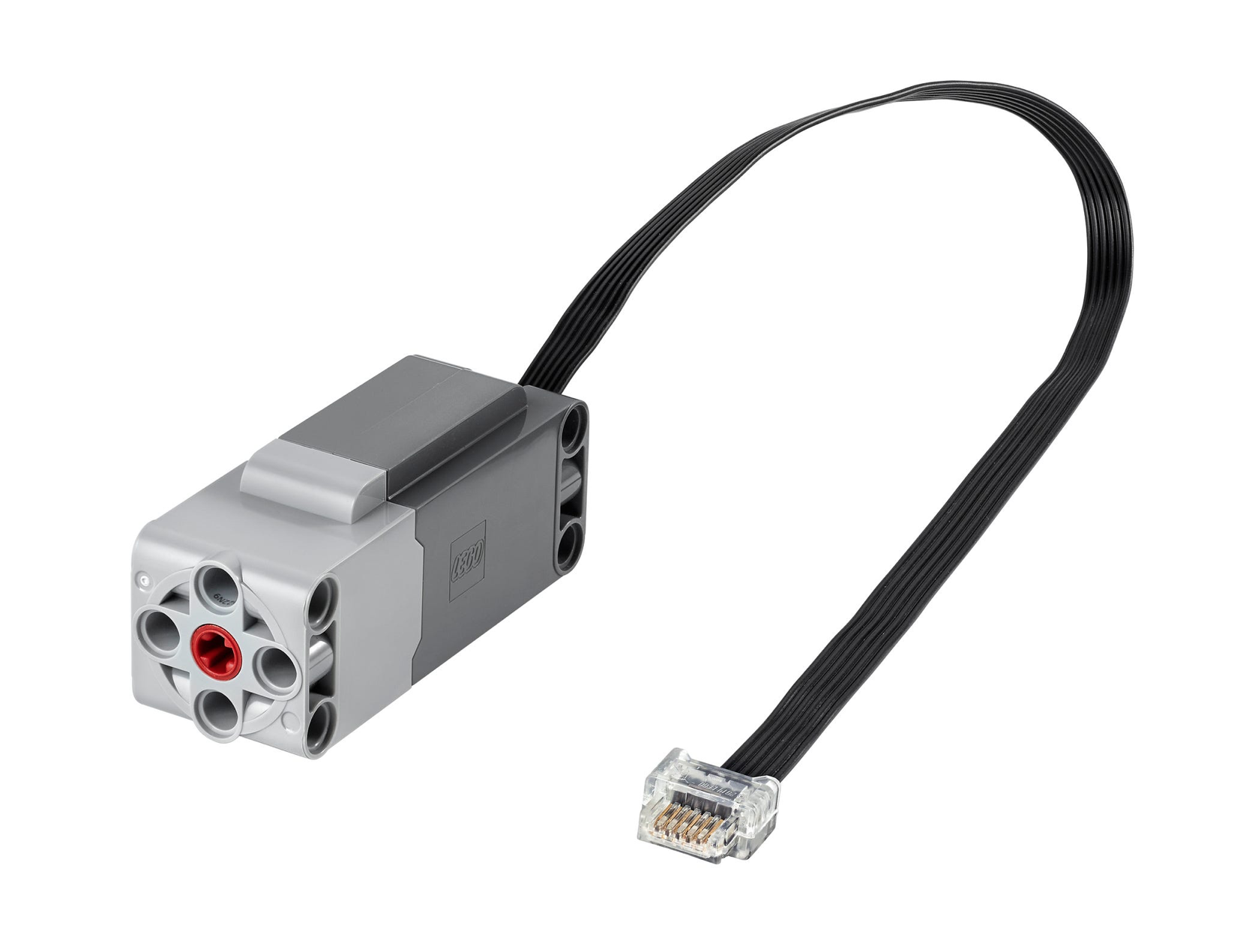
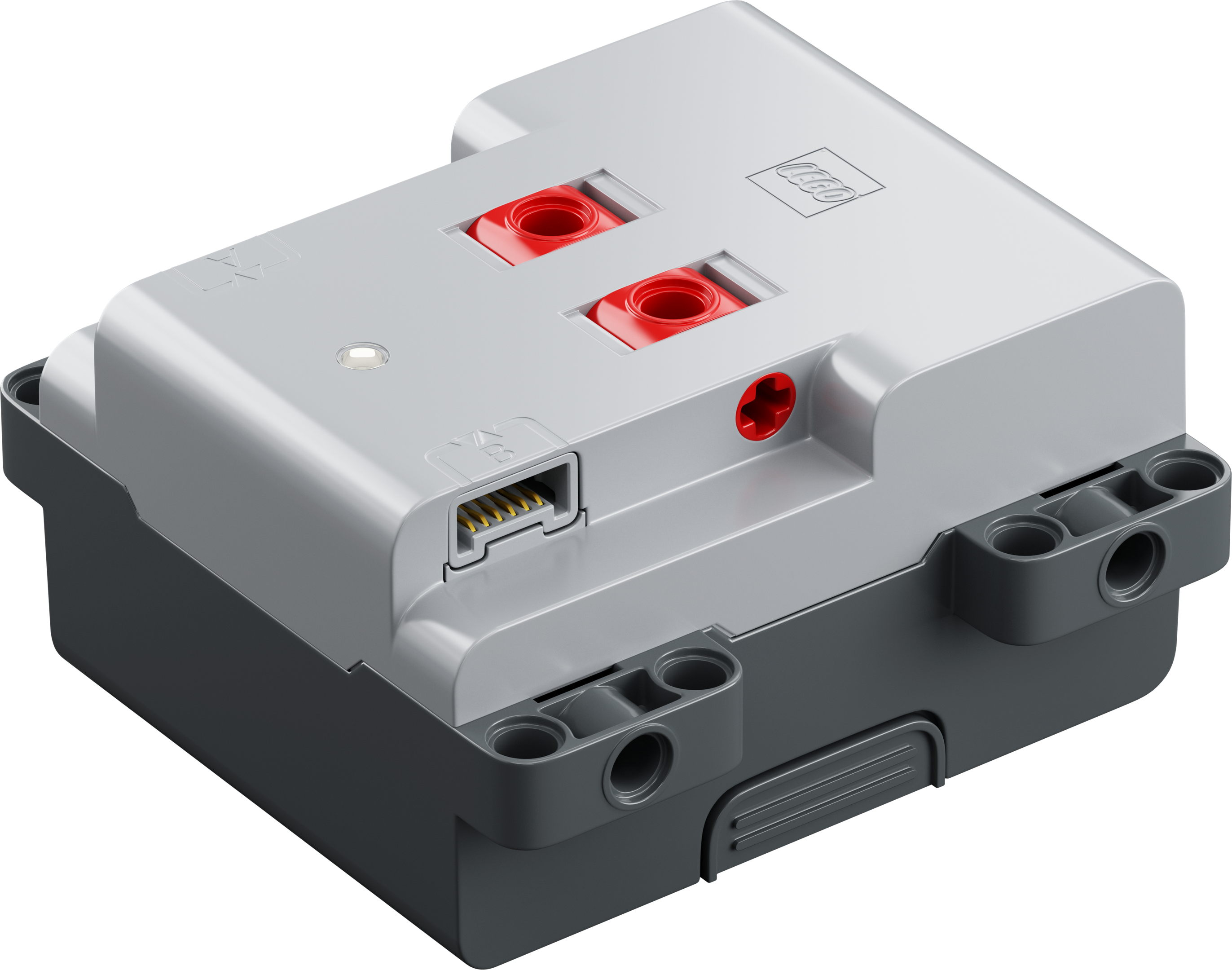
- LEGO Powered Up (PU) / Control+: The current generation, offering Bluetooth connectivity, precise control, and integration with a smartphone app. Key components include Smart Hubs (which contain battery and Bluetooth receiver), various motors (e.g., Technic Large Motor, Technic XL Motor, Technic Angular Position Motor), and sensors. Many modern large Technic sets, like the Liebherr R 9800 Excavator, utilize this system. You'll often need to purchase Powered Up hubs and Powered Up motors separately for your MOCs.
4. Motion and Actuation: Linear Actuators and Pneumatics
- Linear Actuators: These worm gear-driven devices provide controlled linear push/pull motion, perfect for raising/lowering arms, extending supports, or operating complex mechanisms.
- Pneumatic Elements: Utilize compressed air to operate cylinders, offering powerful and realistic movements for cranes, diggers, and other heavy machinery. Requires pumps, air tanks, and switches. The Mercedes-Benz Arocs 3245 is an excellent example of a set rich in pneumatic components.
5. Specialized Connectors and Bushings
- Technic Bricks with Holes: These are System bricks with Technic pin holes, acting as crucial bridges between the two systems.
- Bushings: Small cylindrical pieces that reduce friction and hold axles in place.
- Axle Connectors: Allow for versatile connections between axles and other elements.
Techniques for Seamless Technic-System Integration
The real art of integration lies in making the functional elements blend seamlessly with the aesthetic ones. Here are some fundamental techniques:
1. Bridging the Gap: Stud-to-Pin Conversion
This is arguably the most critical technique. You need ways to attach Technic beams and axles to System bricks, and vice versa.
- Technic Bricks with Holes: These are your best friends. They look like regular System bricks but have Technic pin holes running through them, allowing you to directly attach pins and axles to a System structure.
- Liftarms with Studs: Some Technic liftarms have studs on one side, offering another direct connection point to System plates.
- Plates with Technic Pin Holes: These specialized plates (e.g., 1x2, 1x4) allow you to securely anchor Technic pins into a System base.
- Using Pins with Studs: Certain pins have a stud on one end, allowing you to connect a Technic element to a System stud.
2. Structural Reinforcement and Aesthetics
Technic elements are incredibly strong, making them ideal for reinforcing System structures that will house moving parts or bear significant loads.
- Building a Technic Frame: Often, the internal skeleton of your integrated MOC will be entirely Technic, providing strength and housing the mechanisms. The System elements then form the external cladding.
- Concealing Mechanisms: A well-integrated model hides its working parts. Use System bricks, plates, and slopes to cover gears, motors, and axles, maintaining a clean aesthetic. Think about routing wires discreetly through your model.
- Maintaining Scale and Proportion: When adding functions, be mindful of how the Technic elements affect the overall size and look of your System model. Sometimes, a slight increase in scale is necessary to accommodate complex internal mechanisms.
3. Power Routing and Control
If you're using motors, managing wires and ensuring easy access to power switches or control hubs is vital.
- Wire Management: Plan routes for motor wires to avoid pinching or interference with moving parts. Use clips or channels to keep them tidy.
- Hub Placement: Position your Powered Up Hubs in an accessible location for battery changes and easy connection to your control device (smartphone/tablet). Consider how to integrate the hub's aesthetic into your model.
4. Planning and Prototyping
Before committing to a final build, especially for complex integrations:
- Sketch it Out: Draw your concept, focusing on where the moving parts will go and how they'll connect.
- Build the Mechanism First: Often, it's easier to build and test the Technic mechanism in isolation before trying to integrate it into a System structure.
- Modular Design: Consider building your MOC in modules, allowing you to easily access and refine different sections of the mechanism.
Top LEGO Technic Sets for Parts & Inspiration
To get started with Technic integration, having a good selection of Technic parts is essential. While you can buy individual parts, many large Technic sets offer an incredible array of gears, beams, motors, and specialized elements, making them excellent "part donors" or sources of inspiration for complex mechanisms.
Recommended Sets for Parts & Inspiration:
-
Liebherr R 9800 Excavator
- Piece Count: 4108 pieces
- Key Features for Integration: This behemoth is a treasure trove of Powered Up components, including 2 Smart Hubs and 7 motors. It features complex gearing, massive linear actuators, and a robust frame. It's an unparalleled source for heavy-duty Technic parts and inspiration for large-scale, motorized functions.
- Best For: Builders looking for a comprehensive collection of modern Powered Up components, advanced gearing, and the ability to build massive, powerful, and remotely controlled mechanisms.
-
Rough Terrain Crane
- Piece Count: 4056 pieces
- Key Features for Integration: Packed with gears, axles, and pneumatic elements, this set offers a masterclass in crane mechanisms. It has a massive boom, outriggers, and a working winch, all operated via manual functions, making it perfect for understanding complex mechanical linkages.
- Best For: Learning advanced gearing, stability mechanisms, and potentially adapting pneumatic functions for your System builds.
-
Cat D11 Bulldozer
- Piece Count: 3854 pieces
- Key Features for Integration: Another excellent source of Powered Up components, featuring 2 Hubs and 4 motors. Its complex track system, blade, and ripper mechanisms provide a wealth of gears, linkages, and structural elements. It's fantastic for heavy machinery MOCs.
- Best For: Acquiring Powered Up components, learning about track systems, and designing robust, motorized linear movements.
-
Liebherr Crawler Crane LR 13000
- Piece Count: 2883 pieces
- Key Features for Integration: Though a slightly lower piece count than some, its sheer scale and lifting capabilities are impressive. It features a multitude of gears, long beams, and powerful motors suitable for heavy-duty lifting and large-scale structural integration.
- Best For: Aspiring crane builders, those needing extremely long Technic beams, and anyone wanting to integrate powerful lifting functions.
-
Bucket Wheel Excavator
- Piece Count: 3929 pieces
- Key Features for Integration: This set is a goldmine for gears, conveyor belt elements, and large structural beams. Its complex digging and conveying mechanisms offer fantastic insights into continuous motion systems and heavy machinery design.
- Best For: Understanding large-scale gearing, conveyor systems, and obtaining a wide variety of structural Technic elements.
-
Mercedes-Benz Arocs 3245
- Piece Count: 2793 pieces
- Key Features for Integration: A masterclass in pneumatic functions, featuring pumps, cylinders, and valves. It also includes complex gearing for its crane arm and outriggers. Excellent for understanding and replicating realistic hydraulic-like movements.
- Best For: Learning about pneumatic systems, acquiring pneumatic components, and building realistic truck-based functions.
-
Land Rover Defender
- Piece Count: 2573 pieces
- Key Features for Integration: Features an advanced gearbox, all-wheel drive, independent suspension, and realistic steering. This set is invaluable for understanding vehicle mechanics and integrating sophisticated drivetrains and suspension into System cars or trucks.
- Best For: Vehicle enthusiasts, learning about gearboxes, suspension, and steering mechanisms for automotive MOCs.
Advanced Concepts: Programming and Customization
For those who want to push the boundaries even further, modern LEGO Technic offers programmable control.
- LEGO Powered Up App: The official app for Powered Up and Control+ sets allows you to create custom control interfaces and basic programs for your motors and sensors. You can design sequences, assign controls to sliders or buttons, and even integrate simple logic.
- Third-Party Apps & Firmware: The LEGO building community is incredibly innovative. Apps like BrickController 2 (for Android/iOS) allow for more advanced custom controls using game controllers. For truly advanced users, custom firmware and programming environments can unlock even greater control and functionality for Powered Up hubs.
- Integration with LEGO MINDSTORMS / SPIKE Prime: While a larger leap, for the ultimate in programmable functionality and sensor integration, you can explore incorporating elements from LEGO MINDSTORMS or LEGO Education SPIKE Prime, which offer advanced programmable bricks and a wider array of sensors for truly intelligent MOCs. These systems use a visual block-based coding language, making them accessible even for beginners.
Quick Comparison Table: Top Technic Sets for Parts & Integration
| Set Name (Item #) | Piece Count | Key Features for Integration | Best For |
|---|---|---|---|
| Liebherr R 9800 Excavator | 4108 | 2 Powered Up Hubs, 7 motors, advanced gearing, large linear actuators | Comprehensive Powered Up components, heavy-duty motorized functions |
| Rough Terrain Crane | 4056 | Complex manual gearing, pneumatic elements, massive boom, outriggers | Learning advanced gearing, stability, pneumatic systems |
| Cat D11 Bulldozer | 3854 | 2 Powered Up Hubs, 4 motors, track system, blade/ripper mechanisms | Powered Up components, track systems, robust linear motion |
| Liebherr Crawler Crane LR 13000 | 2883 | Multiple powerful motors, long beams, heavy lifting mechanisms | Large-scale lifting functions, long structural beams |
| Bucket Wheel Excavator | 3929 | Abundance of gears, conveyor belt elements, large structural frames | Large-scale gearing, conveyor systems, structural Technic parts |
What to Consider When Buying LEGO Technic for Integration
Making smart purchasing decisions can save you time and money as you embark on your Technic integration journey.
1. Focus on Part Variety, Not Just Piece Count
While large sets offer many pieces, consider the *type* of pieces. Sometimes, a smaller, specialized Technic set might contain unique gears, specific linear actuators, or rare connectors that are exactly what your project needs. Look at the parts inventory if possible, or watch reviews that highlight specific components.
2. Power System Compatibility: Powered Up is the Future
If you're starting fresh, prioritize sets or individual components that use the LEGO Powered Up system. This ensures compatibility with modern LEGO apps and offers the most versatile control options. While Power Functions components are still usable, they are no longer actively produced and can be harder to integrate with newer control methods.
3. Budget and "Part-Out" Value
Large Technic sets can be a significant investment. Consider their "part-out" value – if you were to sell the individual components, would it be worth it? Many builders buy large sets, build them once, and then disassemble them to use the parts for their MOCs. Alternatively, look for specific Technic part packs or individual components on secondary markets if you only need a few specific pieces.
4. Complexity Level: Start Simple
Don't jump straight into building a multi-motor, app-controlled crane for your first Technic-System MOC. Start with simpler functions like a working door, a basic gear-driven crank, or a simple steering mechanism. Master the fundamental connections and principles before tackling grander projects. This iterative approach builds confidence and skill.
5. Specific Functions You Need
Before buying, clearly define what functions you want to add to your System build. Do you need linear motion (actuators), rotational power (gears/motors), suspension, or steering? This will guide your choice of sets, helping you acquire the most relevant components. For example, if you need a lot of pneumatic parts, the Mercedes-Benz Arocs 3245 is a great starting point.
Conclusion
The fusion of LEGO System and Technic is a gateway to a whole new realm of creative possibilities. By understanding the core components, mastering fundamental integration techniques, and drawing inspiration from fantastic sets like the Liebherr R 9800 Excavator or the Cat D11 Bulldozer, you can transform your static models into dynamic, functional masterpieces. The joy of seeing your LEGO creations move, lift, or steer with realistic precision is an unparalleled building experience.
Don't be intimidated by the complexity; start small, experiment, and let your imagination guide you. The journey from a simple brick-built model to a fully functional, motorized MOC is an incredibly rewarding one, enriching your understanding of engineering principles while expanding your creative horizons. So, grab some Technic elements, revisit your favorite System builds, and prepare to bring your LEGO world to life!
Unlock new creative potential by integrating LEGO Technic functions into your System builds. Learn essential components, techniques, and discover top sets like the Liebherr R 9800 Excavator to add realistic motion and interactivity to your MOCs.
LEGO Technic integration, LEGO System Technic, functional LEGO builds, LEGO MOCs, Powered Up, Power Functions, LEGO gears, LEGO motors, custom LEGO builds, Technic parts, LEGO engineering
Transform your static LEGO models into dynamic, functional creations! This comprehensive guide explores how to integrate LEGO Technic mechanisms into System builds, covering essential components, techniques, and recommended sets like the Liebherr R 9800 Excavator to add realistic motion and interactivity.
Q: What is the fundamental difference between LEGO System and Technic?
A: LEGO System uses studs to connect bricks, focusing on aesthetic detail and form, often at minifigure scale. LEGO Technic uses pins and beams for connections, emphasizing mechanical functionality, gears, axles, and motors to create working models with realistic movements. System is about appearance; Technic is about function, though both can achieve impressive aesthetics.
Q: Can I combine old Power Functions with new Powered Up components?
A: Direct electrical connection between Power Functions and Powered Up is generally not possible without custom adapters, as they use different connectors and communication protocols. However, you can use them in separate, independent systems within the same MOC. For example, one mechanism could be PF-controlled, and another PU-controlled, but they wouldn't integrate into a single control interface without significant modification.
Q: What are some common challenges when integrating Technic into System builds?
A: Common challenges include maintaining structural integrity, concealing the functional mechanisms within an aesthetically pleasing System shell, managing the bulk of Technic elements, routing wires for motorized functions, and ensuring smooth operation without friction or binding. Scale can also be an issue, as Technic mechanisms often require more space than purely System builds.
Q: Where can I find instructions or inspiration for Technic-System MOCs?
A: The LEGO fan community is a fantastic resource! Websites like Rebrickable.com offer countless MOCs with instructions, often filterable by themes or parts. YouTube channels dedicated to LEGO MOCs, LEGO forums (like Eurobricks), and Flickr groups are also great places to see what other builders have created and gather inspiration for your own projects.
Q: Do I need special tools to combine System and Technic?
A: No special tools are strictly required beyond the standard LEGO brick separator, which is invaluable for disassembling tight connections. All LEGO elements are designed to fit together by hand. However, some builders find tweezers or small pliers helpful for manipulating small pins or routing wires in tight spaces.
Q: What does "MOC" stand for in the LEGO community?
A: "MOC" is an acronym for My Own Creation. It refers to any LEGO model that a builder has designed and constructed themselves, rather than following instructions from an official LEGO set.
Q: Is it hard to learn Technic building?
A: Like any skill, learning Technic building takes practice, but it's incredibly rewarding. Starting with smaller Technic sets or by simply disassembling and studying the mechanisms of larger sets (like the Land Rover Defender) is a great way to learn. There are also many online tutorials and communities eager to help beginners understand gear ratios, linkages, and structural design.
Use Our Tools to Go Further
Get more insights about the sets mentioned in this article with our free LEGO tools