
LEGO Structural Engineering: Building Strong and Stable
Supporting Free Content
When you purchase through our links, we earn a small commission at no extra cost to you. As an Amazon Associate and eBay Partner, this helps us keep bringing you expert LEGO® reviews and guides. Thank you for your support!
LEGO structural engineering involves applying real-world architectural and civil engineering principles to build robust, stable, and aesthetically pleasing models using LEGO bricks. This discipline focuses on techniques like interlocking bricks, distributing weight, reinforcing structures, and employing advanced building methods such as SNOT (Studs Not On Top) to create models that can withstand gravity, stress, and display gracefully. Understanding these principles is key to moving beyond basic stacking and constructing truly impressive and durable LEGO creations, whether you're replicating a famous landmark or designing your own imaginative build.
The humble LEGO brick is much more than a toy; it's a powerful tool for understanding fundamental principles of design, physics, and, most importantly, structural engineering. Every time you snap two bricks together, you're engaging in an act of engineering, creating connections that will determine the strength and stability of your final model. For enthusiasts and aspiring builders alike, mastering the art of structural integrity in LEGO is the gateway to creating models that not only look fantastic but also stand the test of time and gravity.
At Brick by Brick, we're passionate about the incredible learning potential and sheer joy that LEGO offers. In this comprehensive guide, we'll dive deep into the world of LEGO structural engineering. We'll explore the core concepts that make a build strong, reveal essential techniques used by master builders, and showcase some of the most impressive LEGO sets that exemplify these principles, helping you make informed decisions about which sets will best foster your engineering skills and satisfy your building aspirations.


Understanding the Fundamentals of LEGO Structural Engineering
Before we stack a single brick, it's crucial to grasp the foundational concepts that underpin every stable LEGO structure. These aren't just abstract ideas; they are practical considerations that dictate how your model will hold together.
- Connection Points: The Backbone of Stability: A standard 2x4 LEGO brick has 8 studs on top, offering 8 potential connection points. The more studs connected, the stronger the bond. However, it's not just about quantity; it's about distribution. A single connection point is a weak link; multiple, spread-out connections create strength.
- Load Distribution: Sharing the Weight: Just like in real buildings, weight needs to be evenly distributed across a structure. Concentrating too much weight on a single point or a narrow base will inevitably lead to collapse. Utilizing wider bases, spreading forces across multiple columns, or employing internal frameworks helps manage load effectively.
- Interlocking and Overlapping: The Key to Rigidity: One of LEGO's greatest strengths is its interlocking system. Bricks are designed to snap together, creating friction and mechanical bonds. The "brick bond" technique, where subsequent layers overlap the joints of the layer below (much like real brickwork), is fundamental for preventing vertical seams that can weaken a wall.
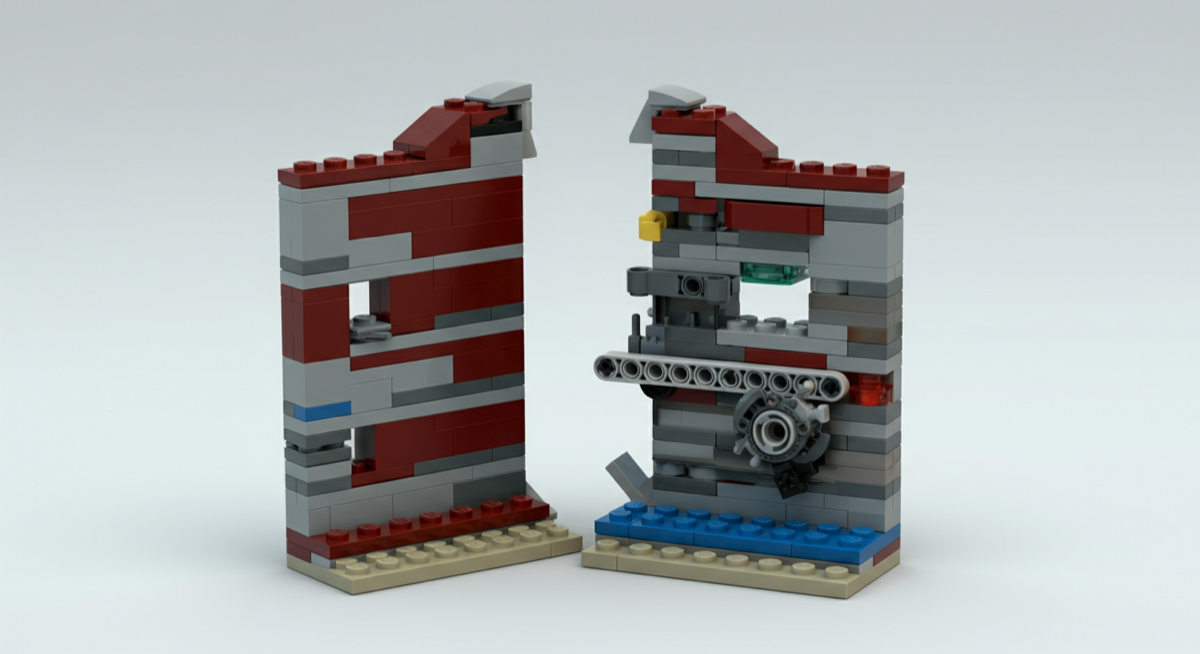
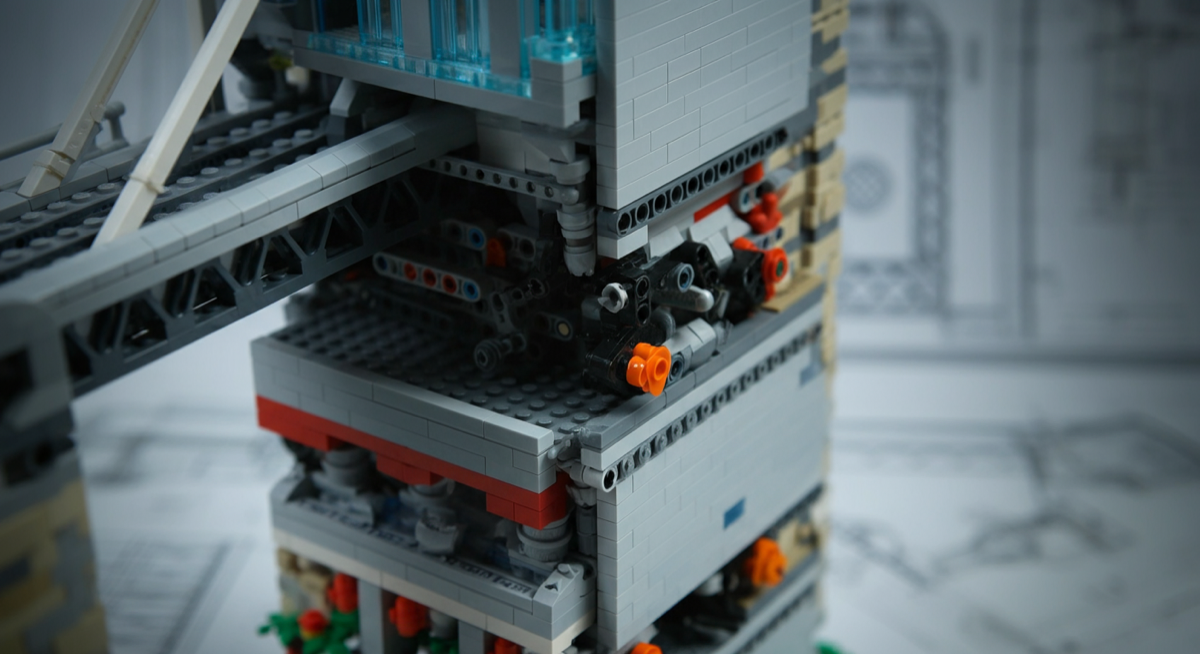
- Bracing and Reinforcement: Adding Internal Strength: For taller or more complex structures, simple stacking isn't enough. Internal bracing—using Technic beams, pins, or angled plates to create triangular supports—adds immense rigidity. Think of the crossbeams in a bridge or the internal framework of a skyscraper.
- Center of Gravity: Finding the Balance: For any structure, especially those with unique shapes or cantilevers, understanding the center of gravity is paramount. A low and central center of gravity generally leads to greater stability. Builders often use heavier bricks or strategically place elements to achieve this balance.
These principles are not just theoretical; they are visibly demonstrated in many advanced LEGO sets and are essential for any builder aiming to create robust MOCs.
Essential Techniques for Building Unshakeable Structures
With the fundamentals in mind, let's explore some of the practical building techniques that LEGO masters employ to achieve incredible structural integrity.
The Power of the Stud and Anti-Stud Connection
The iconic stud-and-tube connection is LEGO's primary bond. To maximize its strength:
- Maximize Overlap: Always aim for bricks to overlap across multiple studs and layers. Avoid creating tall stacks of single bricks with aligned seams.
- Plate Reinforcement: Plates (thinner bricks) are excellent for reinforcing connections. A layer of plates placed perpendicularly over a seam significantly strengthens the bond.
Layering and Staggering for Supreme Strength
This is arguably the most crucial technique for walls and towers:
- Brick Bond: When building a wall, always ensure that the bricks in one layer bridge the gaps between the bricks in the layer below. This prevents vertical "fault lines" that can cause a structure to split or buckle.
- Alternating Directions: For thicker walls or columns, alternate the direction of bricks in each layer (e.g., horizontal then vertical). This creates a highly robust, interwoven structure.
- Internal Bracing with Technic: For very tall or open structures, an internal skeleton of LEGO Technic beams and pins can provide incredible strength without adding significant bulk. This is especially useful for creating hollow yet strong frameworks.
SNOT (Studs Not On Top) Techniques
SNOT building is about changing the orientation of bricks to allow studs to point in different directions (sides, bottom, even inwards). While often used for aesthetic detail, it's also a powerful structural tool:
- Adding Girders and Beams: SNOT bricks like headlight bricks or bricks with studs on the side can be used to attach structural elements horizontally or vertically, providing internal bracing or support for external features.
- Creating Strong Joints: By attaching plates or bricks to the sides of a structure, SNOT techniques can create strong, multi-directional connections that reinforce corners or support complex geometries.
- Embedding Features: SNOT allows for embedding windows, doors, or decorative panels flush with a wall, often creating a stronger, more integrated look than simply stacking them on top of studs.
Weight Distribution and Cantilevers
Building outward or upwards requires careful consideration of weight:
- Counterweights: For elements that extend significantly from a main structure (cantilevers), ensure there's enough weight on the opposing side to prevent tipping.
- Anchoring: Structures built on a relatively small base but extending upwards must be firmly anchored to that base, often using internal columns or strong connections that spread the load.
- Triangulation: Triangles are inherently stable shapes. Incorporating triangular bracing into your designs, especially for supports and trusses, adds immense strength and prevents racking (where a rectangular frame deforms into a parallelogram).
Showcasing Stability: Top LEGO Sets for Structural Engineering Enthusiasts
Many LEGO sets, particularly within the Architecture and Technic themes, are masterclasses in structural engineering. They not only provide engaging builds but also subtly teach these principles through their design.
Masterpieces of Architecture and Engineering
The LEGO Architecture series is a prime example of how intricate design meets robust construction. These sets often demand sophisticated techniques to capture the essence of their real-world counterparts while maintaining structural integrity.
- Notre-Dame de Paris: This monumental set, with its incredible piece count of 4382, is a true testament to complex LEGO structural engineering. Recreating the iconic Gothic cathedral involves building massive load-bearing walls, intricate flying buttresses, and a towering spire. Builders will experience the challenge of creating a stable, multi-level structure that faithfully replicates the architectural marvel's complex geometry and internal bracing. It’s perfect for experienced builders who appreciate historical architecture and advanced building techniques.
- Neuschwanstein Castle: Priced at $279.99 and boasting 3455 pieces, this stunning rendition of Germany's fairytale castle is an engineering marvel. Its multi-tiered structure, turrets, and intricate facades demand careful layering and interlocking to ensure stability. Builders will learn about supporting various levels and integrating decorative elements without compromising the overall strength of the model. This set is ideal for those who love detailed, multi-faceted builds with a strong emphasis on architectural accuracy and stability.
- Himeji Castle: With 2125 pieces, the exquisitely captures the elegance of Japan's most famous castle. Building its distinctive curved roofs and multi-layered defensive structures requires precise SNOT techniques and robust internal supports. It's a fantastic example of how seemingly delicate architectural features are supported by underlying structural strength, perfect for those interested in intricate roof designs and traditional Japanese architecture.
- Taj Mahal: Comprising 2024 pieces, the is a symmetrical masterpiece. Its construction highlights the importance of a strong, broad base and a central, load-bearing dome structure. The repetitive elements and intricate detailing require consistent and stable building practices, making it an excellent set for understanding symmetry and foundational structural principles.
- Empire State Building: This 1767-piece set demonstrates the challenges of building upwards. The is a slender, towering structure that relies on a strong, broad base and a carefully constructed internal core to resist swaying and remain perfectly vertical. It's an excellent example of how to achieve height and stability with relatively simple, repetitive building techniques, appealing to fans of iconic skyscrapers.
- Statue of Liberty: With 1685 pieces, the is a figurative build that still requires significant structural thought. Recreating the draped robes and upraised arm necessitates a robust internal skeleton and clever SNOT techniques to achieve its distinctive shape and balance, making it a unique challenge for builders interested in organic forms and internal support systems.
- Great Pyramid of Giza: This 1476-piece set beautifully illustrates the power of simple, massive construction. The emphasizes a broad base, interlocking layers, and sheer bulk for stability. It's a fantastic, hands-on demonstration of how ancient builders achieved incredible feats of engineering with foundational principles, ideal for those who appreciate history and foundational structural concepts.
Foundational Learning and Functional Engineering
Beyond detailed replicas, some sets are designed specifically to teach building principles or showcase functional mechanics.
- Architecture Studio: This set, with 1211 pieces, is perhaps the ultimate starting point for any aspiring architect or engineer. Unlike traditional sets with specific instructions, the provides a vast array of white and transparent bricks and a comprehensive guidebook filled with architectural concepts and building challenges. It encourages experimentation with scale, form, and, crucially, structural stability, making it perfect for creative builders who want to learn by doing.
- LEGO Set 10307 LEGO Eiffel Tower: A monumental 10,001-piece set, the LEGO Set 10307 is a true marvel of LEGO engineering. Recreating one of the world's most iconic structures, it demonstrates incredible stability through its latticework design and how many smaller elements come together to form a massive, robust build. Its sheer height and intricate bracing make it a profound lesson in vertical structural integrity and weight distribution.
- LEGO Set 42146 LEGO Technic Liebherr Crawler Crane LR 13000: Technic sets are all about functional engineering! This massive 2,883-piece crane is a testament to stability, balance, and mechanical principles. Builders learn about counterweights, outriggers, and the internal forces required to lift heavy loads, making it an advanced lesson in dynamic structural engineering. LEGO Set 42146 is perfect for those who want to see engineering in action.
- LEGO Creator Expert Modular Buildings: While not a single set, the entire line of Modular Buildings (e.g., Corner Garage, Assembly Square) is incredibly popular for its intricate details and robust construction. These sets teach builders about creating multi-story structures with strong foundations, interlocking floors, and often complex internal bracing for stability, making them excellent for urban planners and detail-oriented builders.
Quick Comparison: Top Structural Engineering LEGO Sets
| Set Name | Item Number | Piece Count | Best For |
|---|---|---|---|
| Notre-Dame de Paris | 21061-1 | 4382 | Advanced complex geometry, internal bracing, historical architecture |
| Neuschwanstein Castle | 21063-1 | 3455 | Multi-level structures, intricate detail, cantilevered elements |
| LEGO Set 10307 LEGO Eiffel Tower | 10307 | 10001 | Extreme height, latticework, vertical stability, weight distribution |
| Architecture Studio | 21050-1 | 1211 | Foundational engineering concepts, creative experimentation, learning design principles |
| LEGO Set 42146 Technic Liebherr Crawler Crane LR 13000 | 42146 | 2883 | Functional mechanics, dynamic stability, heavy load support, advanced Technic building |
What to Consider When Buying LEGO Sets for Structural Engineering
Choosing the right LEGO set can significantly impact your learning experience and building satisfaction. Here are key factors to consider:
- Complexity vs. Skill Level: Beginners might prefer sets like the Architecture Studio, which encourages freeform building and exploration of basic shapes. More experienced builders will enjoy the challenge and intricate techniques found in large Architecture sets such as Notre-Dame de Paris or the LEGO Set 10307 LEGO Eiffel Tower.
- Type of Structure: Are you interested in tall, slender skyscrapers (e.g., Empire State Building), sprawling castles (e.g., Neuschwanstein Castle), or functional machinery (e.g., LEGO Set 42146 LEGO Technic Liebherr Crawler Crane LR 13000)? Each type presents unique structural challenges.
- Piece Count & Budget: Generally, higher piece counts correlate with more complex and structurally demanding builds, but also higher price points. Determine your budget and how much time you're willing to invest. Sets like the Great Pyramid of Giza offer substantial builds without the highest piece counts.
- Learning Objectives: Do you want to learn about specific techniques like SNOT, internal bracing, or cantilever construction? Research sets known for showcasing these methods. The Architecture series is excellent for architectural stability, while Technic sets excel at mechanical and dynamic stability.
- Display vs. Playability: Many large architectural sets are designed primarily for display, focusing on intricate details and static stability. Technic sets, on the other hand, often prioritize functional movement and the structural integrity required for play. Consider whether you want a static model or one with moving parts.
Conclusion
The world of LEGO structural engineering is a fascinating intersection of creativity and physics. From the foundational principles of interlocking bricks and load distribution to advanced techniques like SNOT and intricate bracing, every build offers an opportunity to learn and master the art of stability. Whether you're replicating the grandeur of the Notre-Dame de Paris, exploring functional mechanics with the LEGO Set 42146 LEGO Technic Liebherr Crawler Crane LR 13000, or embarking on your own original MOCs, the lessons learned from building strong and stable LEGO models are invaluable.
We encourage you to explore the incredible sets we've highlighted, each a testament to LEGO's engineering prowess. Dive into the architectural wonders of the Neuschwanstein Castle or start your design journey with the versatile Architecture Studio. At Brick by Brick, we believe that every brick laid is a step towards becoming a master builder. Happy building, and may your creations stand strong!
Discover LEGO structural engineering! Learn how to build strong, stable models with expert techniques and explore top Architecture and Technic sets like Notre-Dame and the Eiffel Tower.
LEGO structural engineering, LEGO stability, building techniques, strong LEGO builds, LEGO Architecture, LEGO Technic, SNOT, MOC, Notre-Dame LEGO, Eiffel Tower LEGO, Neuschwanstein Castle LEGO
Unlock the secrets to building strong and stable LEGO models with our comprehensive guide to structural engineering. Learn essential techniques and explore top LEGO sets that exemplify robust design.
Q: What is structural engineering in LEGO?
A: Structural engineering in LEGO refers to the process of designing and constructing LEGO models to be strong, stable, and capable of withstanding various forces, primarily gravity. It involves applying principles like load distribution, reinforcement, interlocking, and balance to ensure a model doesn't collapse or deform, replicating real-world engineering challenges on a smaller scale.
Q: How do I make my LEGO builds stronger and more stable?
A: To make your LEGO builds stronger, focus on maximizing brick overlap across layers (the "brick bond" technique), utilizing plates for reinforcement, incorporating internal bracing (especially with Technic elements for larger structures), spreading weight across a wider base, and ensuring a low center of gravity. Avoid vertical seams and single-stud connections in critical areas.
Q: What does SNOT mean in LEGO building?
A: SNOT stands for "Studs Not On Top." It's a LEGO building technique where bricks are oriented so that their studs face in directions other than upwards. This allows builders to attach elements to the sides of a model, create smooth surfaces, add intricate details, or provide multi-directional structural support, greatly expanding creative possibilities.
Q: Are LEGO Technic sets good for learning engineering principles?
A: Absolutely! LEGO Technic sets are specifically designed to teach advanced engineering concepts. They focus on functional mechanisms, gear systems, pneumatics, suspension, and structural frames that move and bear loads. Sets like the LEGO Set 42146 LEGO Technic Liebherr Crawler Crane LR 13000 are excellent for understanding how real-world machines are built to be robust and perform specific tasks.
Q: What is the strongest LEGO connection type?
A: The strongest individual LEGO connection is typically a stud-and-tube connection (a standard brick-to-brick connection) where the studs fully engage the anti-studs. However, the true strength of a LEGO build comes from the cumulative effect of many such connections, especially when reinforced by overlapping bricks, plates, and proper load distribution. A single connection point is never as strong as a system of interconnected, reinforced points.
Q: Can LEGO sets really teach real-world engineering concepts?
A: Yes, LEGO sets are fantastic educational tools. They allow builders to experiment with concepts like tension, compression, balance, leverage, and structural integrity in a tangible, hands-on way. Many engineers and architects credit LEGO with sparking their interest in their fields, as the process of building, problem-solving, and iterating with bricks directly mirrors professional engineering challenges.
Q: What is a MOC in the LEGO community?
A: MOC stands for "My Own Creation." It refers to any LEGO model that has been designed and built independently by a fan, rather than following official LEGO instructions. MOCs often push the boundaries of LEGO structural engineering, as builders must devise their own techniques and solutions to create stable, unique, and often complex designs.
Use Our Tools to Go Further
Get more insights about the sets mentioned in this article with our free LEGO tools