
LEGO bricks are far more than just toys; they are powerful educational tools transforming classrooms worldwide by fostering hands-on learning, critical thinking, and creativity. From developing fine motor skills in preschoolers to teaching advanced robotics and coding to high school students, LEGO Education programs and resources provide engaging, curriculum-aligned solutions that prepare students for the 21st century. This article will explore the diverse range of LEGO products designed for educational settings, highlight their pedagogical benefits, and guide educators and institutions on how to integrate these dynamic tools into their learning environments to spark curiosity and build essential skills.

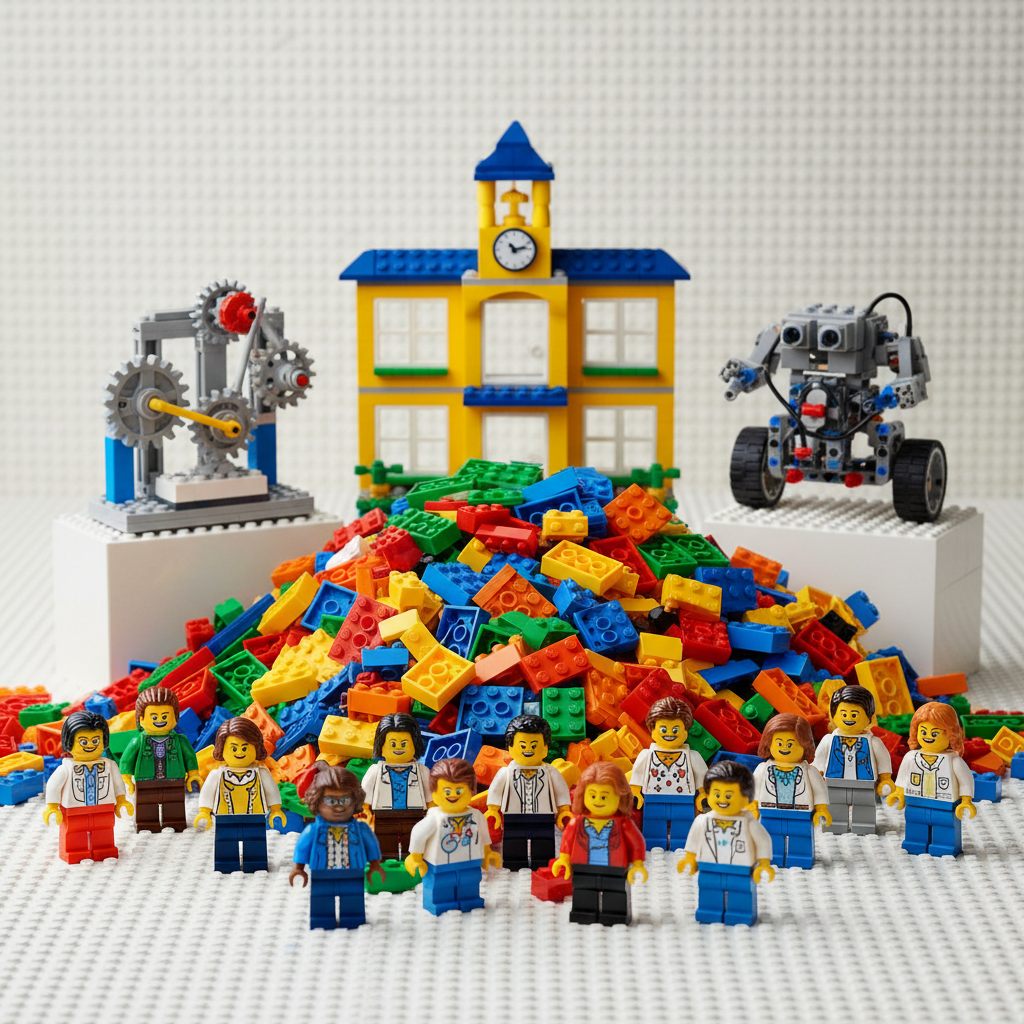
Visually encapsulates the article's core theme of diverse students engaging in hands-on, play-based STEAM learning with LEGO in a classroom setting, setting an inviting tone for the content and illustrating the broad impact across age groups.

The Power of Play-Based Learning with LEGO in Education


In an era emphasizing STEAM (Science, Technology, Engineering, Arts, and Mathematics) education, the demand for integrated, project-based learning experiences is higher than ever. LEGO, through its dedicated LEGO Education division and its vast array of consumer sets, has emerged as a cornerstone in this movement. The core philosophy is simple: learning by doing. When students manipulate physical bricks, they engage multiple senses, internalize abstract concepts, and collaborate with peers to solve real-world problems. This approach goes beyond rote memorization, cultivating crucial 21st-century skills such as critical thinking, problem-solving, collaboration, communication, and creativity.


Educators globally report significant improvements in student engagement and comprehension when LEGO sets are incorporated into lessons. According to a study by Tufts University, students using LEGO Education solutions showed a 40% increase in science content knowledge and a 75% increase in computational thinking skills. This tangible, interactive method makes complex subjects accessible and exciting, turning abstract theories into concrete, buildable realities. Whether it's designing a stable bridge, coding a robot to navigate a maze, or illustrating historical events through models, LEGO provides the versatile medium for students to explore, experiment, and express their understanding.

Early Childhood & Elementary Foundations: Building Blocks for Success

For the youngest learners, LEGO DUPLO and classic LEGO bricks are invaluable for developing foundational skills. These large, easy-to-handle bricks are perfect for small hands, promoting fine motor skills, spatial awareness, and early problem-solving. In early childhood settings, free play with bricks encourages imaginative storytelling, color recognition, and basic counting. As children progress to elementary school, LEGO Classic sets open doors to more complex structures and creative expression, while specialized LEGO Education sets introduce fundamental STEAM concepts.

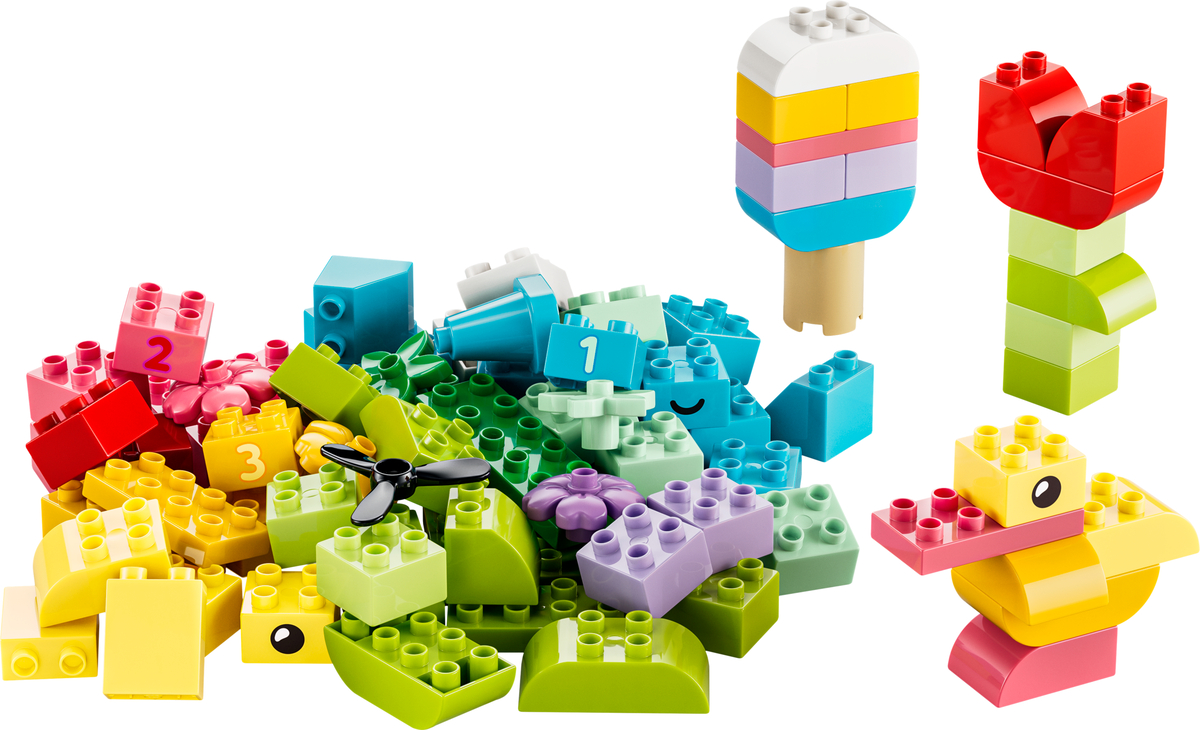
  • LEGO Set 10914 (LEGO DUPLO Large Creative Brick Box): This set is a staple in preschool and kindergarten classrooms. With a generous piece count, including unique elements like windows, flowers, and numbered bricks, it facilitates open-ended play, imaginative construction, and early mathematical concepts. It's perfect for developing fine motor skills, hand-eye coordination, and collaborative play among young children.
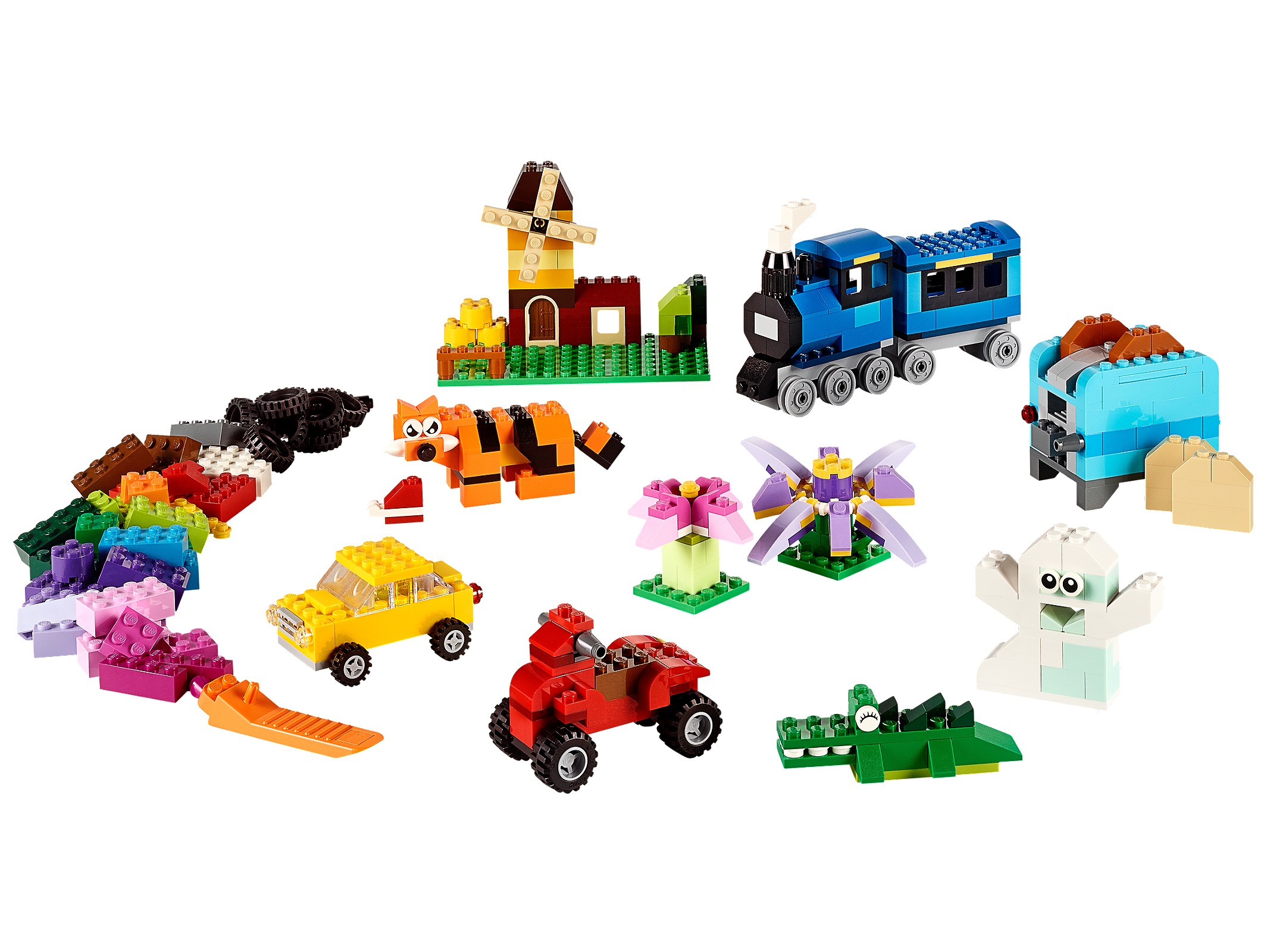
  • LEGO Set 10698 (LEGO Classic Large Creative Brick Box): Transitioning from DUPLO, this set offers a vibrant assortment of classic LEGO bricks in various colors and shapes. It's ideal for elementary students to express their creativity, build anything they can imagine, and explore basic engineering principles like balance and stability. This set is excellent for fostering free play, MOC (My Own Creation) building, and group projects.
  • Bonus Lego Basic Town: With a substantial 2542 pieces, this universal building set is fantastic for elementary classrooms. Students can collaborate to build entire towns, fostering creativity, urban planning concepts, and social studies themes. Its open-ended nature makes it suitable for diverse projects, from replicating local landmarks to designing futuristic cities.
  • Giant Lego Dacta Basic Set: Dacta was LEGO's original educational line, and this 1417-piece basic set carries on that legacy. It's designed for structured learning and open-ended exploration, providing a versatile foundation for building various models, experimenting with simple machines, and understanding basic structural integrity. It's particularly well-suited for early elementary STEAM activities.
  • LEGO Set 45300 (LEGO Education WeDo 2.0): An excellent introduction to robotics and coding for elementary students (grades 2-4). WeDo 2.0 combines LEGO bricks with a Smarthub, motor, and sensors, allowing students to build and program simple machines and robots. It comes with curriculum-aligned projects focusing on physical science, life science, earth and space science, and engineering. It's perfect for hands-on exploration of cause and effect, basic programming logic, and collaborative problem-solving.
  • LEGO Set 45345 (LEGO Education SPIKE Essential): Designed for elementary students (grades 1-5), SPIKE Essential is a comprehensive STEAM learning solution. It blends iconic LEGO building with simple coding (based on Scratch), motors, and sensors. The curriculum units are aligned with national standards and focus on engaging stories and challenges that help students develop computational thinking and engineering design skills. It’s an evolution of WeDo, offering more sophisticated capabilities in an accessible package.

Middle School: Robotics, Coding, and Engineering in Action

As students enter middle school, their cognitive abilities expand, allowing for more complex challenges. LEGO Education meets this demand with robust platforms that dive deeper into robotics, coding, and engineering principles. These sets are designed to support interdisciplinary learning, connecting science and math concepts to real-world applications through engaging build-and-code projects. They encourage systematic thinking, debugging, and iterative design processes.

  • LEGO Set 45678 (LEGO Education SPIKE Prime): This is a flagship product for middle school (grades 6-8) STEAM education. SPIKE Prime combines colorful LEGO building elements with a programmable Hub, powerful motors, and accurate sensors. Its intuitive Scratch-based coding language (and Python for advanced users) allows students to design, build, and code complex robotic solutions. It comes with extensive curriculum units aligned with Common Core State Standards and Next Generation Science Standards, making it ideal for competitive robotics clubs and classroom integration across subjects.
  • LEGO Set 45401 (LEGO Education BricQ Motion Essential): For elementary and middle school students (grades 2-5), this set focuses on physical science concepts without the need for digital devices. Students explore forces, motion, and energy through hands-on building challenges, using gears, levers, and weights. It's an excellent entry point for understanding mechanical principles and scientific inquiry, perfect for classrooms with limited access to technology.
  • LEGO Set 45400 (LEGO Education BricQ Motion Prime): Geared towards middle school students (grades 6-8), BricQ Motion Prime offers a deeper dive into physical science and engineering. This non-digital solution allows students to investigate concepts like potential and kinetic energy, friction, and speed through engaging, hands-on experiments. It supports scientific investigation skills and provides a tangible way to understand abstract physics principles, making it ideal for science and technology classrooms.

High School: Advanced Robotics and Design Challenges

For high school students, LEGO Education continues to provide platforms that support advanced computational thinking, engineering design, and preparation for STEM careers. These sets are often used in competitive robotics leagues, advanced science electives, and engineering courses, challenging students to push the boundaries of their creativity and problem-solving skills.

  • LEGO Set 45544 (LEGO MINDSTORMS Education EV3): While newer platforms like SPIKE Prime exist, the EV3 remains a powerful and widely used robotics platform for high school students (grades 6+). It offers a robust programmable brick, powerful motors, and a variety of sensors. Students can design, build, and program sophisticated robots using a graphical programming environment or even more advanced languages like Python. EV3 is perfect for competitive robotics teams (like FIRST LEGO League and FIRST Tech Challenge) and advanced engineering projects, fostering deep understanding of control systems, sensors, and mechanical design.

Creative & Collaborative Learning with Universal Sets

Beyond the specialized Education lines, many general LEGO sets offer incredible value for fostering creativity, artistic expression, and collaborative project-based learning in various school settings, from art classes to history projects and interdisciplinary studies. These sets often come with high piece counts, encouraging ambitious builds and shared experiences.

  • Lego Mosaic Dino: With 2847 pieces, this mosaic set is fantastic for art classes or interdisciplinary projects. Students can explore pixel art, color theory, and historical themes by recreating dinosaur imagery or even designing their own large-scale murals. It encourages precision, pattern recognition, and collaborative artistic expression.
  • Lego Mosaic Cat: Similar to the Dino mosaic, this 2127-piece set offers another excellent opportunity for artistic exploration. Students can study animal anatomy, color blending, and pixel art techniques. These mosaic sets can be used to create permanent classroom art installations, showcasing student creativity.
  • Lego Mosaic Johnny Thunder: Featuring a beloved LEGO adventurer, this 2127-piece mosaic set can inspire projects in history, geography, or storytelling classes, allowing students to recreate scenes or design new adventures for the character while engaging with mosaic art principles.
  • Giant Lego Topic Set: This 2195-piece universal building set is perfect for theme-based learning. Educators can assign projects related to specific topics like transportation, architecture, or natural habitats, allowing students to build detailed models and dioramas that demonstrate their understanding in a tangible way. It's excellent for fostering creativity and collaborative storytelling.
  • Lego Minifigure and Lego Dragon: These large-scale sculpture sets (1850 and 1535 pieces respectively) are fantastic for exploring design, proportion, and structural engineering on a grander scale. They can be used in art classes for studying form, in math for scaling, or in general creative challenges where students work together to replicate or reimagine iconic LEGO figures.
  • LEGO Chess: This 1450-piece set is not just a game; it's a fantastic educational tool for developing strategic thinking, problem-solving, and patience. In a classroom setting, it can be used to teach logic, foresight, and even basic game theory. Building the board and pieces also adds an extra layer of engagement.

Integrating LEGO into the Curriculum: Tips for Educators

Successfully integrating LEGO into school curricula requires planning and support. Here are some key considerations:

  1. Curriculum Alignment: Many LEGO Education resources come with detailed lesson plans aligned to national and international educational standards (e.g., Common Core, NGSS). Ensure the chosen activities directly support learning objectives.
  2. Professional Development: LEGO Education offers professional development programs for educators, which are invaluable for maximizing the impact of the kits. Proper training helps teachers feel confident in facilitating learning and troubleshooting technical issues.
  3. Funding and Grants: Educational sets can be a significant investment. Schools often secure funding through grants (e.g., STEM grants, technology grants), district budgets, or partnerships with local businesses. Resources are often available from state education departments or organizations like FIRST LEGO League.
  4. Classroom Management: Establish clear rules for handling bricks, organizing sets, and collaborative work. Implementing a system for inventory and storage is crucial for longevity and ease of use.
  5. Assessment: Integrate LEGO projects into your assessment strategies. This could include rubrics for design, problem-solving approaches, teamwork, and presentations of their creations.

Quick Facts: Why LEGO for Education?

  • Hands-on Learning: Makes abstract concepts tangible.
  • STEAM Focus: Directly supports Science, Technology, Engineering, Arts, Mathematics.
  • 21st-Century Skills: Fosters critical thinking, creativity, collaboration, communication.
  • Curriculum Alignment: Many solutions come with standards-aligned lesson plans.
  • Scalability: Products available for K-12, from DUPLO to advanced robotics.
  • Engagement: Proven to increase student interest and motivation.
  • Problem-Solving: Encourages iterative design and debugging.

Quick Comparison Table: Top Educational LEGO Products

Product Name Item Number Best For Key Features Age Range (Approx.)
LEGO Set 10914 (LEGO DUPLO Large Creative Brick Box) 10914 Early Childhood (Preschool-K) Large, easy-to-handle bricks, open-ended play, fine motor skills 1.5 - 5 years
LEGO Set 45345 (LEGO Education SPIKE Essential) 45345 Elementary (Grades 1-5) Introductory robotics & coding, Scratch-based, STEAM learning 6 - 10 years
LEGO Set 45678 (LEGO Education SPIKE Prime) 45678 Middle School (Grades 6-8) Advanced robotics & coding, Scratch/Python, competitive robotics 10 - 14 years
LEGO Set 45544 (LEGO MINDSTORMS Education EV3) 45544 High School (Grades 6+) Robust robotics platform, advanced programming, engineering design 10+ years
LEGO Set 45400 (LEGO Education BricQ Motion Prime) 45400 Middle School (Grades 6-8) Non-digital physical science, forces & motion, engineering principles 10 - 14 years
Bonus Lego Basic Town 9287-1 Elementary (Grades 5+) Universal building, imaginative play, collaborative projects 5+ years

What to Consider When Buying LEGO for Your School

Investing in LEGO for educational purposes is a strategic decision that can significantly impact student learning. To ensure you make the best choices for your institution, consider these key factors:

  • Age and Grade Level: Different LEGO sets are designed for specific developmental stages. DUPLO is ideal for toddlers and preschoolers, while SPIKE Essential targets elementary, SPIKE Prime for middle school, and MINDSTORMS EV3 for middle to high school. Matching the product to the age range is crucial for effective engagement.
  • Curriculum Alignment: Identify your school's educational goals and curriculum standards (e.g., NGSS, Common Core, CSTA). Choose LEGO Education sets that offer specific lesson plans and activities directly supporting these objectives, especially in STEAM subjects.
  • Technology Integration: Some LEGO Education sets (like SPIKE and WeDo) require tablets or computers for programming, while others (like BricQ Motion) are screen-free. Assess your school's existing technology infrastructure and internet access when making selections.
  • Budget and Funding: Educational LEGO sets represent an investment. Explore options for grants (e.g., STEM education grants, local foundation grants), district funding, or parent-teacher organization support. Consider starter packs versus larger classroom bundles, and remember the long-term durability of LEGO bricks.
  • Professional Development: Will your educators require training to effectively implement the LEGO solutions? Factor in the cost and time for professional development, as it significantly enhances the program's success. Many LEGO Education partners offer comprehensive training packages.
  • Durability and Storage: LEGO bricks are renowned for their durability, but proper storage is essential in a classroom environment. Consider sets that come with robust storage bins or plan for purchasing organizational solutions to keep pieces sorted and prevent loss.
  • Scalability and Expansion: Think about future growth. Can you easily add more sets or expand your program as student interest and funding increase? Choosing a platform that offers expandability can be more cost-effective in the long run.

Conclusion: Building Brighter Futures, Brick by Brick

The integration of LEGO into educational settings is more than a trend; it's a proven methodology for inspiring the next generation of innovators, thinkers, and problem-solvers. From the foundational creativity offered by classic bricks like the Bonus Lego Basic Town to the advanced robotics and coding of LEGO Set 45678 (LEGO Education SPIKE Prime), LEGO provides a versatile, engaging, and effective platform for learning across all age groups and subjects. By investing in these powerful tools, schools can create dynamic learning environments where students don't just learn about the world, but actively build their understanding of it. Explore the possibilities and empower your students to build their own futures, one brick at a time.

Discover how LEGO in schools fosters STEAM skills, creativity, and critical thinking. Explore LEGO Education programs, resources, and product recommendations for K-12.

LEGO in schools, LEGO Education, educational programs, STEAM, robotics, coding, classroom resources, curriculum, SPIKE Prime, WeDo 2.0

Unlock the power of play-based learning! This article guides educators through LEGO's educational programs and resources, highlighting how they boost STEAM skills and creativity in classrooms.

Q: What is the difference between regular LEGO and LEGO Education?
A: While all LEGO bricks promote creativity, LEGO Education products are specifically designed for classroom use with a strong pedagogical focus. They often come with curriculum-aligned lesson plans, teacher training resources, and robust storage solutions. The sets themselves may include specialized sensors, motors, and programmable hubs for robotics and coding, tailored for specific age groups and learning objectives, unlike general consumer sets which are primarily for entertainment.

Q: How do LEGO Education products align with curriculum standards?
A: LEGO Education works closely with educational experts to ensure their products and accompanying curricula align with national and international learning standards, such as the Common Core State Standards (CCSS), Next Generation Science Standards (NGSS), and CSTA K-12 Computer Science Standards. Their lesson plans clearly outline learning objectives, activities, and assessment opportunities that directly support these benchmarks.

Q: Are LEGO Education sets suitable for all ages?
A: Yes, LEGO offers educational solutions across the entire K-12 spectrum and even into early childhood. LEGO Set 10914 (LEGO DUPLO Large Creative Brick Box) is for preschoolers, LEGO Set 45345 (LEGO Education SPIKE Essential) for elementary, LEGO Set 45678 (LEGO Education SPIKE Prime) for middle school, and LEGO Set 45544 (LEGO MINDSTORMS Education EV3) for middle and high school. There are options designed for every developmental stage.

Q: Can I use regular LEGO sets for educational purposes?
A: Absolutely! While not specifically branded "Education," sets like LEGO Set 10698 (LEGO Classic Large Creative Brick Box) and Giant Lego Topic Set are excellent for fostering creativity, problem-solving, and collaborative building in classrooms. They are particularly good for open-ended challenges, art projects (like the Lego Mosaic Dino), and storytelling exercises, though they may lack the structured curriculum of dedicated Education sets.

Q: How can schools fund LEGO Education programs?
A: Schools typically secure funding through a variety of avenues. Common methods include applying for STEM education grants from local, state, or federal government programs, seeking support from philanthropic foundations, utilizing school district technology or curriculum budgets, engaging parent-teacher organizations (PTOs), or establishing partnerships with local businesses that wish to support educational initiatives.

Q: What kind of training is available for teachers using LEGO Education?
A: LEGO Education provides comprehensive professional development programs for educators. These training sessions cover how to effectively implement the curriculum, manage classroom activities, troubleshoot technical issues with robotics kits, and integrate LEGO solutions across various subjects. Training can range from online modules to in-person workshops, ensuring teachers are confident and proficient.

Q: What skills do students develop when using LEGO in schools?
A: Students develop a wide array of skills, including critical thinking, problem-solving, computational thinking (coding), engineering design, scientific inquiry, creativity, collaboration, communication, fine motor skills, spatial reasoning, and resilience through iterative design and debugging. These are often referred to as 21st-century skills, crucial for future academic and career success.