
LEGO Color History: Evolution of the Palette Since 1949
Supporting Free Content
When you purchase through our links, we earn a small commission at no extra cost to you. As an eBay Partner, this helps us keep bringing you expert LEGO® reviews and guides. Thank you for your support!
How the LEGO color palette grew from a handful of bright colors on the first 1949 bricks to dozens today, why the greys and brown changed in 2004, and which colors make up most of the pieces in 2026 sets, counted from our catalog.
LEGO's first plastic bricks, sold from 1949, came in a handful of bright colors. Today a single year of sets uses dozens. The palette grew with the move to ABS plastic in 1963, with themes that needed more realistic colors, and through one big reset in 2004 when LEGO swapped its greys and brown for new shades. This page walks through that history and then counts which colors make up the pieces in this year's sets, using our catalog.
The first bricks: cellulose acetate and a few colors
In 1949 the LEGO Group's plastics department began making its first plastic bricks, sold as Automatic Binding Bricks and made of cellulose acetate. They were renamed LEGO Mursten, LEGO Bricks, in 1953, and the stud-and-tube design that still holds bricks together was patented in Denmark on January 28, 1958. The early range was small and bright. Sources agree that red, white and yellow were part of it and disagree on the rest, so this page does not list them all.
The bigger change for color came in 1963, when ABS plastic replaced cellulose acetate. ABS is more stable, which matters for color: bricks keep their shade and their grip for decades.
The palette grows
Counting the colors in the sets our catalog has inventories for gives a rough picture of how the range grew. Our catalog records finishes such as pearl, chrome, glitter and speckle as separate colors, so these counts run higher than LEGO's own palette, but the trend is clear.
| Year | Colors in that year's sets | Of which transparent | Sets counted |
|---|---|---|---|
| 1955 | 6 | 1 | 35 |
| 1975 | 10 | 1 | 40 |
| 1985 | 22 | 6 | 165 |
| 1995 | 32 | 8 | 190 |
| 2005 | 107 | 28 | 338 |
| 2016 | 66 | 19 | 695 |
| 2026 | 74 | 18 | 778 |
Counted from our catalog's set inventories in October 2026, spare parts excluded. The peak around 2005 reflects the many specialty colors in use before LEGO trimmed its palette, which is where the next part of the story starts.
The 2004 grey and brown change
Around 2004 LEGO reorganized its color chart. Three common colors were phased out: the old light grey and dark grey, which were warm and slightly yellowish, and the old brown. Their replacements, light bluish grey, dark bluish grey and reddish brown, arrived with the 2004 sets that reached shelves from late 2003. Fans nicknamed the new greys "bley", and the change upset builders with large collections in the old shades, because old and new parts do not match side by side.
The greys went on to dominate. A 2015 analysis published by The Brothers Brick found that shades of grey made up around a quarter of parts produced by 2014, where red, yellow and blue had dominated in the 1970s.
The palette today
Brick Architect's chart of LEGO's 2016 palette lists 39 solid colors, 3 metallic colors, 1 glow-in-the-dark color and 14 transparent colors, and notes that the range has changed little since 2005. In the 2026 sets our catalog has inventories for, the most used colors by piece count are:
| Color | Share of 2026 pieces |
|---|---|
| Black | 16.1% |
| Light bluish grey | 11.6% |
| White | 10.0% |
| Dark bluish grey | 8.1% |
| Tan | 6.0% |
| Reddish brown | 5.4% |
| Red | 5.0% |
| Yellow | 2.9% |
Counted across 387,165 pieces in 778 sets released in 2026, as of October 2026. The two bluish greys together account for about a fifth of all pieces, and the colors that once defined LEGO, red and yellow, now make up less than a tenth between them.
For a set that shows off the current palette, these are good starting points:

The Large Creative Brick Box: a broad mix of the standard bright and neutral colors, with baseplates, for free building.
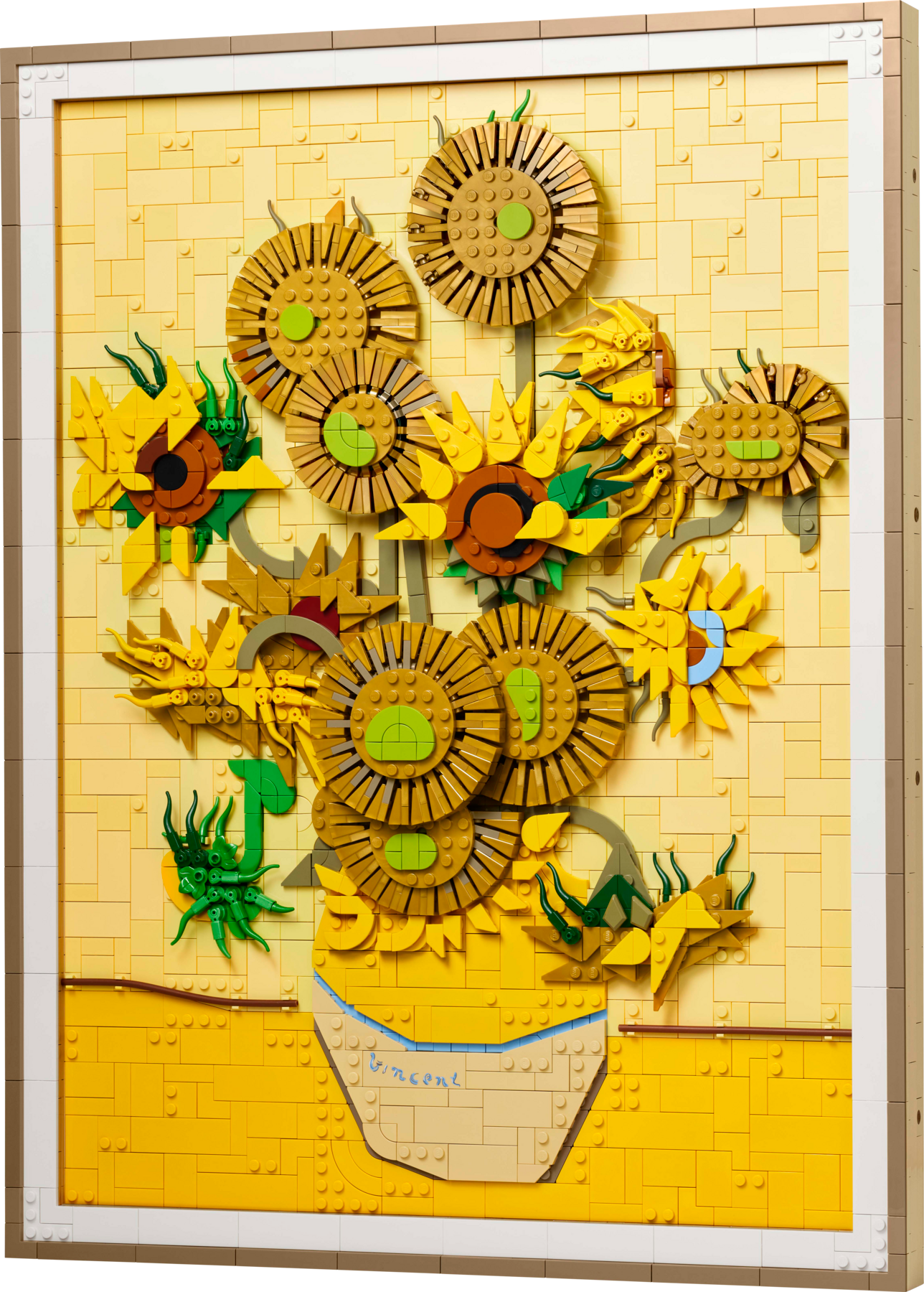
A LEGO Art set that builds its picture from many colors at once, a good way to see how many shades the current palette holds.
Keeping colors looking right
Sunlight is the main enemy of LEGO colors: white and pale bricks yellow first, so displays belong out of direct sun. For cleaning, LEGO's own advice is to wash loose pieces by hand in water no hotter than 40°C, with a mild detergent if needed, and let them dry in the air out of direct sunlight, never in a dishwasher or with a hair dryer. Our guide to protecting LEGO from dust covers displays and cleaning in more detail.
Tools that work with color
Two of our free tools deal with color directly. The Brick Mosaic Maker turns a photo into a mosaic in the colors of a LEGO Art or mosaic set, and the Missing Piece Checker flags look-alike colors, such as the old and new greys, when you check a set piece by piece. For planning your own builds, our guide to color theory for MOCs covers how to choose a palette.
Use Our Tools to Go Further
Get more insights about the sets mentioned in this article with our free LEGO tools