

The Journal · Investment & Collecting
How Rare Are LEGO Minifigures? A Study of 16,821 Figures
How rare are LEGO minifigures? We counted how many sets each of 16,821 figures appears in. 82% appear in exactly one set, only 1% appear in six or more, and new figures are about half as likely to come back within three years as figures from before 2000. Results by theme, and an honest note on what a set count can't tell you.
Supporting Free Content
As an Amazon Associate I earn from qualifying purchases. As an eBay Partner, we earn from qualifying purchases at no extra cost to you. We also earn a commission when you buy from Wicked Brick or BRKOX through our links (Awin). When you purchase through our links, that small commission helps us keep bringing you expert LEGO® reviews and guides. Thank you for your support!
How rare are LEGO minifigures? By the measure we can count, most are confined to a single set. We checked how many sets each of 16,821 figures appears in, and 82% appear in exactly one. Only 1% appear in six or more. Newer figures are also less likely to return than older ones. This is a count of sets rather than copies, and it says nothing direct about value, so the limits below matter as much as the headline.
What the data shows
| Sets that include the figure | Figures | Share |
|---|---|---|
| One | 13,746 | 81.7% |
| Two | 1,850 | 11.0% |
| Three to five | 1,031 | 6.1% |
| Six or more | 194 | 1.2% |
The average figure appears in 1.37 sets. Only 61 figures appear in ten or more, and 15 appear in twenty or more. Collectible Minifigures come in their own packets by design, but leaving out the 869 figures found only there hardly moves the result: 80.8% of the remaining 15,952 appear in one set.
Figures are less likely to return than they were
Comparing how many old and new figures appear in one set isn't fair, because old figures have had decades to return. So we also asked a question that gives each group the same chance: did the figure appear in another set within three calendar years of its first?
| First appeared | Figures | Back in another set within three years | In one set so far |
|---|---|---|---|
| 1975 to 1989 | 544 | 33.6% | 62.7% |
| 1990 to 1999 | 1,004 | 32.5% | 62.2% |
| 2000 to 2004 | 752 | 25.0% | 74.9% |
| 2005 to 2009 | 1,118 | 24.7% | 74.5% |
| 2010 to 2014 | 2,367 | 19.1% | 80.4% |
| 2015 to 2019 | 3,694 | 17.4% | 82.4% |
| 2020 to 2022 | 2,413 | 15.2% | 84.7% |
The chance of a quick return has fallen by more than half since the 1990s. At the same time, the number of new versions has climbed: 322 figures made their first appearance in 2010 and 1,113 in 2025. These tables exclude figures found only in Collectible Minifigures packets. The rise doesn't prove that any figure is harder to get. Part of it may reflect more detailed printing, since small print changes create a new version, where a plain older figure could be used unchanged for years. We can't separate those causes from a set count.
When a figure does return, it tends to be soon. Of the figures in two or more sets, half appeared in those sets in the same calendar year, and only about 5% were spread over more than five years.
Rarity by theme
Themes with at least 100 figures, grouped by the theme of each figure's first set. Sub-themes are counted under their parent theme.
| Theme | Figures | In one set | In three or more sets |
|---|---|---|---|
| Speed Champions | 151 | 99% | 0% |
| Ideas | 283 | 98% | 0% |
| Icons | 243 | 98% | 0% |
| Creator | 239 | 98% | 0% |
| Modular Buildings | 125 | 97% | 1% |
| Collectible Minifigures | 887 | 96% | 1% |
| Seasonal | 569 | 94% | 3% |
| Friends | 876 | 87% | 3% |
| City | 1,946 | 87% | 5% |
| Disney | 498 | 85% | 5% |
| Harry Potter | 590 | 84% | 7% |
| The Hobbit and Lord of the Rings | 109 | 84% | 6% |
| Jurassic World | 142 | 83% | 7% |
| DC | 426 | 81% | 8% |
| Minecraft | 281 | 80% | 9% |
| Marvel | 749 | 80% | 7% |
| Monkie Kid | 179 | 77% | 8% |
| Star Wars | 1,463 | 76% | 9% |
| Castle | 458 | 71% | 12% |
| Town | 727 | 69% | 14% |
| Pirates | 172 | 67% | 19% |
| Ninjago | 1,020 | 65% | 15% |
| DREAMZzz | 115 | 62% | 18% |
| Space | 182 | 54% | 30% |
| Trains | 109 | 51% | 22% |
| Legends of Chima | 153 | 36% | 18% |
Adult display lines and Speed Champions keep almost every figure to one set. Lines built around a recurring cast, like Ninjago and Legends of Chima, reuse far more, and older themes such as Space and Trains may sit low in part because their figures have had longer to return. A theme's figure also counts here even if it later appears in a set from another theme.
The sets with the most one-set figures
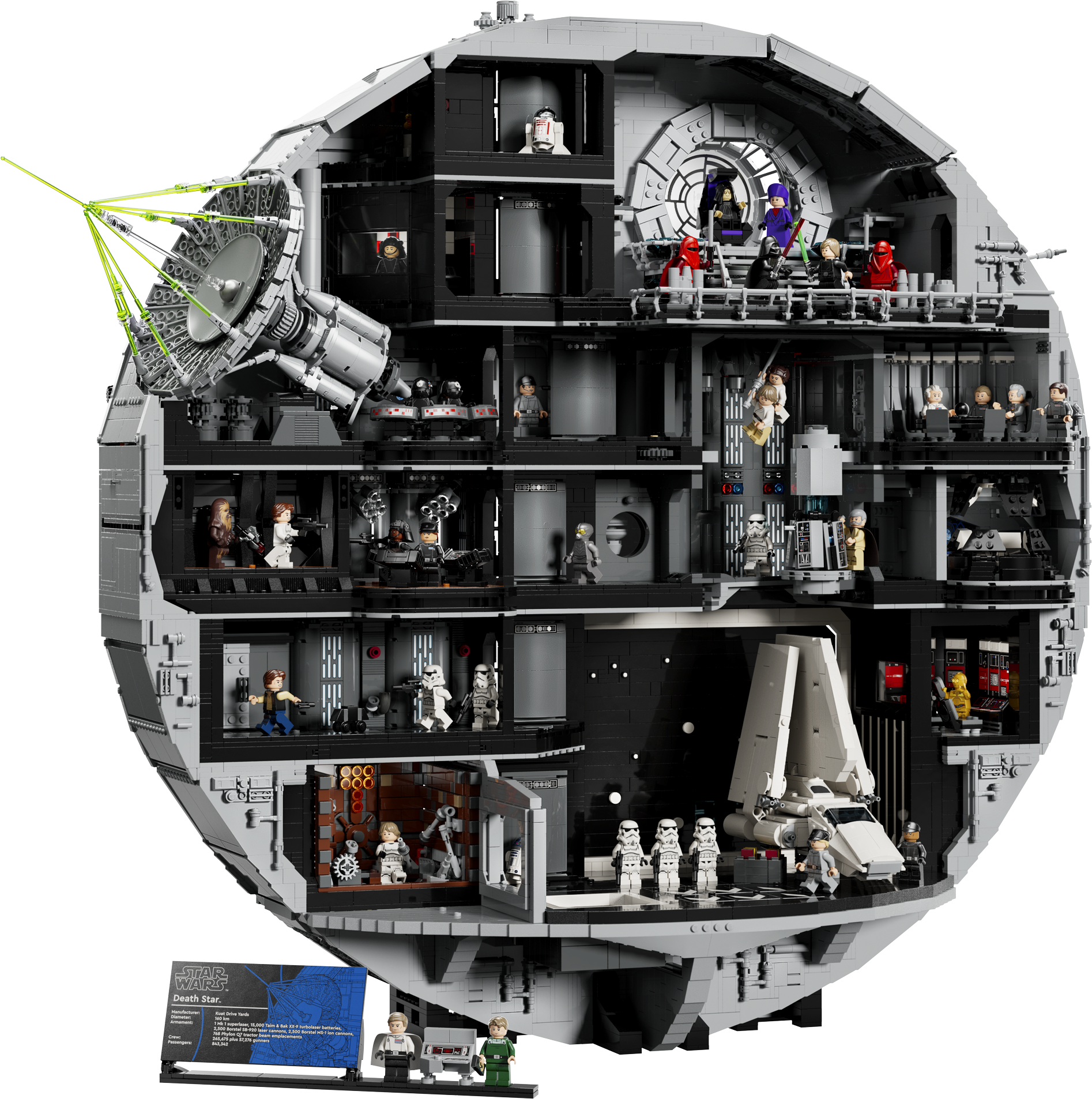 Death Star
Among retail sets, these carry some of the most figures that appear nowhere else in our catalog. A newer set's figures can still return later.
Death Star (2025). 27 figures that appear in no other set in our catalog, the most of any set in the study.
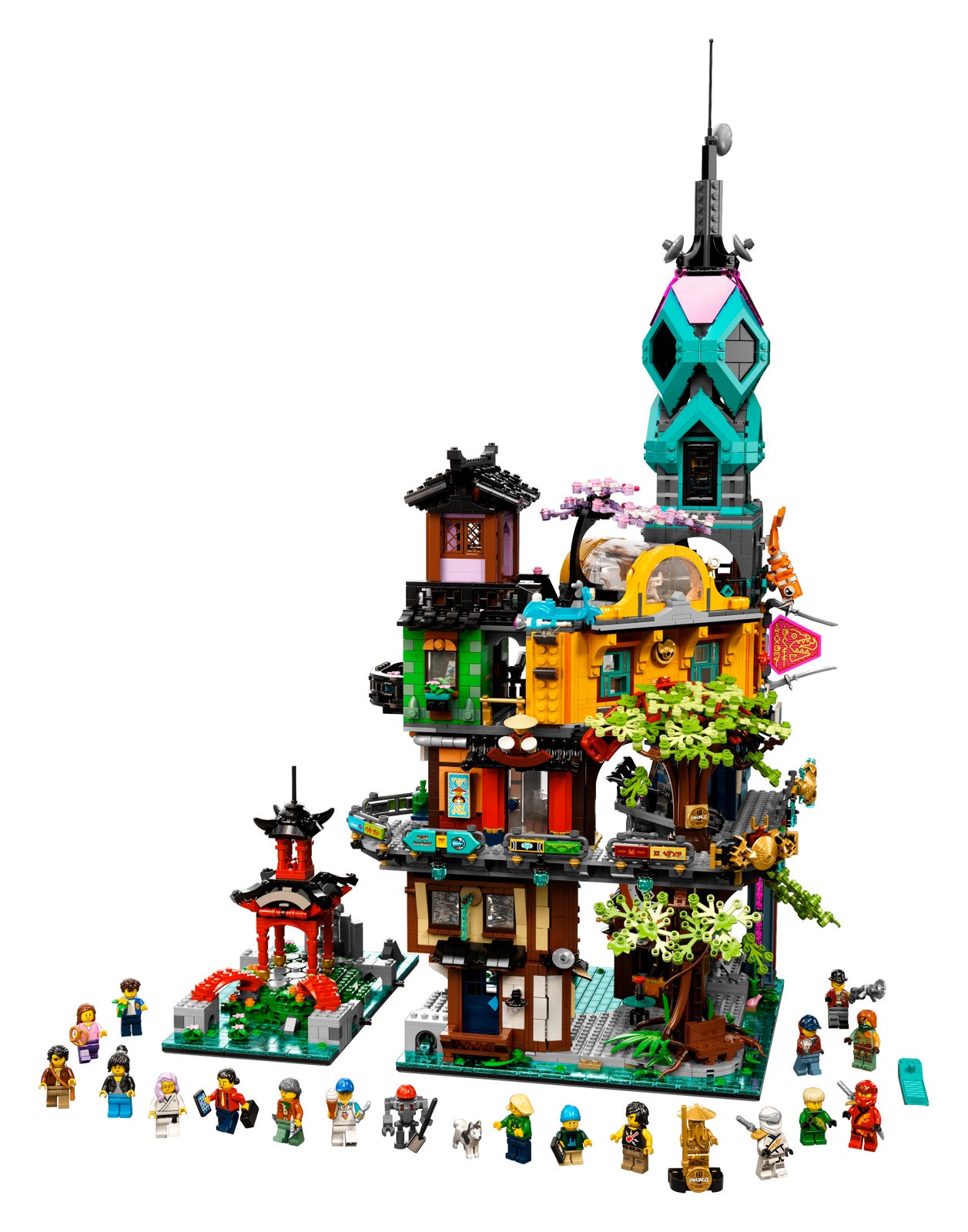
NINJAGO City Gardens (2021). 19 figures found in no other set in our catalog.
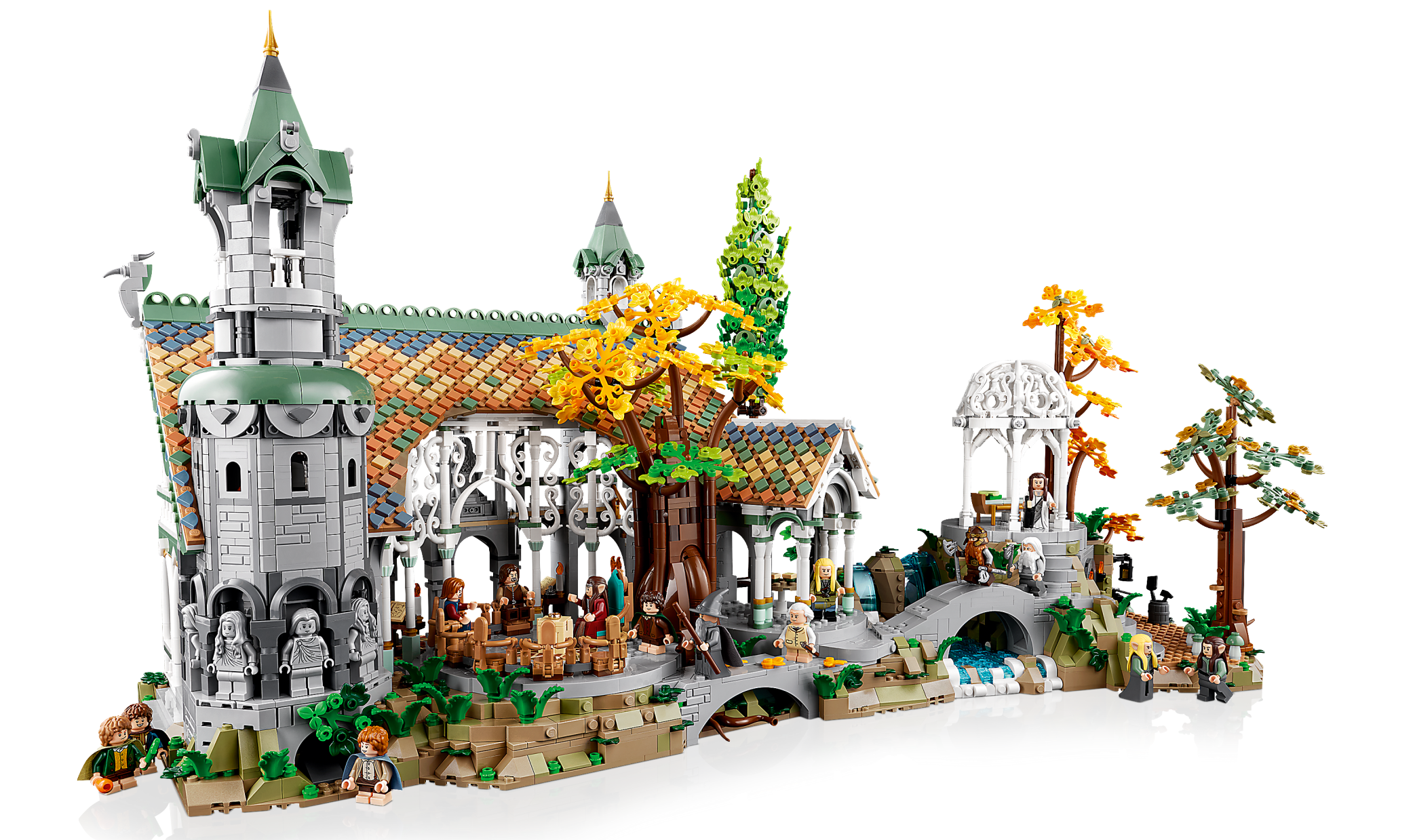
The Lord of the Rings: Rivendell (2023). 19 figures found in no other set in our catalog.
The most reused figures
| Figure | Sets | Years |
|---|---|---|
| Skeleton, standard face | 38 | 1995 to 2012 |
| Battle Droid, one bent arm | 36 | 2007 to 2025 |
| Classic Spaceman, red | 31 | 1979 to 1984 |
| Classic Spaceman, white | 29 | 1979 to 1984 |
| Creeper | 29 | 2014 to 2026 |
| Steve | 28 | 2014 to 2024 |
| Spider-Man, printed arms | 25 | 2021 to 2026 |
This list leaves out three LEGO store figures from 2025 and 2026 that reach 24 or 25 entries, because they are store items rather than figures in retail sets. Generic and simple figures dominate, which makes sense: a plain skeleton can be reused as it is.
Most one-set figures can't be bought new
Of the 12,416 one-set figures we could check, 85.8% have an only set that reads as retired in our catalog. Another 5% have an only set that is expected to retire soon, and 9% have one that is still current. So for most figures, the only route is a secondhand set or a single figure from a reseller. The retired reading partly depends on a set's age and is not LEGO's own statement for every set, so treat it as an estimate. We skipped 1,330 one-set figures because their set's retirement record could not be confirmed as belonging to that exact set.
What this can't tell you
- It is not value. We don't hold reliable market values for minifigures, so nothing here compares rarity with price. A figure in one set is not automatically worth more, and this study is no reason to buy any figure as an investment.
- It is not the number of copies. LEGO doesn't generally publish production numbers per figure. A figure in one best-selling set may exist in far greater numbers than one spread across several small runs.
- It counts exact versions, not characters. A new print or a different hairpiece makes a new entry, so a character seen across dozens of sets can still show up here as many one-set figures.
- It cannot see demand. A figure can be in one set and still be easy to buy cheaply if few people want it.
- Recent figures can still return. "In one set" means so far, particularly for figures from the last few years.
- The catalog isn't perfect. A figure that was left out of a set's listed contents, or a version recorded differently, would change its count.
How we measured it
We used our catalog's list of the figures in each set, reading the latest listed contents of each set, as of October 30, 2026. For each figure we counted the distinct set numbers that include it, treating variants of one number as one set. Here is what went into the sample:
- Included: 16,821 figures of the 17,353 in our catalog, found across 8,333 set numbers from 1975 to 2026. That covers retail sets, books, promotions, LEGO store items and education packs, since each is a real way to get a figure.
- Excluded as sets: gear, service packs, and the catalog's supplemental and some promotional sub-themes, because bundles and key chains would count a figure twice without giving it a new appearance. 90 figures appear only in those, and 442 are in no listed set, so neither group is in the sample.
- First appeared: the release year of the earliest set that includes the figure. If two sets share that year, the theme comes from the lower set number.
We recalculated the headline figures, the year groups and a sample of themes with a separately written database query, and they matched. For more on what collectors look for, see whether LEGO minifigures increase in value and browse every minifigure.