

The Journal · Investment & Collecting
How Long Do LEGO Sets Stay on Sale? A Study of 2,240 Sets
How long do LEGO sets stay on sale? We measured 2,240 sets first listed on LEGO.com US from 2017 through 2022. The median stayed listed for 19 months, only 28% passed two years, large sets lasted about twice as long as small ones, and newer sets are staying longer than older ones. Results by year, size and theme.
Supporting Free Content
As an Amazon Associate I earn from qualifying purchases. As an eBay Partner, we earn from qualifying purchases at no extra cost to you. We also earn a commission when you buy from Wicked Brick or BRKOX through our links (Awin). When you purchase through our links, that small commission helps us keep bringing you expert LEGO® reviews and guides. Thank you for your support!
How long do LEGO sets stay on sale? Typically about 19 months. We measured 2,240 sets first listed on LEGO.com US from 2017 through 2022, using the first and last dates each one was listed. Half of them lasted between 13 and 24 months, only 28% passed two years, and the common advice that sets last "about two years" turns out to describe the long end of normal. Size and theme change the answer considerably, and newer sets are staying longer than older ones.
What the data shows
| Across 2,240 sets first listed 2017 to 2022 | Result |
|---|---|
| Median time listed on LEGO.com US | 19.0 months |
| Middle half of sets | 13.0 to 24.4 months |
| Listed for more than one year | 79% |
| Listed for more than two years | 28% |
| Listed for more than three years | 10% |
| Listed for more than five years | 2% |
Newer sets are staying longer
This was the finding we did not expect. The median rose by about seven months between the sets first listed in 2017 and those first listed in 2022, and the 2023 and 2024 sets are still well above the 2017 level.
| First listed in | Sets | Median months listed | Passed two years | Still on sale at our check |
|---|---|---|---|---|
| 2017 | 350 | 15.9 | 15% | 0.3% |
| 2018 | 327 | 16.1 | 20% | 0.9% |
| 2019 | 316 | 18.8 | 30% | 0% |
| 2020 | 371 | 19.1 | 29% | 1.1% |
| 2021 | 383 | 18.7 | 26% | 2.6% |
| 2022 | 493 | 23.2 | 44% | 3.9% |
| 2023 | 425 | 21.4 | 35% so far | 10.6% |
| 2024 | 429 | 20.7 | 18% so far | 35.7% |
The 2023 and 2024 medians are already settled even though some of those sets are still selling, because every one still on sale has outlasted the median. Their "passed two years" figures will keep rising. The dates tell us that sets last longer, not why, so we are not going to guess at LEGO's reasons. Sets from 2025 and 2026 are left out of this table because too many are still on sale to give a median.
Bigger sets last longer
| Pieces | Sets | Median months listed | Passed two years |
|---|---|---|---|
| 25 to 99 | 450 | 14.4 | 19% |
| 100 to 249 | 625 | 18.1 | 25% |
| 250 to 499 | 506 | 19.0 | 23% |
| 500 to 999 | 388 | 20.5 | 34% |
| 1,000 to 1,999 | 173 | 22.6 | 46% |
| 2,000 or more | 98 | 30.9 | 71% |
The largest sets lasted about twice as long as the smallest, and 38% of them passed three years. Size and theme overlap, since Icons and Architecture sets tend to be aimed at adults and small sets dominate other lines, so read this table and the next one together.
How long each theme stays on sale
Themes with at least 15 sets in the sample, longest first. Sub-themes are counted under their parent theme.
| Theme | Sets | Median months listed | Passed two years |
|---|---|---|---|
| Architecture | 19 | 34.1 | 74% |
| Icons | 25 | 32.0 | 72% |
| Ideas | 31 | 28.1 | 58% |
| Creator | 95 | 24.0 | 50% |
| Technic | 85 | 23.7 | 47% |
| Monkie Kid | 37 | 23.7 | 46% |
| Duplo | 84 | 23.5 | 49% |
| Minecraft | 68 | 23.5 | 44% |
| Classic | 35 | 22.7 | 46% |
| Speed Champions | 38 | 22.3 | 34% |
| Jurassic World | 32 | 22.3 | 25% |
| Harry Potter | 55 | 21.8 | 46% |
| City | 211 | 21.0 | 28% |
| Disney | 90 | 20.2 | 27% |
| Star Wars | 187 | 19.7 | 26% |
| Marvel | 131 | 18.8 | 19% |
| Ninjago | 168 | 16.2 | 16% |
| Juniors | 31 | 16.1 | 3% |
| Friends | 220 | 15.8 | 16% |
| Super Mario | 43 | 15.4 | 23% |
| DC | 66 | 14.5 | 9% |
| DOTS | 75 | 14.1 | 11% |
| Hidden Side | 21 | 13.8 | 5% |
| The LEGO Movie | 30 | 13.6 | 10% |
| Seasonal | 65 | 13.1 | 37% |
| BrickHeadz | 116 | 12.0 | 24% |
| Elves | 15 | 11.5 | 0% |
| Nexo Knights | 26 | 11.3 | 4% |
Star Wars sits almost exactly on the overall median, despite the long-running flagships people remember. A few themes hide a wide spread: the middle half of Seasonal sets runs from about 3 months to 35, which suggests a mix of short holiday items and long-running sets. With only 19 to 31 sets, the Architecture, Icons and Ideas figures are a tendency rather than a precise result, and 24% of the Icons sets are still on sale, so its median can only be a low estimate.
The long survivors
 Statue of Liberty
Fewer than 2% of sets stayed listed for more than five years. These are some of the longest-lived sets with 500 or more pieces that have since left:
Statue of Liberty, LEGO Architecture. Listed on LEGO.com US from June 2018 until August 2026, about 8.2 years.

Assembly Square, a Modular Building. Listed from January 2017 until March 2024, about 7.2 years.

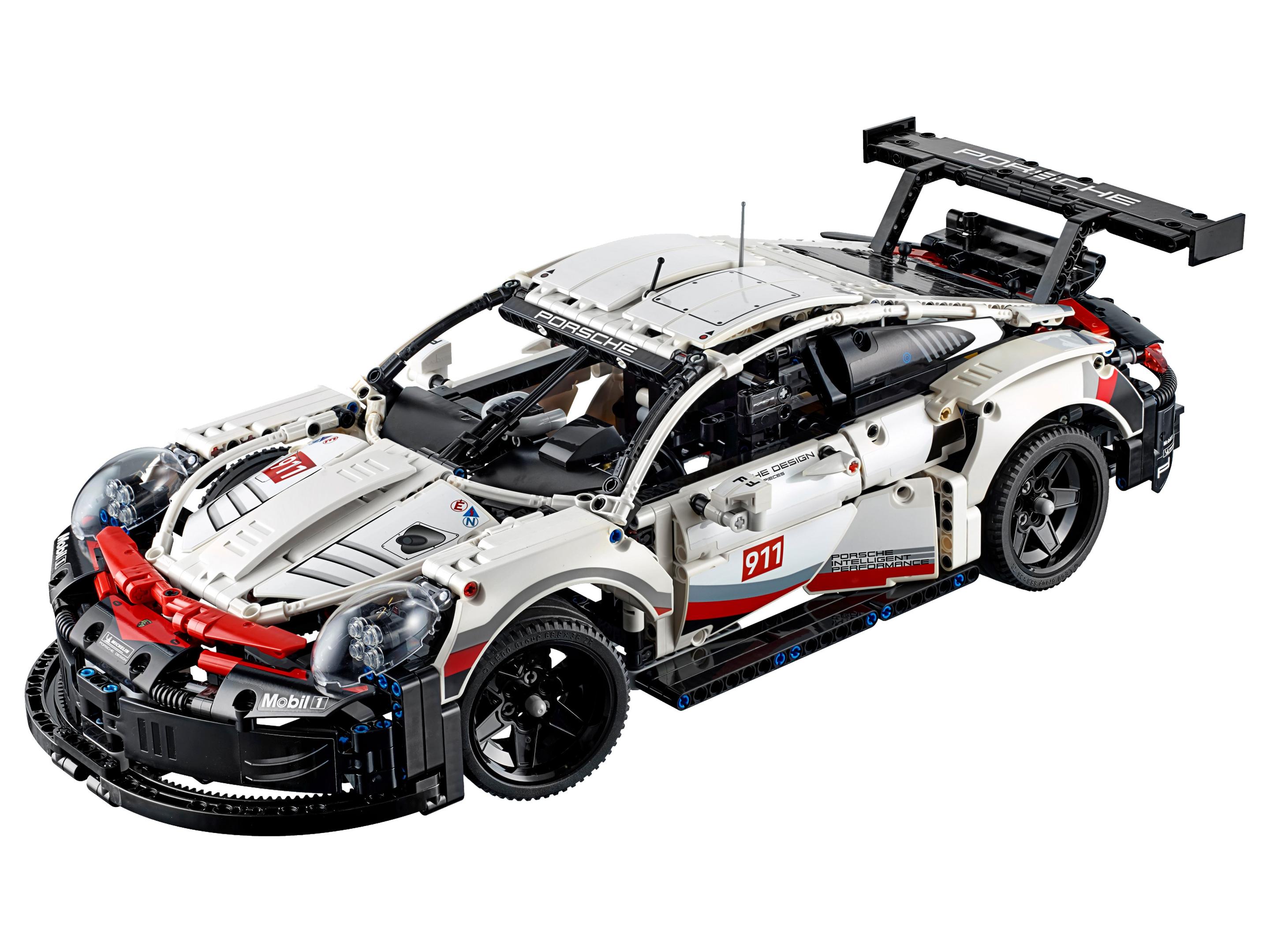
Porsche 911 RSR, LEGO Technic. Listed from January 2019 until January 2025, about 6.1 years.
A few sets from the same years are still going. At our check, Hogwarts Castle, first listed in September 2018, was still on LEGO.com US, with an expected exit at the end of 2027.
When in the year sets leave
Of the 2,203 sets in the sample that have left LEGO.com US, about 40% were last listed in November or December and another 40% from January through March. Only about 20% left between April and October. Winter is when the listings thin out, so a set you have your eye on is more likely to vanish around the holidays than in summer.
How close are the expected exit dates?
Our catalog holds an expected exit date for 2,067 of those 2,203 sets. The typical set was last listed within days of it, with a median gap of 3 days after the date. 41% were last listed within a month either side, 34% stayed listed for more than a month after it, and only 3% left more than three months before it. Treat this as a loose check rather than proof the dates predict well: an expected date can be revised, and we hold the latest version rather than what was published years ago. The practical reading is that a set rarely leaves long before its date, and often lingers after it.
How to use this
- Use 19 months as the starting point, not two years. A set that has been out for 19 months has already outlasted half of the sets in this study.
- Adjust for size and theme. A small DC or DOTS set may be gone in little more than a year, while a large Icons or Architecture set often has around three.
- Check the expected exit date when there is one. Our list of LEGO sets retiring in 2026 gathers this year's. Our guide to telling when a set is about to retire covers the other signals.
- Don't buy on this alone if you are investing. Leaving LEGO.com says nothing about what a set will be worth later. Our study of 454 retired sets looks at that, and the results vary widely.
How we measured it
Our catalog holds the first and last dates each set was listed on LEGO.com in the US, refreshed from our data sources, with checks in this sample taken between November 18, 2025 and October 25, 2026. Time listed is the last date minus the first date. Here is what went into the sample:
- Included: sets with a first listing date from January 2017 through December 2022 and at least 25 pieces. We chose those years because 98% of the sets have left, so unfinished sets barely affect the result. Sets first listed from 2010 through 2016 give medians of roughly 13 to 19 months.
- Excluded: gear, books, games, service packs, bulk bricks, promotional items, supplemental sets, education products and Collectible Minifigures, which are not comparable retail builds. We also excluded sets listed for under 30 days, 79 across all years, and any record that did not match its set number exactly.
- Counted as left: a set whose US listing had ended at least 90 days before our check, or whose expected exit date had passed. Otherwise a set counts as still on sale, at its time so far, including any recently delisted set that may simply be out of stock. That can only make our figures slightly low.
Four limits matter. These are US listings only, and other countries can differ. They cover LEGO.com rather than other retailers, which may hold stock for longer. Time listed runs from first date to last, so it does not subtract any stock-outs in between. And a first listing can fall a little before or after a set's general release. We recalculated the headline figures with a separately written database query, and they matched. The figures describe sets from the past and aren't a forecast for any one set.