
Creating LEGO MOC Buildings: Architecture and Structure Tips
Supporting Free Content
When you purchase through our links, we earn a small commission at no extra cost to you. As an Amazon Associate and eBay Partner, this helps us keep bringing you expert LEGO® reviews and guides. Thank you for your support!
Creating impressive LEGO MOC (My Own Creation) buildings involves a blend of artistic vision, architectural understanding, and clever brick-building techniques to ensure both aesthetic appeal and structural integrity. To build your own custom LEGO structures, start by conceptualizing your design, gathering appropriate parts, and applying fundamental architectural principles like scale, proportion, and stability. Leveraging techniques like Studs Not On Top (SNOT) for intricate details and learning from official LEGO Architecture sets can significantly elevate your MOCs from simple stacks to breathtaking models.
Unleashing Your Inner Architect: What are LEGO MOC Buildings?
The world of LEGO offers boundless possibilities, and for many enthusiasts, the pinnacle of creative expression lies in building MOCs – My Own Creations. A LEGO MOC building is a custom structure designed and built entirely by a fan, ranging from quaint cottages and bustling cityscapes to towering skyscrapers and historical landmarks. Unlike following pre-designed instructions, MOCs challenge you to imagine, plan, and execute your unique vision, pushing the boundaries of what's possible with interlocking bricks.
Why dive into MOC building? It's an incredible journey of problem-solving, artistic development, and pure joy. It allows you to recreate real-world architecture, design fantastical structures, or expand your existing LEGO city with bespoke buildings that reflect your personal style. It's also an excellent way to learn about real-world architectural principles, engineering, and design, all while having fun with your favorite bricks.
For those looking to truly understand the fundamentals of architectural design in LEGO, the is an invaluable resource. This set provides over 1200 white and transparent LEGO bricks, along with a comprehensive guidebook filled with inspiration and techniques from leading architects. It's not about building a specific model, but about exploring concepts like scale, mass, surface, and light, making it a perfect starting point for any aspiring MOC architect.
Key Takeaways:
- MOC (My Own Creation): A custom LEGO model designed and built by a fan.
- Benefits: Fosters creativity, problem-solving, and architectural understanding.
- Starting Point: Consider the for foundational learning.
The Blueprint for Success: Foundational Architectural Principles in LEGO
Just like real-world architects, LEGO builders need to consider several core principles to create stable, realistic, and visually appealing structures. Neglecting these can lead to flimsy builds or designs that just don't look quite right.
1. Scale and Proportion
Achieving a believable scale is crucial for MOCs. Whether you're building a minifigure-scale modular building or a micro-scale landmark, maintaining consistent proportions across your model makes it feel authentic. Researching reference images and understanding the actual dimensions of real buildings can greatly aid in translating them into brick form. For instance, if you're building a miniature city, consider a consistent scale for vehicles, buildings, and figures. If you're building a larger display, like a highly detailed castle, ensure turrets aren't disproportionately large compared to walls.
2. Structural Integrity and Stability
A beautiful MOC is only good if it stands up! Structural integrity is paramount. This means ensuring your walls are strong, your floors don't sag, and your roof doesn't collapse. Key techniques include:
- Staggering Bricks: Avoid stacking bricks directly on top of each other in a straight column; offset them like real brickwork for strength.
- Reinforcing Walls: Use larger bricks, plates, or Technic elements embedded within walls for added stability, especially for taller structures.
- Strong Foundations: Build on large baseplates or multiple layers of plates to create a solid, unyielding base.
- Weight Distribution: Distribute heavy elements evenly to prevent tipping.
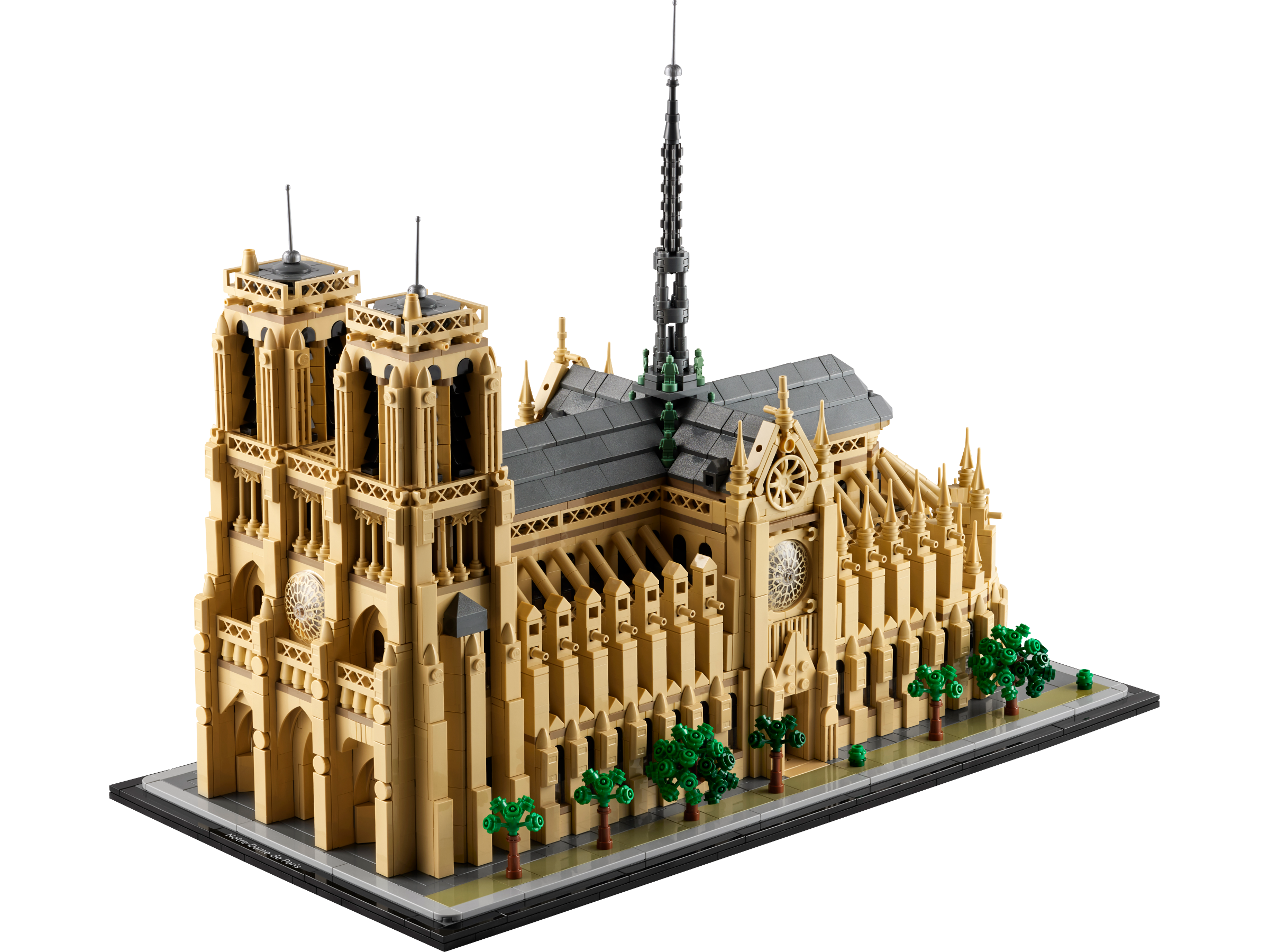
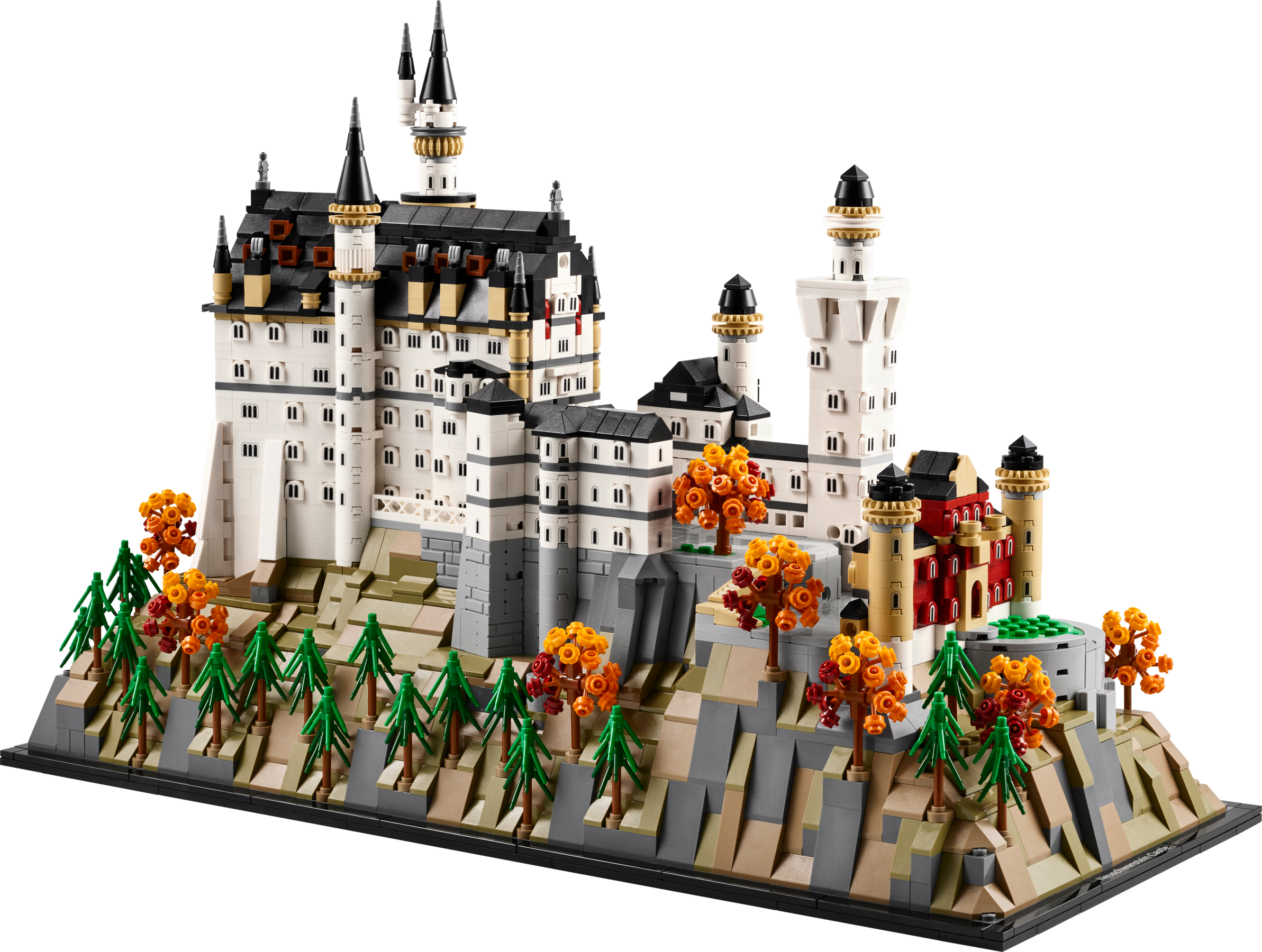
Consider the impressive stability of sets like the PRODUCT_LINK[Item Number: 21061-1], Notre-Dame de Paris, with its 4382 pieces, or the PRODUCT_LINK[Item Number: 21063-1], Neuschwanstein Castle, with its 3455 pieces. These models, despite their complexity and height, are engineered to stand firm, showcasing excellent structural design principles that MOC builders can emulate.
3. Part Selection and Usage
The vast array of LEGO elements offers incredible versatility. Knowing your bricks is key:
- Basic Bricks & Plates: The workhorses for walls, floors, and general structure.
- Tiles: For smooth surfaces, roofs, and detailing without visible studs.
- Slopes & Wedges: Essential for roofs, inclines, and shaping.
- SNOT Bricks (Studs Not On Top): Bricks with studs on the side, crucial for advanced detailing and non-vertical building.
- Technic Elements: Beams, pins, and axles provide internal strength, particularly for larger or more complex MOCs, or for creating functional elements.
4. Color Palette and Texture
Color choice dramatically impacts the mood and realism of your MOC. Research real-world buildings for inspiration on material colors (stone, brick, concrete, wood). Don't be afraid to introduce subtle variations in color (e.g., light grey and dark grey alongside white) to simulate weathering or different materials. Texture can be achieved through various brick types, greebling (adding small, intricate details), or by strategically using studded vs. tiled surfaces. The PRODUCT_LINK[Item Number: 21060-1], Himeji Castle, for example, masterfully uses a limited, authentic color palette to evoke its historical Japanese architecture.
Building Blocks of Brilliance: Essential Techniques for LEGO MOC Buildings
Once you grasp the foundational principles, it's time to dive into specific techniques that will bring your LEGO MOC building to life.
1. Mastering Bases and Foundations
Every great building starts with a solid foundation. For LEGO MOCs, this often means:
- Large Baseplates: Begin with one or more LEGO baseplates to define the footprint of your building.
- Reinforced Platform: Build several layers of regular plates on top of your baseplate. This creates a sturdy, level surface and prevents your MOC from flexing or breaking apart when moved.
- Technic Frames: For very large or heavy MOCs, consider incorporating a Technic frame within your base layers. This adds incredible rigidity and load-bearing capacity.
Think about the robust base of the PRODUCT_LINK[Item Number: 21058-1], Great Pyramid of Giza, which supports a massive and intricate structure, or the compact yet stable foundation of the PRODUCT_LINK[Item Number: 21054-1], The White House.
2. Crafting Walls and Facades
Walls are the most visible part of your building, offering immense opportunities for detail:
- Standard Stacking: The simplest method, but remember to stagger bricks for strength.
- SNOT (Studs Not On Top): This technique allows you to build sideways, creating smooth walls, intricate patterns, or attaching details at different angles. It's essential for achieving realistic window frames, cornices, or specific textures.
- Texturing: Use different brick types (e.g., masonry bricks, grill bricks, jumper plates) to add varied textures to your walls. The detailed facades of the PRODUCT_LINK[Item Number: 21010-1], Robie House, with its distinct horizontal lines, or the classical columns of the PRODUCT_LINK[Item Number: 21030-1], United States Capitol Building, showcase how varied brick usage can define a structure's character.
3. Designing Realistic Roofs
Roofs can dramatically define the style of your building:
- Pitched Roofs: Use slope bricks of various angles (e.g., 33°, 45°, 65°) to create traditional sloped roofs. Tiles can be added for a smooth finish or to mimic shingles.
- Flat Roofs: Simple layers of plates and tiles work well, often incorporating details like vents, skylights, or even rooftop gardens.
- Domes & Spires: More challenging, requiring advanced SNOT techniques, hinged bricks, or curved slopes. The PRODUCT_LINK[Item Number: 21056-1], Taj Mahal, is a masterclass in dome construction, while the PRODUCT_LINK[Item Number: 21046-1], Empire State Building, demonstrates elegant spire design.
- Unique Rooflines: The distinctive tiered roofs of the PRODUCT_LINK[Item Number: 21060-1], Himeji Castle, offer incredible inspiration for complex and culturally specific roof designs.
4. Adding Windows, Doors, and Entrances
These elements provide realism and a sense of scale:
- Standard Frames: Utilize official LEGO window and door frames.
- Custom Frames: Build your own frames using plates, tiles, and SNOT bricks for unique sizes or styles.
- Glass Solutions: Use transparent bricks, panels, or even custom-cut acrylic for larger windows.
- Entrances: Design grand entrances with arches, columns, and detailed doorways. The intricate archways and sculptural elements of the PRODUCT_LINK[Item Number: 21062-1], Trevi Fountain, although not a building in the traditional sense, offer fantastic examples of how to integrate such details.
Advanced Techniques for Elevating Your MOCs
Ready to push your LEGO MOC building skills further? These techniques will help you achieve truly stunning results.
1. SNOT (Studs Not On Top) Building
SNOT is perhaps the most powerful advanced technique. It involves orienting bricks so their studs face in directions other than upwards. This allows for:
- Smooth Walls: By building a "skin" of tiles sideways, you can create perfectly smooth, studless facades.
- Intricate Patterns & Textures: Attach small elements sideways to create detailed brickwork, cornices, or architectural ornaments.
- Complex Shapes: Build curves, angles, and other non-rectangular forms more easily.
Many of the details on the PRODUCT_LINK[Item Number: 21061-1], Notre-Dame de Paris, particularly its intricate carvings and stained-glass windows, would rely heavily on SNOT techniques to achieve their fidelity.
2. Greebling
Greebling is the art of adding small, often nonsensical, technical-looking details to a surface to give it a more complex, industrial, or textured appearance. While often associated with sci-fi MOCs, greebling can be used subtly in architectural builds to simulate vents, pipes, HVAC systems, or intricate carvings on older buildings. It adds depth and visual interest.
3. Modular Construction
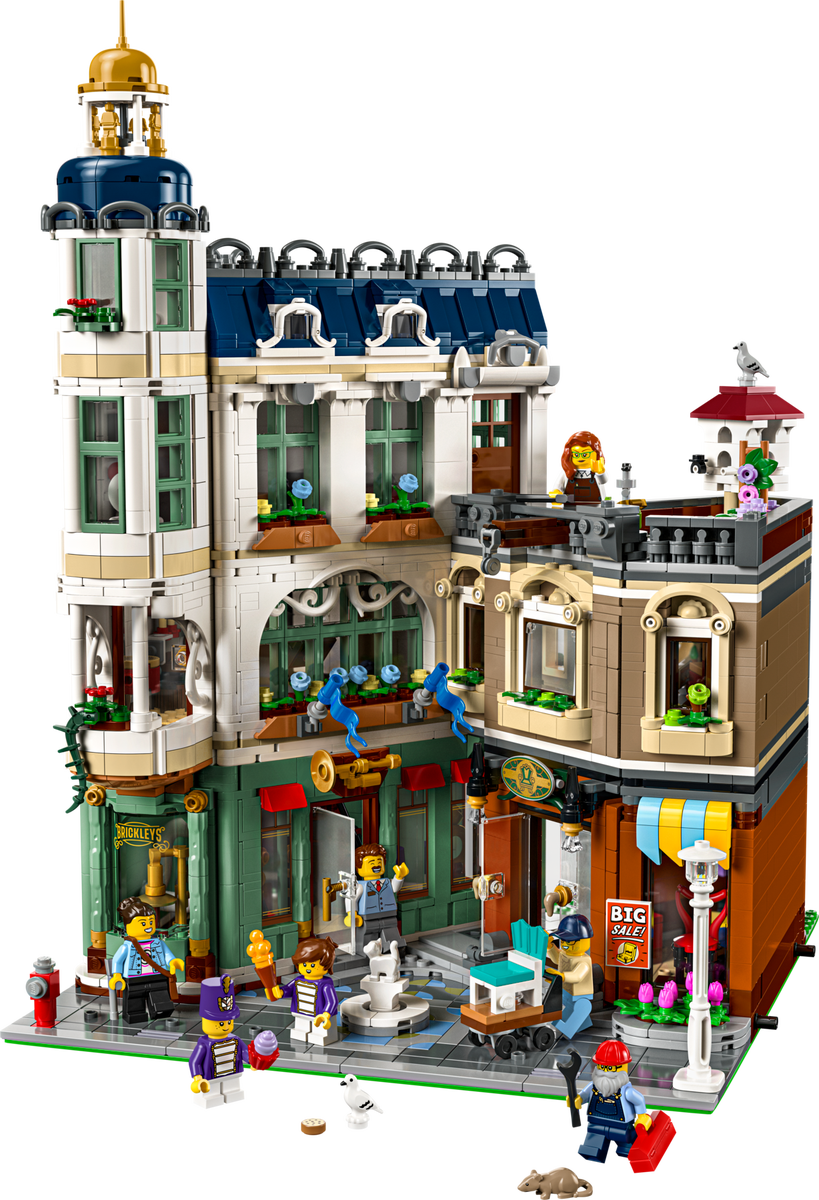
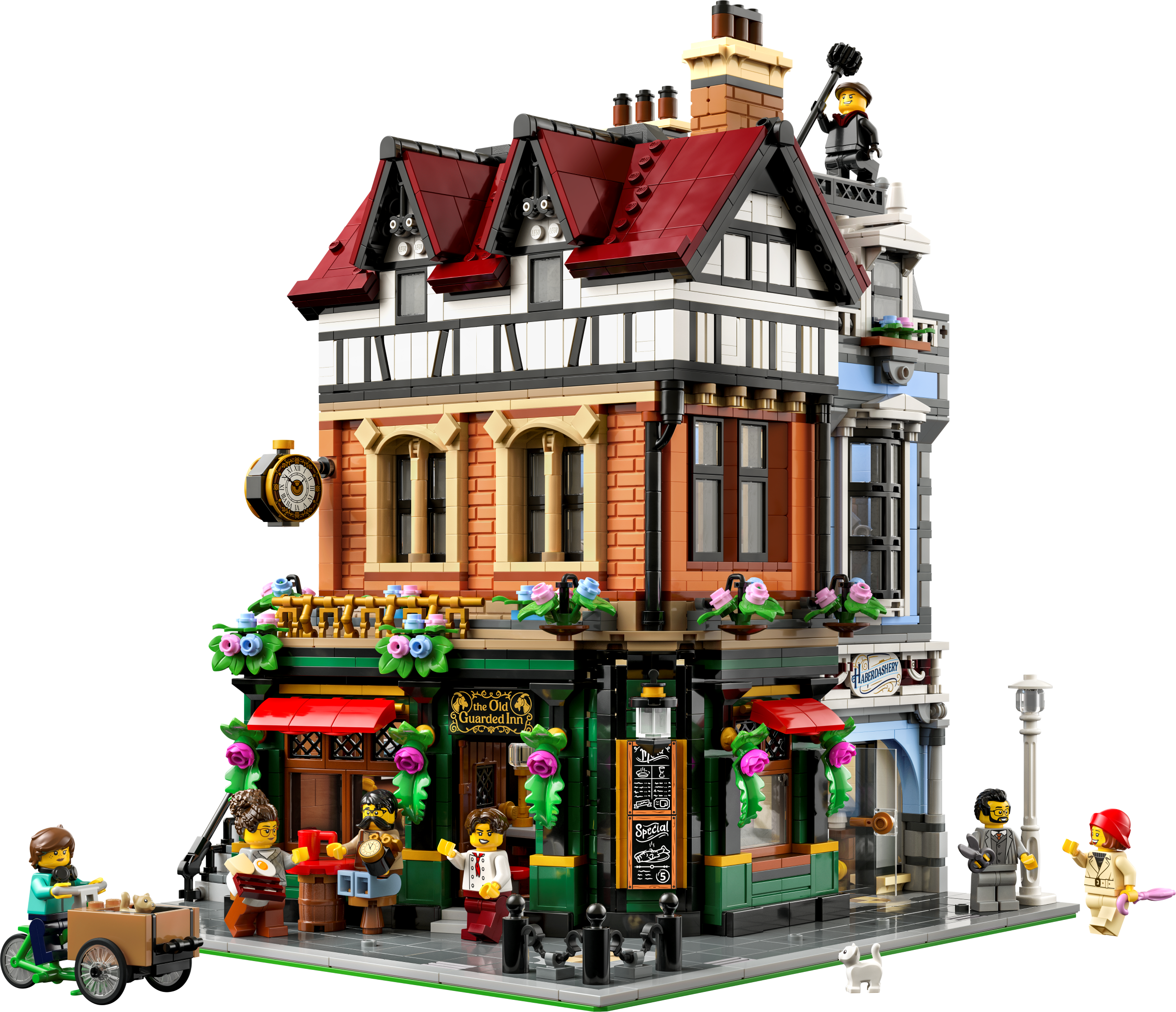
For larger MOCs, especially city buildings, consider building in modules. This means constructing your building in separate, manageable sections (e.g., floors, wall panels, roof sections) that can be easily connected and disconnected. This makes transport, storage, and even modification much simpler. The official LEGO Modular Buildings series is a fantastic example of this concept, inspiring countless MOCs.
4. Internal Structuring and Support
Beyond external facades, think about the internal skeleton of your MOC. For tall structures like the PRODUCT_LINK[Item Number: 21046-1], Empire State Building, or the PRODUCT_LINK[Item Number: 21042-1], Statue of Liberty, robust internal frameworks are essential. This might involve extensive use of Technic beams and pins, or strategically placed brick columns, to carry the load and prevent bowing or collapse.
5. Integrating Landscape and Surroundings
A building rarely stands alone. Integrating your MOC with a surrounding landscape, street, or plaza enhances its realism and visual impact. Consider adding trees, benches, lampposts, or water features. The PRODUCT_LINK[Item Number: 21045-1], Trafalgar Square, is a brilliant example of how a complex structure can be integrated seamlessly with its environment, including fountains, statues, and surrounding paths.
Learning from the Masters: Official LEGO Architecture Sets as Inspiration
One of the best ways to improve your MOC building skills is to study official LEGO Architecture sets. These sets are designed by expert LEGO designers who meticulously research and translate real-world landmarks into brick form, showcasing advanced techniques, clever part usage, and impeccable structural design. They are not just models; they are educational tools.
- Notre-Dame de Paris: With 4382 pieces, this monumental set is a masterclass in recreating Gothic architecture. Pay attention to how the designers replicate the flying buttresses, rose windows, and intricate carvings using standard bricks and SNOT techniques. Its scale and detail offer immense learning opportunities for complex historical structures.
- Neuschwanstein Castle: This 3455-piece marvel shows how to tackle organic shapes, multiple turrets, and the integration of a building with a rocky landscape. It's an excellent study in achieving intricate details and varied textures on a large scale, particularly for fantasy or historical castle MOCs.
- Himeji Castle: A stunning 2125-piece recreation, this set is perfect for understanding complex tiered roof structures, subtle curves, and the distinct aesthetics of Japanese architecture. Its clean lines and elegant design offer lessons in minimalist detailing and accurate cultural representation.
- Taj Mahal: Comprising 2024 pieces, the Taj Mahal is an iconic example of symmetry, domes, and intricate ornamentation. Building this set reveals techniques for creating smooth, curved surfaces and achieving grand scale with repetitive, elegant details.
- Robie House: This 2276-piece set, a Frank Lloyd Wright masterpiece, is an incredible lesson in horizontal emphasis, cantilevered roofs, and the integration of interior and exterior spaces. It's ideal for MOC builders interested in modernism and creating distinctive architectural styles.
- Great Pyramid of Giza: At 1476 pieces, this set goes beyond just the pyramid, showing the surrounding complex. It's an amazing study in large-scale ancient structures, historical context, and modular building techniques that allow for a cutaway view.
- The White House: This 1483-piece model exemplifies classical architecture, symmetry, and detailed facade work. It's great for learning how to represent iconic government buildings with precision.
- Empire State Building: With 1767 pieces, this set is a fantastic example of skyscraper construction, showcasing repetitive patterns, verticality, and elegant spire design. It's a must-study for anyone building tall structures.
- Statue of Liberty: This 1685-piece set is less of a building and more of a sculpture, but it offers invaluable lessons in creating organic shapes, drapery, and complex curves using rigid LEGO elements. These techniques can be adapted for highly ornate architectural details.
- Trevi Fountain: This 1880-piece set is a masterclass in integrating water elements, sculptural details, and complex architectural forms into a cohesive scene. It's perfect for MOC builders looking to add dynamism and intricate details to their builds.
- Trafalgar Square: A 1197-piece set that beautifully captures a complex urban space, including multiple structures, fountains, and statues, demonstrating how to integrate different architectural elements and a landscape into a cohesive display.
- United States Capitol Building: This 1032-piece set focuses on the iconic dome and neoclassical facade, providing excellent insight into constructing prominent architectural features.
- Fallingwater: Another Frank Lloyd Wright masterpiece, this 811-piece set demonstrates organic architecture and integration with natural elements. It's a great study for cantilevered designs and harmony with the environment.
- Imperial Hotel: With 1188 pieces, this set, based on Frank Lloyd Wright's lost Tokyo masterpiece, features unique geometric patterns and angles, offering lessons in creating distinctive, intricate facades.
Quick Comparison Table: Iconic LEGO Architecture Sets for Inspiration
Here's a snapshot of some top LEGO Architecture sets that can serve as excellent guides for your MOC building journey:
| Name | Item Number | Piece Count | Best For Learning | Price (Approx.) |
|---|---|---|---|---|
| Notre-Dame de Paris | 21061-1 | 4382 | Gothic details, large-scale historical accuracy, complex forms | $ |
| Neuschwanstein Castle | 21063-1 | 3455 | Organic shapes, intricate turrets, landscape integration | $279.99 |
| Himeji Castle | 21060-1 | 2125 | Tiered roofs, Japanese architectural style, subtle curves | $ |
| Robie House | 21010-1 | 2276 | Modernist design, horizontal lines, cantilevered elements | $ |
| Empire State Building | 21046-1 | 1767 | Skyscraper construction, verticality, repetitive detailing | $ |
What to Consider When Building Your Own LEGO MOC
1. Your Vision and Reference Material
Start with a clear idea. Do you want to replicate an existing building, or create something entirely new? Gather reference photos, blueprints, or sketches. This initial planning phase is critical and will save you time and frustration later. Consider using digital design software like BrickLink Studio for planning, especially for larger or more complex MOCs. This allows you to experiment with parts and structures before committing to physical bricks.
2. Budget and Part Availability
MOCs can be brick-intensive! Factor in the cost of acquiring specific bricks. You can source parts from your existing collection, buy bulk lots, or use online marketplaces like BrickLink to buy individual elements. Many builders start with a theme and color palette, then purchase specific parts as needed. Remember, the provides a great starter kit of versatile white and transparent bricks.
3. Time and Patience
Building a significant MOC takes time, often weeks or months. Be patient with yourself. You will encounter challenges, and you will need to redesign sections. Embrace the iterative process; it's part of the fun and learning experience.
4. Display and Storage
Where will your finished MOC live? Consider its size, weight, and fragility. Ensure you have a stable surface for display and, if necessary, a plan for moving or storing it safely. Modular construction (as discussed earlier) can be a lifesaver here.
5. Inspiration from Others
Follow other MOC builders online, browse sites like BrickLink, LEGO Ideas, and Flickr for inspiration. Join LEGO fan communities. Seeing what others have created can spark new ideas and expose you to innovative techniques you might not have considered.
Frequently Asked Questions About LEGO MOC Buildings
What does MOC stand for in LEGO?
MOC stands for "My Own Creation." It refers to any LEGO model that has been designed and built by a fan, rather than following official LEGO instructions or designs. MOCs allow builders to express their creativity and engineering skills.
How do I start building my first LEGO MOC building?
Begin by choosing a simple concept, like a small house or a facade. Gather inspiration from real buildings or existing LEGO sets. Sketch out your design, either on paper or using digital software like BrickLink Studio. Start with a solid base and build up, focusing on structural stability and basic architectural elements like walls, windows, and roofs. Don't be afraid to experiment and rebuild!
What are the most essential LEGO pieces for MOC buildings?
Essential pieces include basic bricks (2x4, 2x2, 1xX), plates of various sizes, tiles for smooth surfaces, slope bricks for roofs, and SNOT bricks (bricks with studs on the side) for advanced detailing. Transparent bricks for windows and door frames are also crucial. Sets like the can provide a good foundational collection of versatile parts.
Can I use official LEGO Architecture sets to learn MOC techniques?
Absolutely! Official LEGO Architecture sets are excellent educational tools. They are designed by master builders and demonstrate sophisticated techniques for structural integrity, scale, detail, and part usage. Deconstructing and rebuilding them, or simply studying their instructions, can teach you invaluable lessons that you can apply to your own MOCs. Sets like the Notre-Dame de Paris or the Neuschwanstein Castle are particularly rich in advanced building methods.
Where can I find inspiration for my LEGO MOC buildings?
Inspiration is everywhere! Look at real-world architecture in your town or city, browse architectural history books, or search online image platforms like Pinterest and Flickr for building styles. LEGO fan communities on websites like BrickLink, Eurobricks, and LEGO Ideas are also fantastic sources of inspiration, showcasing thousands of incredible MOCs by other builders.
Is it expensive to build LEGO MOCs?
The cost of building MOCs can vary greatly. If you have a large existing LEGO collection, you might be able to build many MOCs for free. However, buying specific parts (especially rare or large quantities of common parts) can add up. Online marketplaces like BrickLink allow you to buy individual bricks, which can be more cost-effective than buying entire sets if you only need certain elements. Planning your build carefully and sourcing parts efficiently can help manage costs.
What is SNOT building and why is it important for MOC buildings?
SNOT stands for "Studs Not On Top." It's a fundamental advanced LEGO technique where bricks are oriented so their studs face sideways or downwards, rather than just upwards. This allows builders to create smooth, studless surfaces, attach details at different angles, build intricate patterns, and achieve complex, non-rectangular shapes. SNOT is crucial for adding realism, texture, and advanced detailing to LEGO MOC buildings, enabling features like detailed window frames, cornices, and curved walls.
Conclusion: Build Your Dreams Brick by Brick
Embarking on the journey of creating LEGO MOC buildings is one of the most rewarding aspects of the LEGO hobby. It's an opportunity to transform your imagination into tangible, brick-built masterpieces. By understanding foundational architectural principles, mastering essential and advanced building techniques, and drawing inspiration from the incredible designs of official LEGO Architecture sets, you'll be well-equipped to construct structures that impress and inspire.
Whether you're starting with the versatile bricks of the or dissecting the genius of the PRODUCT_LINK[Item Number: 21061-1], Notre-Dame de Paris, every brick you place is a step towards realizing your unique vision. So gather your bricks, sketch your blueprints, and start building the architectural wonders you've always dreamed of. The world of LEGO MOCs awaits your creative touch!
Unlock your LEGO MOC building potential! Learn essential architecture and structure tips, advanced techniques, and get product recommendations to create stunning custom LEGO buildings.
LEGO MOC buildings, LEGO architecture tips, custom LEGO builds, LEGO building techniques, SNOT building, LEGO structural integrity, LEGO Architecture sets, Notre-Dame de Paris LEGO, Neuschwanstein Castle LEGO, Himeji Castle LEGO
Ready to build your own amazing LEGO creations? This comprehensive guide provides expert tips on architectural design, structural stability, and advanced building techniques for stunning LEGO MOC buildings. Discover inspiring official LEGO Architecture sets and learn how to bring your unique brick-built visions to life.
Q: What does MOC stand for in LEGO?
A: MOC stands for "My Own Creation." It refers to any LEGO model that has been designed and built by a fan, rather than following official LEGO instructions or designs. MOCs allow builders to express their creativity and engineering skills.
Q: How do I start building my first LEGO MOC building?
A: Begin by choosing a simple concept, like a small house or a facade. Gather inspiration from real buildings or existing LEGO sets. Sketch out your design, either on paper or using digital software like BrickLink Studio. Start with a solid base and build up, focusing on structural stability and basic architectural elements like walls, windows, and roofs. Don't be afraid to experiment and rebuild!
Q: What are the most essential LEGO pieces for MOC buildings?
A: Essential pieces include basic bricks (2x4, 2x2, 1xX), plates of various sizes, tiles for smooth surfaces, slope bricks for roofs, and SNOT bricks (bricks with studs on the side
Use Our Tools to Go Further
Get more insights about the sets mentioned in this article with our free LEGO tools