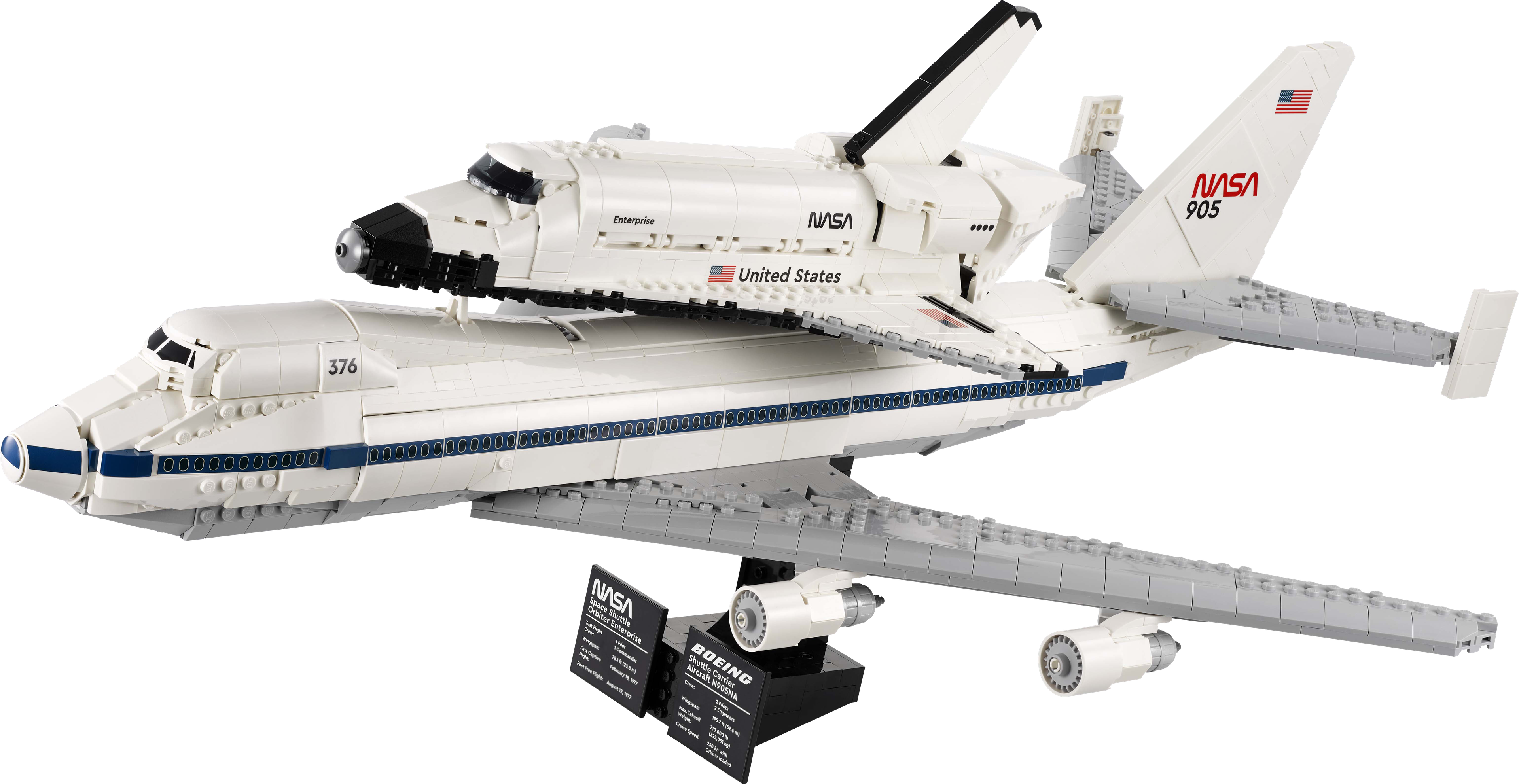

Building LEGO MOC Vehicles: Cars, Ships, and Aircraft Guide
Supporting Free Content
When you purchase through our links, we earn a small commission at no extra cost to you. As an Amazon Associate and eBay Partner, this helps us keep bringing you expert LEGO® reviews and guides. Thank you for your support!
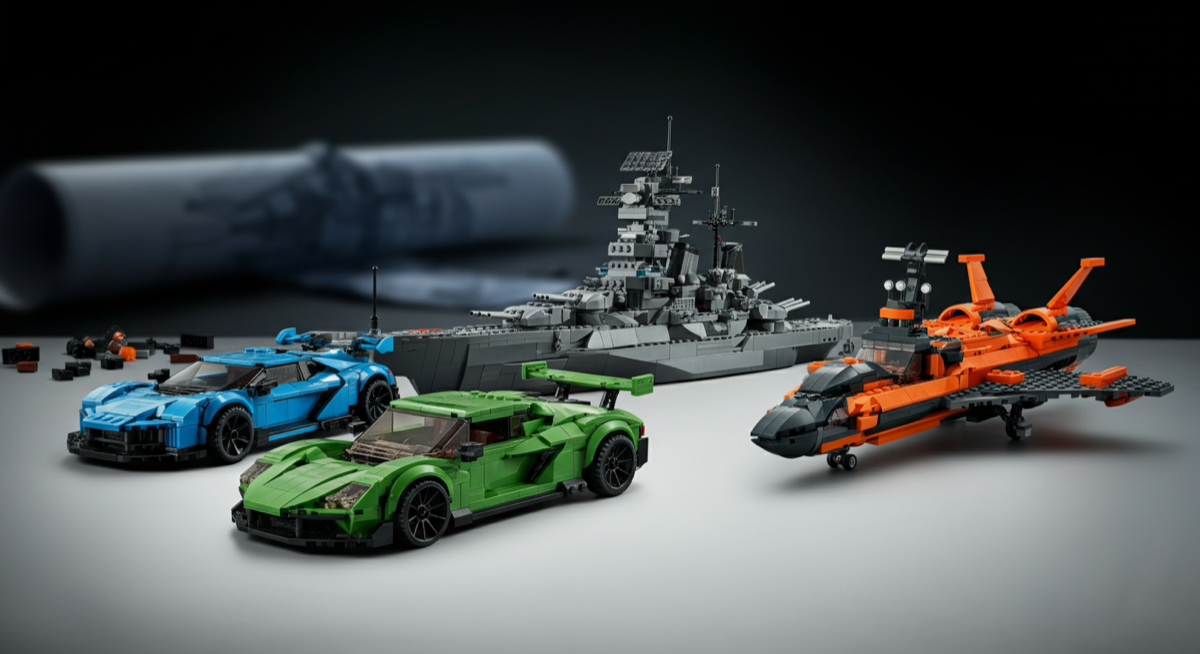
Embarking on the journey of building LEGO MOC vehicles—My Own Creations—is one of the most rewarding and creative aspects of the LEGO hobby. Whether you dream of crafting a custom supercar, a majestic battleship, or an innovative aircraft, the fundamental principles involve understanding structural integrity, sourcing the right parts, and applying imaginative building techniques. This guide will equip you with the knowledge to dive into custom LEGO vehicle design, from identifying ideal starter sets for parts to mastering advanced building concepts, ensuring your creations are not only visually stunning but also robust and functional.

The World of LEGO MOC Vehicles: What, Why, and How
The term "MOC" stands for My Own Creation, and it represents the pinnacle of LEGO creativity: building something entirely from your imagination, without instructions. For vehicle enthusiasts, LEGO MOCs offer an unparalleled opportunity to design and construct anything from realistic replicas of existing cars, ships, and aircraft to fantastical vehicles born purely from your mind. This pursuit is popular among both teens and Adult Fans of LEGO (AFOLs) who have an engineering bent, a passion for automotive design, or a simple love for creative problem-solving.
Why Build LEGO MOC Vehicles?
- Unleash Creativity: There are no limits! You can design vehicles that LEGO hasn't, or put your unique spin on existing concepts.
- Develop Engineering Skills: MOC building hones your understanding of structural stability, weight distribution, gearing, and aerodynamics (even in brick form!).
- Problem-Solving: Every MOC presents challenges, from getting the right curve to ensuring functionality. Overcoming these is incredibly satisfying.
- Personalization: Your MOC is truly yours, a unique expression of your interests and skills.
- Community Engagement: Share your MOCs online, get feedback, and be inspired by a global community of builders.
Key Takeaways for MOC Building
- MOCs are My Own Creations, built without instructions.
- Focus on both aesthetics and functionality for compelling vehicle designs.
- MOC building is an excellent way to develop creative and engineering skills.
Essential Building Blocks: Sets for Your Vehicle MOC Parts Collection
To build impressive MOC vehicles, you'll need a diverse collection of LEGO bricks. While buying individual bricks from services like BrickLink or LEGO's Pick a Brick is an option, many experienced MOC builders start by acquiring specific sets that are rich in useful parts, unique elements, or advanced building techniques. These sets serve as fantastic "part packs" and inspiration hubs.
Top LEGO Themes for Vehicle MOC Parts
When it comes to sourcing parts for your custom cars, ships, and aircraft, certain LEGO themes stand out for their utility and versatility. These themes often provide specialized pieces, robust structural elements, and inspiration for functional mechanisms.
-
LEGO Technic: The Engineer's Dream
LEGO Technic sets are an absolute goldmine for MOC vehicle builders. They are designed around realistic functions like working gearboxes, steering mechanisms, suspensions, and pneumatic systems. These sets are crucial for understanding and replicating complex functionalities in your own creations. They provide beams, pins, gears, axles, and panels that are essential for strong, functional MOCs.
- Why it's recommended: Unparalleled for functional mechanics, robust structures, and specialized parts like shock absorbers, differentials, and universal joints.
- Who it's perfect for: Builders interested in realistic functions, complex engineering, and durable models.
- Recommendation: While no specific Technic set from our database, look for any larger LEGO Technic car sets or crane sets as they often contain a wealth of useful gears, panels, and structural elements. Even smaller sets can yield valuable unique parts.
-
LEGO Creator Expert / Icons Vehicles: Detail and Design Excellence
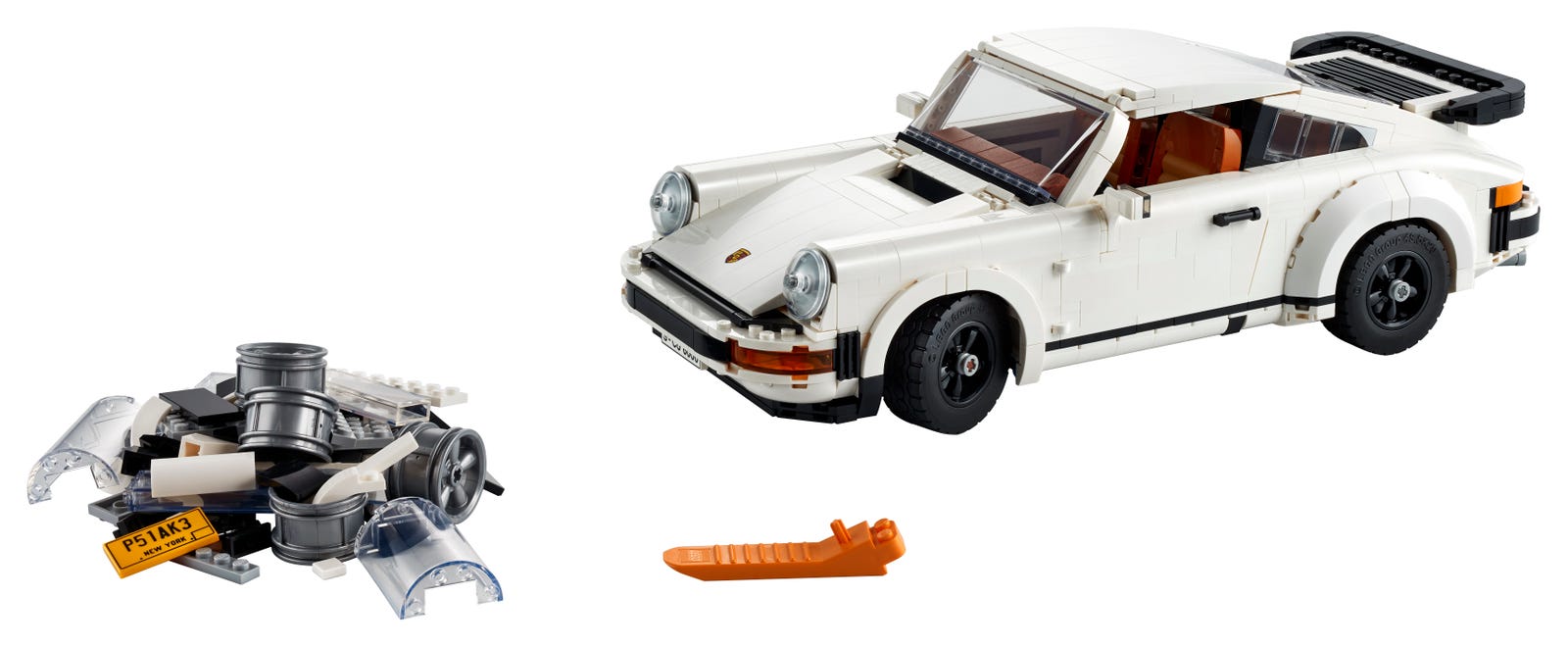
These sets are renowned for their incredible detail, realistic scaling, and advanced building techniques. Sets like the LEGO Set 10295 (Porsche 911) or the LEGO Set 10304 (Chevrolet Camaro Z28) offer a masterclass in shaping, interior design, and intricate exterior detailing. They are fantastic sources for specialized curves, tiles, and unique color schemes.
- Why it's recommended: Excellent for intricate detailing, advanced shaping techniques, and a wide array of specialized plates and tiles. Often includes unique recolors of common parts.
- Who it's perfect for: Builders focused on aesthetic realism, display-quality models, and learning advanced SNOT (Studs Not On Top) techniques.
- Recommendation: Consider dismantling a Creator Expert car set if you're serious about parts. Even if you keep the model, studying its construction will provide invaluable insights for your own MOCs.
-
LEGO Speed Champions: Iconics at a Smaller Scale
Speed Champions sets offer a fantastic selection of iconic sports cars and race cars at a more accessible price point and scale. They are excellent for acquiring useful car parts like wheel arches, windscreens, and unique printed elements. They also demonstrate how to capture the essence of a real vehicle with a limited piece count, a valuable skill for any MOC builder.
- Why it's recommended: Great source of specific vehicle parts (wheels, windscreens, sloped bricks) in a smaller, manageable scale.
- Who it's perfect for: Car enthusiasts, those looking for specific car-related parts, and builders who enjoy minifigure-scale vehicles.
- Recommendation: Collect a few LEGO Speed Champions sets to build up a versatile inventory of car-specific pieces.
-
LEGO Creator 3-in-1 Vehicles: Versatility and Inspiration
These sets are amazing for MOC builders because they explicitly encourage rebuilding. Each set offers instructions for three different models, showcasing the versatility of its parts inventory. A set like the LEGO Creator 3-in-1 Supersonic Jet (Item #31126) provides a great selection of common and uncommon parts useful for various vehicle types.
- Why it's recommended: Excellent part diversity, encourages deconstruction and reconstruction, and offers great value.
- Who it's perfect for: Builders who want a versatile parts collection and enjoy experimenting with different build ideas from a single set.
-
LEGO Classic Creative Boxes: The Foundation
These sets, like the LEGO Classic Creative Brick Box (Item #10698), are pure gold for any MOC builder! They provide a wide assortment of basic bricks, plates, and specialty pieces in various colors. While they don't offer advanced techniques, they are the bread and butter of any serious LEGO collection, providing the fundamental elements for structural stability and shaping.
- Why it's recommended: Essential for a broad base of common bricks, plates, and basic elements in a variety of colors.
- Who it's perfect for: Every MOC builder, from beginner to advanced, as a foundational parts source.
-
LEGO City Vehicles: Everyday Inspiration and Common Parts
While often simpler in design, LEGO City sets provide a great foundation for MOCs, especially for younger builders or those looking for more common vehicle parts for everyday scenarios. Sets like the LEGO City Police Car (Item #60312) offer standard chassis elements, tires, and basic vehicle components.
- Why it's recommended: Good source of common vehicle parts, chassis elements, and basic vehicle designs.
- Who it's perfect for: Builders looking for a diverse range of common vehicle components, especially for minifigure-scale builds.
Mastering the Mechanics: Tips for Realistic Vehicle MOCs
Building a compelling MOC vehicle goes beyond just putting bricks together; it involves thoughtful design, structural integrity, and often, functional elements. Here are some principles to consider:
1. Structural Integrity and Stability
Your vehicle needs to hold together! This is especially true for larger MOCs. Use the "brick-on-brick" technique as much as possible, where bricks overlap to distribute stress. Technic pins and axles are excellent for creating strong sub-assemblies and connecting larger sections.
- Layering: Build up layers of plates and bricks, interlocking them like real-world masonry.
- SNOT (Studs Not On Top): This technique uses bricks with studs on their sides (like headlight bricks or SNOT bricks) to build in different directions, allowing for intricate shaping and stronger connections.
- Internal Bracing: For larger models, internal Technic frames or brick-built bracing can prevent sagging or collapse.
2. Functionality: Steering, Suspension, and More
Adding working features elevates a MOC from a static model to an interactive creation. This is where Technic elements truly shine.
- Steering: Rack-and-pinion gearing is common for realistic steering. Experiment with different gear ratios for responsiveness.
- Suspension: Rubber Technic elements, springs, or even flexible Technic beams can create working suspension systems for off-road vehicles.
- Opening Doors/Hoods/Trunks: Hinges, ball joints, and clip connections are perfect for creating articulated parts.
- Engines: Many builders create detailed engine bays, complete with brick-built engines that sometimes even feature moving pistons (often driven by external gears).
3. Aesthetics and Detailing
The visual appeal of your MOC is what captures attention. Pay close attention to scale, proportion, and details.
- Reference Material: Look at photos and blueprints of real vehicles for inspiration on curves, proportions, and unique features.
- Color Scheme: Choose a consistent color palette. Sometimes, a limited palette can make a MOC look more professional.
- Greebling: This is the art of adding small, intricate details using various small parts (grilles, tiles, small plates) to create a sense of mechanical complexity or texture, often seen on sci-fi ships but applicable to vehicles too.
- Smooth Finishes: Tiles and sloped elements can give your vehicle a sleek, polished look, covering exposed studs where desired.
Beyond the Road: Crafting LEGO MOC Ships and Aircraft
While cars are a popular starting point, the principles of MOC building extend beautifully to ships and aircraft, presenting unique challenges and opportunities.
Building LEGO MOC Ships
From historical galleons to modern battleships or futuristic cruisers, LEGO ships require careful attention to hull shaping, stability, and scale.
- Hull Design: This is often the most challenging part. Builders use various techniques, including traditional brick-building, SNOT, or even large specialized boat hull pieces. Curved slopes and wedges are your best friends here.
- Waterline vs. Full Hull: Decide if your ship will be a "waterline model" (flat bottom, as if floating) or a full hull. Full hulls require more complex shaping.
- Detailing: Decks, cabins, masts, rigging (string elements are useful!), weaponry, and lifeboats all add to the realism.
- Stability: For larger ships, internal Technic frameworks are almost essential to prevent sagging and ensure rigidity.
Building LEGO MOC Aircraft
Airplanes, helicopters, and spacecraft push the boundaries of LEGO building with their aerodynamic shapes, intricate wings, and sometimes complex landing gear.
- Aerodynamic Shaping: Smooth curves and angles are paramount. Slopes, wedges, and advanced SNOT techniques are used extensively to create sleek fuselages and wings.
- Wing Design: Wings need to be strong enough to support their own weight and often feature intricate internal structures. They also need to attach securely to the fuselage.
- Landing Gear: Retractable landing gear is a common and impressive feature for aircraft MOCs, often utilizing Technic mechanisms or even simple hinge/clip systems for smaller models.
- Cockpits and Engines: Detailed cockpits with control panels and brick-built jet engines or propellers significantly enhance realism.
- Recommendation: While not strictly a vehicle set, larger LEGO Star Wars ships like the LEGO Set 75192 (Millennium Falcon) or LEGO Set 75301 (X-Wing Starfighter) offer incredible building techniques for complex aircraft and spacecraft MOCs. Studying their construction can provide a wealth of ideas for advanced structural and aesthetic design.
Unexpected Sources: Architecture Sets for Unique MOC Parts
While focused on buildings, LEGO Architecture sets can be surprisingly useful for MOC vehicle builders, offering a unique palette of parts, colors, and sophisticated building techniques that can be repurposed for intricate vehicle details, textures, or even structural components. These sets often contain a high density of small plates, tiles, grille bricks, and unique window elements that can add incredible realism and detail to your custom builds.
Here's how some of our featured Architecture sets can contribute to your vehicle MOC parts collection:
-
: Notre-Dame de Paris (4382 pieces)
This massive set will be a treasure trove of small, intricate pieces. Think about the hundreds of light gray, dark gray, and tan tiles, plates, and grille bricks. These are perfect for adding detailed textures to engine bays, control panels, or weathered exteriors of ships and aircraft. The gothic architectural elements can be broken down into fantastic greebling components.
-
: Neuschwanstein Castle ($279.99, 3455 pieces)
Similar to Notre-Dame, this set offers a vast array of small, detailed pieces in muted colors (white, light gray, dark tan). The many sloped bricks and roof tiles could be adapted for unique aerodynamic shaping on fantasy airships or intricate hull plating on historical vessels. Its sheer volume of basic bricks and plates also provides a solid foundation.
-
: Himeji Castle (2125 pieces)
The distinctive white and dark grey colors, along with specialized roof tiles and curved elements, make this a source for unique paneling or decorative accents on more stylized MOC vehicles. The smaller plates and tiles are always useful for fine detailing.
-
: Taj Mahal (2024 pieces)
This set is almost entirely white, making it ideal for builders who need a large quantity of white bricks, plates, and arches. These can form the base of sleek, modern vehicles or provide clean paneling for aircraft. The domes provide interesting curved elements that could be re-imagined as unique engine covers or futuristic vehicle components.
-
: Trevi Fountain ($159.99, 1880 pieces)
With its focus on water and intricate sculptures, this set provides many translucent blue elements, curved slopes, and textured bricks. These could be repurposed for water effects on ship MOCs, unique windscreens, or even stylized engine exhausts. The detailed statue elements might inspire unique figureheads or decorative vehicle emblems.
-
: Statue of Liberty (1685 pieces)
While its primary color is Sand Green, which is less common for vehicles, this set offers a substantial quantity of unique structural elements and small plates. The intricate layering used to create the statue's folds can inspire techniques for complex curved surfaces on vehicles. The golden elements could be used for accenting details.
-
: Great Pyramid of Giza (1476 pieces)
This set is a fantastic source of tan and dark tan bricks and plates, as well as unique sloping elements. These colors and shapes are perfect for creating desert-themed vehicles, rugged off-roaders, or even certain sci-fi craft with a weathered aesthetic. The water elements can also be repurposed.
-
: Architecture Studio (1211 pieces)
This set is designed specifically for creative building, offering a wide assortment of white and transparent bricks, plates, and specialized elements. It's a fantastic starter kit for understanding basic architectural forms, which translates well to vehicle structures. The variety of slopes, curves, and SNOT bricks is invaluable.
-
: Trafalgar Square (1197 pieces)
This set provides a good mix of grey, tan, and dark red elements, along with many small tiles and architectural details. The lampposts and fountains could yield interesting parts for vehicle accessories or unique structural elements.
-
: United States Capitol Building (1032 pieces)
Rich in white bricks, plates, and domed elements, this set offers plenty of components for sleek, government-style vehicles or intricate architectural details on larger MOCs. The columns can be adapted for unique structural or aesthetic purposes.
By looking beyond the intended purpose of Architecture sets, MOC builders can discover a wealth of specialized parts and unique color schemes to bring their vehicle creations to life with an unmatched level of detail and sophistication.
Quick Comparison Table: Top MOC-Friendly LEGO Themes for Vehicles
Here's a quick overview of themes best suited for different MOC vehicle building needs:
| Theme | Primary Use for MOC Vehicles | Key Part Types | Complexity Level | Best For |
|---|---|---|---|---|
| LEGO Technic | Functional mechanics, robust structures | Gears, pins, axles, panels, beams, shock absorbers | Advanced | Realistic functions, large-scale models |
| LEGO Creator Expert/Icons | Detailed aesthetics, advanced shaping | Specialized curves, tiles, unique colors, SNOT elements | Intermediate to Advanced | Display models, intricate replicas |
| LEGO Speed Champions | Iconic car parts, minifigure scale | Wheel arches, windscreens, sloped bricks, small plates | Beginner to Intermediate | Small, detailed cars, specific vehicle components |
| LEGO Creator 3-in-1 | Versatile part selection, rebuilding inspiration | Diverse range of common & uncommon bricks, plates, slopes | Beginner to Intermediate | Experimentation, varied vehicle types |
| LEGO Classic | Foundational brick inventory | Basic bricks, plates, windows, doors in various colors | Beginner | Starting a parts collection, basic structures |
| LEGO Architecture | Unique detailing, specialized textures | Small plates, tiles, grille bricks, translucent elements, slopes | Intermediate | Adding intricate detail, unique color palettes |
What to Consider When Buying for Your MOC Vehicle Collection
Building a robust parts inventory for MOC vehicles is an ongoing process. Here's what to keep in mind when expanding your collection:
- Part Diversity vs. Specificity: Do you need a broad range of general bricks (e.g., from LEGO Classic sets) or specific, specialized parts (e.g., unique Technic gears or Creator Expert windscreens)? Balance your needs.
- Color Palette: Decide on a primary color scheme for your next MOC, then acquire parts in those colors. Sometimes buying a set for a few unique colored parts is worth it.
- Budget: MOC building can be an investment. Smaller sets (like Speed Champions or smaller City vehicles) are great for specific parts and techniques in the $20-$50 range. Larger Technic or Creator Expert sets provide extensive inventories but come at a higher price point (often $100+).
- Functionality Needs: If your MOC requires working steering, suspension, or complex mechanisms, prioritize Technic sets. If it's about aesthetic realism, Creator Expert sets are key.
- Storage Solutions: As your collection grows, efficient storage becomes critical. Consider sorting by part type, color, or both to easily find the pieces you need.
Frequently Asked Questions About LEGO MOC Vehicles
What does MOC stand for in LEGO?
MOC stands for My Own Creation. It refers to any LEGO model that a builder designs and constructs entirely by themselves, without using official LEGO instructions. This includes custom cars, ships, aircraft, buildings, and anything else imaginable.
What are the best LEGO themes for MOC vehicles?
The best themes for MOC vehicles depend on your focus. For realistic functions and structural components, LEGO Technic is unparalleled. For detailed aesthetics and advanced shaping, LEGO Creator Expert/Icons vehicles are excellent. LEGO Speed Champions offers great car-specific parts, while LEGO Creator 3-in-1 sets provide versatile parts for experimentation. Don't forget LEGO Classic boxes for foundational bricks and even LEGO Architecture sets for unique detailing elements.
How do I start building my first LEGO MOC vehicle?
Start small! Pick a simple vehicle concept, like a basic car or a small plane. Begin by sketching your idea or finding reference images. Then, gather a selection of basic bricks, plates, and wheels. Focus on the core structure first, then add details. Don't be afraid to experiment, deconstruct, and rebuild. Many builders find it helpful to start by modifying an existing official LEGO set to learn techniques before going completely custom.
Where can I get ideas and inspiration for LEGO MOC vehicles?
There are countless sources of inspiration! Look at real-world vehicles, concept art, and even other LEGO MOCs online. Websites like Flickr, Instagram (using #LEGOMOC, #LEGOCar, #LEGOShip), BrickLink's MOC section, and dedicated LEGO fan sites are full of incredible creations. Studying official LEGO sets, especially Technic and Creator Expert, can also teach you advanced building techniques.
What are some common challenges when building LEGO MOC vehicles?
Common challenges include achieving structural stability, especially for larger or more complex models; ensuring aesthetic consistency (e.g., smooth curves, seamless paneling); integrating functional elements like steering or suspension; and dealing with limited parts in specific colors or shapes. Overcoming these challenges is part of the fun and learning experience of MOC building!
Can I sell my LEGO MOCs or instructions?
Yes, many LEGO MOC builders do sell their custom models or digital building instructions online. Platforms like Rebrickable, BrickLink, or even personal websites are popular for sharing and selling MOC designs. However, be mindful of intellectual property if your MOC is based on a copyrighted design (e.g., a specific movie car). For original creations, selling instructions or models is a great way to share your passion and potentially earn some income.
Are Architecture sets actually useful for vehicle MOCs?
Absolutely! While not immediately obvious, LEGO Architecture sets can be incredibly useful. They often contain a high density of small, intricate parts like tiles, grille bricks, modified plates, and unique slopes in a specific color palette. These elements are perfect for adding fine detailing, greebling, or creating unique textures on vehicle surfaces, cockpits, or engine bays. They encourage thinking outside the box for part application.
Conclusion
Building LEGO MOC vehicles is a deeply rewarding endeavor that combines creativity, engineering, and sheer passion for LEGO. By leveraging the diverse range of parts found in themes like Technic, Creator Expert, Speed Champions, and even the often-overlooked Architecture sets, you can construct anything your imagination dreams up. Remember to focus on both structural integrity and aesthetic appeal, and don't be afraid to experiment. The journey of MOC building is one of continuous learning and boundless possibilities. So, gather your bricks, find your inspiration, and start building your next magnificent LEGO MOC vehicle today!
Unleash your creativity with LEGO MOC vehicles! This guide provides expert tips, essential sets for parts, and inspiration to build custom cars, ships, and aircraft. Discover how to build your own unique LEGO creations.
LEGO MOC vehicles, custom LEGO cars, LEGO ships, LEGO aircraft, LEGO MOC guide, LEGO Technic MOCs, Creator Expert MOCs, LEGO building tips, unique LEGO parts, LEGO MOC inspiration
Dive into the exciting world of LEGO MOC vehicles! Learn how to build custom cars, ships, and aircraft with expert tips on parts, techniques, and essential LEGO sets. Unleash your creativity today!
Q: What does MOC stand for in LEGO?
A: MOC stands for My Own Creation. It refers to any LEGO model that a builder designs and constructs entirely by themselves, without using official LEGO instructions. This includes custom cars, ships, aircraft, buildings, and anything else imaginable.
Q: What are the best LEGO themes for MOC vehicles?
A: The best themes for MOC vehicles depend on your focus. For realistic functions and structural components, LEGO Technic is unparalleled. For detailed aesthetics and advanced shaping, LEGO Creator Expert/Icons vehicles are excellent. LEGO Speed Champions offers great car-specific parts, while LEGO Creator 3-in-1 sets provide versatile parts for experimentation. Don't forget LEGO Classic boxes for foundational bricks and even LEGO Architecture sets for unique detailing elements.
Q: How do I start building my first LEGO MOC vehicle?
A: Start small! Pick a simple vehicle concept, like a basic car or a small plane. Begin by sketching your idea or finding reference images. Then, gather a selection of basic bricks, plates, and wheels. Focus on the core structure first, then add details. Don't be afraid to experiment, deconstruct, and rebuild. Many builders find it helpful to start by modifying an existing official LEGO set to learn techniques before going completely custom.
Q: Where can I get ideas and inspiration for LEGO MOC vehicles?
A: There are countless sources of inspiration! Look at real-world vehicles, concept art, and even other LEGO MOCs online. Websites like Flickr, Instagram (using #LEGOMOC, #LEGOCar, #LEGOShip), BrickLink's MOC section, and dedicated LEGO fan sites are full of incredible creations. Studying official LEGO sets, especially Technic and Creator Expert, can also teach you advanced building techniques.
Q: What are some common challenges when building LEGO MOC vehicles?
A: Common challenges include achieving structural stability, especially for larger or more complex models; ensuring aesthetic consistency (e.g., smooth curves, seamless paneling); integrating functional elements like steering or suspension; and dealing with limited parts in specific colors or shapes. Overcoming these challenges is part of the fun and learning experience of MOC building!
Q: Can I sell my LEGO MOCs or instructions?
A: Yes, many LEGO MOC builders do sell their custom models or digital building instructions online. Platforms like Rebrickable, BrickLink, or even personal websites are popular for sharing and selling MOC designs. However, be mindful of intellectual property if your MOC is based on a copyrighted design (e.g., a specific movie car). For original creations, selling instructions or models is a great way to share your passion and potentially earn some income.
Q: Are Architecture sets actually useful for vehicle MOCs?
A: Absolutely! While not immediately obvious, LEGO Architecture sets can be incredibly useful. They often contain a high density of small, intricate parts like tiles, grille bricks, modified plates, and unique slopes in a specific color palette. These elements are perfect for adding fine detailing, greebling, or creating unique textures on vehicle surfaces, cockpits, or engine bays. They encourage thinking outside the box for part application.
Use Our Tools to Go Further
Get more insights about the sets mentioned in this article with our free LEGO tools