
Collaborative LEGO Building: Group Projects and Events
Supporting Free Content
When you purchase through our links, we earn a small commission at no extra cost to you. As an Amazon Associate and eBay Partner, this helps us keep bringing you expert LEGO® reviews and guides. Thank you for your support!
Collaborative LEGO building offers a unique and incredibly rewarding experience, transforming individual brick-laying into a shared journey of creativity, problem-solving, and connection. Whether you're planning a family fun night, a team-building exercise, or a large-scale community event, building LEGO together enhances communication, fosters teamwork, and results in magnificent creations that everyone can be proud of. From intricate architectural marvels to sprawling custom landscapes, group projects leverage diverse skills and perspectives, making the building process even more engaging and the final result truly spectacular.
The Power of Collaborative LEGO Building
There's a special kind of magic that happens when multiple minds and hands come together over a pile of LEGO bricks. Collaborative LEGO building goes beyond simply following instructions; it's an exercise in shared vision, communication, and collective accomplishment. It transforms a solitary hobby into a vibrant social activity, suitable for all ages and skill levels.
Why Build Together? The Benefits of Group LEGO Projects
Engaging in group LEGO projects offers a wealth of advantages, both personal and interpersonal:
- Enhanced Communication: Builders must articulate their ideas, listen to others, and negotiate solutions, strengthening verbal and non-verbal communication skills.
- Teamwork and Cooperation: Assigning roles, sharing tasks, and working towards a common goal builds a sense of unity and collective responsibility.
- Problem-Solving Skills: Encountering challenges (missing pieces, structural instability, design disagreements) becomes a group effort to brainstorm and implement solutions.
- Creative Expression: Multiple perspectives lead to more innovative designs and unexpected solutions, pushing the boundaries of what's possible.
- Shared Accomplishment: The joy of completing a complex model together is often more profound than individual achievements, fostering a sense of pride and camaraderie.
- Stress Reduction and Mindfulness: The focused, hands-on nature of LEGO building can be incredibly therapeutic, and sharing this experience can multiply its calming effects.
- Skill Development: From fine motor skills in younger builders to advanced architectural planning for adults, collaborative building hones a wide array of abilities.
For organizations, LEGO-based team-building workshops are increasingly popular, leveraging the playful yet structured nature of bricks to foster innovation, strategic thinking, and effective communication among employees. Academic studies, such as those published in journals like the "International Journal of Management Education," often highlight how hands-on activities like LEGO Serious Play can improve team dynamics and problem-solving in professional settings.
Key Takeaways for Collaborative Building
- Collaborative LEGO building boosts communication, teamwork, and problem-solving skills.
- It's a fantastic activity for families, friends, schools, and corporate team-building.
- Shared accomplishment fosters stronger bonds and a greater sense of pride.
Choosing the Right LEGO Set for Your Group Project
The key to a successful collaborative build lies in selecting a set that matches your group's size, skill level, and aspirations. Large, intricate sets from themes like LEGO Architecture are particularly well-suited for group projects due to their complexity and sheer number of pieces, allowing multiple builders to work simultaneously on different sections.
Top LEGO Architecture Sets for Group Building
The LEGO Architecture series, known for its stunning replicas of iconic global landmarks, provides an ideal canvas for group projects. These sets often feature thousands of pieces, intricate details, and a multi-step building process that can be easily divided among participants. Here are some of our top recommendations:
For large, dedicated groups looking for an epic challenge:
-
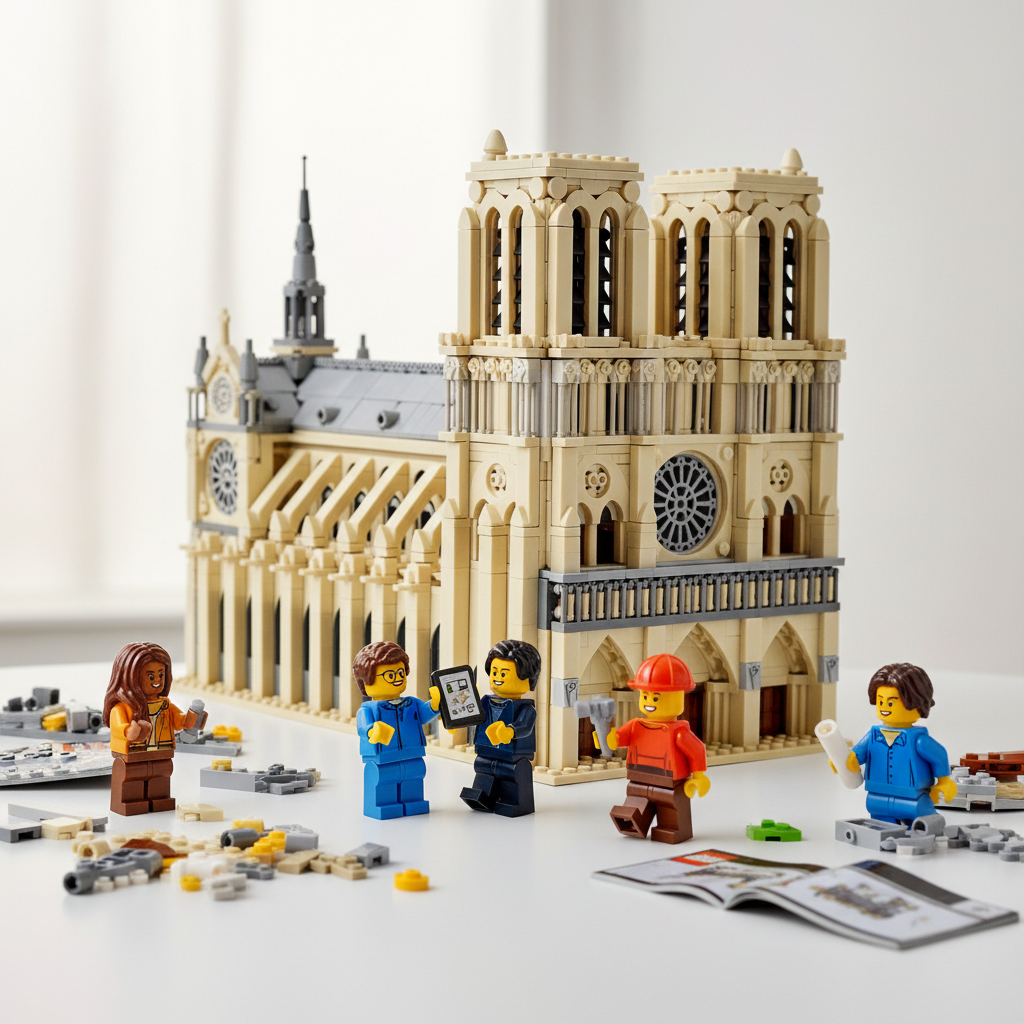
: Notre-Dame de Paris
- Piece Count: 4382
- Why it's great for groups: The sheer scale and intricate details of this magnificent cathedral offer numerous sub-assemblies. Different builders can tackle the nave, transepts, choir, spires, and flying buttresses simultaneously. Its historical significance also provides a rich context for discussion during the build.
- Who it's perfect for: Experienced adult builders (AFOLs - Adult Fans of LEGO) or families with older children looking for a long-term, rewarding project.
-
: Neuschwanstein Castle
- Price: $279.99
- Piece Count: 3455
- Why it's great for groups: This fairytale castle, with its multiple towers, turrets, and detailed stonework, naturally breaks down into distinct sections. Groups can assign different members to various architectural elements, coming together to assemble the grand structure.
- Who it's perfect for: Groups who appreciate historical architecture and a more romantic, intricate building experience.
-
: Robie House
- Piece Count: 2276
- Why it's great for groups: Frank Lloyd Wright's iconic prairie-style house features distinctive horizontal lines and open-plan design. Its modular nature allows different builders to construct various sections of the house, from the foundation to the roof, before combining them.
- Who it's perfect for: Architecture enthusiasts and groups who enjoy modernist design and a sophisticated building challenge.
For medium-sized groups or those seeking a slightly less daunting, but still impressive, project:
-
: Himeji Castle
- Piece Count: 2125
- Why it's great for groups: Japan's iconic "White Heron Castle" features multiple tiers and distinct sections. Builders can work on different levels of the castle, the surrounding walls, or the intricate base, making it ideal for collaborative efforts.
- Who it's perfect for: Groups interested in Asian architecture and those who appreciate intricate detailing and historical significance.
-
: Taj Mahal
- Piece Count: 2024
- Why it's great for groups: The symmetrical design of the Taj Mahal lends itself perfectly to collaborative building. Different people can work on the main dome, the minarets, and the base structure, then combine their efforts for a grand reveal.
- Who it's perfect for: Groups who enjoy iconic landmarks and symmetrical, elegant designs.
-
: Trevi Fountain
- Price: $159.99
- Piece Count: 1880
- Why it's great for groups: The Trevi Fountain's complex sculptures and water effects provide varied building challenges. One person might focus on the statues, another on the architectural elements, and another on the water features.
- Who it's perfect for: Groups who appreciate intricate sculptural details and European landmarks.
-
: Empire State Building
- Piece Count: 1767
- Why it's great for groups: Its towering, modular structure means multiple builders can work on different "floors" or sections of the skyscraper simultaneously, stacking them as they go.
- Who it's perfect for: Fans of New York City and groups who enjoy building upwards and creating impressive scale.
For smaller groups, family projects, or shorter building sessions:
-
: Statue of Liberty
- Piece Count: 1685
- Why it's great for groups: The base and the statue itself can be built in parallel, then combined. Its iconic nature makes it a satisfying project for a small team.
- Who it's perfect for: Patriot enthusiasts or groups looking for a recognizable, medium-complexity build.
-
: The White House
- Piece Count: 1483
- Why it's great for groups: With its distinct wings and central structure, different builders can easily tackle separate sections before joining them to form the complete executive residence.
- Who it's perfect for: History buffs and groups desiring a moderately challenging, highly recognizable landmark.
-
: Great Pyramid of Giza
- Piece Count: 1476
- Why it's great for groups: This set provides a unique cross-section view, allowing builders to work on the exterior pyramid structure, the internal chambers, and the surrounding Nile River landscape simultaneously.
- Who it's perfect for: Groups fascinated by ancient history and architectural cutaway models.
-
: Trafalgar Square
- Piece Count: 1197
- Why it's great for groups: This bustling London landmark includes multiple distinct elements like Nelson's Column, fountains, and surrounding buildings, making it easy to divide tasks.
- Who it's perfect for: Anglophiles and groups who enjoy urban landscapes with varied building components.
-
: United States Capitol Building
- Piece Count: 1032
- Why it's great for groups: The Capitol Building's distinct dome and wings allow for natural division of labor, making it a great choice for patriotic builders.
- Who it's perfect for: Those interested in American history and classic architecture.
-
: Fallingwater
- Piece Count: 811
- Why it's great for groups: Frank Lloyd Wright's masterpiece, built over a waterfall, can be approached by separating the house structure from its natural rock and water base.
- Who it's perfect for: Admirers of modern architecture and natural landscapes, ideal for a smaller, focused group.
Unleash Creativity with Custom Group Builds (MOCs)
Beyond official sets, groups can embark on a MOC (My Own Creation) project. This involves designing and building something entirely from scratch using loose bricks. For this, a foundational set like the is invaluable.
-
: Architecture Studio
- Piece Count: 1211
- Why it's great for groups: This set provides a versatile collection of monochromatic bricks, perfect for conceptualizing and prototyping architectural designs without the constraints of a specific model. It encourages pure creative collaboration.
- Who it's perfect for: Design students, creative teams, or groups wanting to explore their own architectural ideas and master building techniques from the included guidebook.
Other retired Architecture sets like Imperial Hotel, while harder to find new, also offer intricate designs that can inspire or be adapted for group MOC projects if you have access to their instructions or pieces.
Quick Comparison: Top Collaborative Architecture Sets
Here's a snapshot of some of the best LEGO Architecture sets for group building:
Tips for a Successful Collaborative Build Event
Planning is crucial for a smooth and enjoyable group LEGO building experience. Here’s how to set your team up for success:
-
Define Roles and Responsibilities:
- Project Manager: Oversees the entire build, ensures communication, and keeps track of progress.
- Instruction Reader(s): Clearly communicates steps to builders. For very large sets, one person can read while others locate bricks.
- Brick Sorter(s): Organizes pieces, either by color, type, or step. This is incredibly helpful and speeds up the process significantly.
- Builder(s): The hands-on constructors. For large sets, divide the instructions into distinct sections (e.g., "You build the left wing, I'll build the right").
-
Prepare Your Workspace:
- Ample Space: Ensure a large, clear table or floor area where everyone can comfortably reach.
- Sorting Trays/Containers: Use plastic containers, tackle boxes, or even baking sheets to sort pieces. This is a game-changer for efficiency.
- Good Lighting: Essential for identifying colors and small pieces.
- Snacks and Drinks: Keep energy levels up!
-
Manage Expectations:
- It's a marathon, not a sprint: Large sets take time. Emphasize enjoyment of the process over speed.
- Mistakes happen: Rebuilding is part of the fun. Encourage patience and a positive attitude.
- Celebrate small victories: Acknowledge when a section is complete or a tricky part is overcome.
-
Encourage Communication:
- Ask questions: "What's the next step?" "Where does this piece go?"
- Offer help: "Can I find those pieces for you?" "Do you need another set of hands here?"
- Share ideas: Especially for MOCs, encourage brainstorming and constructive feedback.
-
Document the Journey:
- Take photos or videos throughout the build process.
- Capture the "before," "during," and "after" moments to remember the shared experience.
What to Consider When Buying for a Group LEGO Project
Before purchasing your next collaborative LEGO set, keep these factors in mind to ensure the best experience for your group:
- Group Size and Age Range: A 4,000-piece set is perfect for 4-6 experienced adults, but might be overwhelming for two younger children. Consider the attention span and dexterity of your participants.
- Experience Level: Are your builders novices or seasoned AFOLs? Choose sets with appropriate complexity. Sets like Architecture Studio are great for all levels if creativity is the goal, while the Notre-Dame requires significant focus.
- Budget: LEGO sets range widely in price. Factor in the cost per builder and how often you plan to build together. Many of the larger Architecture sets, while an investment, offer many hours of collaborative entertainment.
- Theme and Interest: Pick a subject that genuinely excites everyone. Whether it's historical landmarks like Neuschwanstein Castle or modern marvels like Robie House, shared interest fuels motivation.
- Display Space: Large collaborative builds often result in impressive models. Consider where you'll display your finished masterpiece. Sets like and PRODUCT_LINK[Item Number: 21063-1] are substantial display pieces.
- Replayability/Modularity: While most Architecture sets are meant to be built once and displayed, MOC-focused sets or those with modular components can offer more opportunities for future modifications or re-builds.
Conclusion: Build Bonds, One Brick at a Time
Collaborative LEGO building is more than just assembling plastic bricks; it's about connecting with others, fostering creativity, and building lasting memories. The satisfaction of completing a complex model like the Notre-Dame de Paris or the Neuschwanstein Castle as a team is unparalleled. Whether for family fun, educational enrichment, or professional team-building, group LEGO projects offer a rich, engaging, and rewarding experience for everyone involved. So gather your friends, family, or colleagues, choose your next iconic landmark, and embark on an unforgettable building adventure together!
Discover the joy of collaborative LEGO building! Explore top LEGO Architecture sets like Notre-Dame and Neuschwanstein Castle perfect for group projects, family fun, and team events. Learn tips for successful builds and foster creativity together.
Collaborative LEGO building, group LEGO projects, LEGO team building, LEGO events, large LEGO sets, LEGO Architecture, Notre-Dame de Paris LEGO, Neuschwanstein Castle LEGO, LEGO MOCs, family LEGO activities
Unlock the power of teamwork and creativity with collaborative LEGO building! This guide showcases the best LEGO Architecture sets for group projects, offers tips for successful events, and highlights the many benefits of building together. Perfect for families, friends, and team-building.
Q: What are the main benefits of collaborative LEGO building?
A: Collaborative LEGO building significantly enhances communication, fosters teamwork, improves problem-solving skills, and provides a shared sense of accomplishment. It's also a great way to reduce stress and boost creativity among participants.
Q: What LEGO sets are best for group projects?
A: Large, intricate sets from the LEGO Architecture series are ideal for group projects due to their high piece counts and modular designs. Examples include Notre-Dame de Paris (4382 pieces), Neuschwanstein Castle (3455 pieces), and Taj Mahal (2024 pieces). For pure creative collaboration, the Architecture Studio is excellent.
Q: How can we organize a successful group LEGO build event?
A: To organize a successful event, define clear roles (e.g., project manager, instruction reader, brick sorter, builders), prepare a large, organized workspace with good lighting, manage expectations about build time, and encourage open communication. Documenting the process with photos can also add to the fun.
Q: Can LEGO be used for corporate team-building?
A: Absolutely! LEGO-based activities are increasingly popular for corporate team-building. They promote strategic thinking, innovation, and effective communication in a hands-on, engaging format, often referred to as LEGO Serious Play.
Q: What does MOC stand for in the LEGO community?
A: MOC stands for "My Own Creation." It refers to any LEGO model that builders design and construct themselves, rather than following official instructions. Collaborative MOCs are a fantastic way for groups to express their shared creativity.
Q: Are LEGO Architecture sets suitable for children in a group setting?
A: While many LEGO Architecture sets are designed for ages 12+ or 18+ due to complexity and piece count, older children and teenagers can certainly participate in group builds, especially with adult guidance. For younger children, simpler sets or focusing on specific sub-assemblies can be effective, or a general collection of bricks for free-form building.
Q: Where can I find ideas for collaborative LEGO MOCs?
A: You can find inspiration for collaborative LEGO MOCs on platforms like Rebrickable, LEGO Ideas, Flickr LEGO groups, and various AFOL (Adult Fan of LEGO) communities online. Many groups enjoy creating city layouts, fantasy landscapes, or custom vehicles.
Use Our Tools to Go Further
Get more insights about the sets mentioned in this article with our free LEGO tools