
LEGO DUPLO vs Regular LEGO: When Should Your Child Switch?
Supporting Free Content
When you purchase through our links, we earn a small commission at no extra cost to you. As an eBay Partner, this helps us keep bringing you expert LEGO® reviews and guides. Thank you for your support!
Most children move from DUPLO to regular LEGO between about 4 and 6. This guide covers what each system is for, exactly how DUPLO and standard bricks connect, the signs a child is ready, and the 4+ sets on sale now that bridge the gap.
Most children move from DUPLO to regular LEGO somewhere between 4 and 6, and the move goes best when it is gradual. LEGO designs DUPLO for children from about 18 months to 5 years and makes its 4+ sets as the bridge to standard bricks, so the usual path is one 4+ set next to the DUPLO box, then more standard sets as the child's hands and patience catch up. This guide covers what each system is for, exactly how they connect, the signs a child is ready and the first sets worth buying.
DUPLO and regular LEGO at a glance
The figures for pieces and price per piece below come from the sets our catalog lists as on sale with a US list price, as of October 2026.
| LEGO DUPLO | Regular LEGO | |
|---|---|---|
| Designed for | About 18 months to 5 years | 4+ sets from age 4; every other set carries its own age mark |
| Brick size | Twice the size of a standard brick in each dimension | Standard bricks, plates and small parts |
| Small parts | Made for toddlers | Small-parts warning, not for children under 3 |
| Pieces per set | Median 42 across 40 current sets | Median 124 across 37 current 4+ sets |
| Median price per piece | About 87 cents | About 22 cents for 4+ sets, about 10 cents for all standard sets |
| Figures | DUPLO figures | Minifigures; the two do not swap |
| Building style | Open stacking, few steps | Step-by-step instructions, more detail |
What DUPLO is for
LEGO introduced DUPLO in 1969, and the name comes from the Latin for double: every DUPLO brick is twice the size of a standard brick in each of its three dimensions. That size is the point. Bricks that big are easier for small hands to grip, harder to swallow and quick to stack, so a toddler gets a finished tower or a vehicle in minutes without instructions.
DUPLO sets on sale now range from tubs of loose bricks to vehicles, houses and licensed sets with familiar characters:
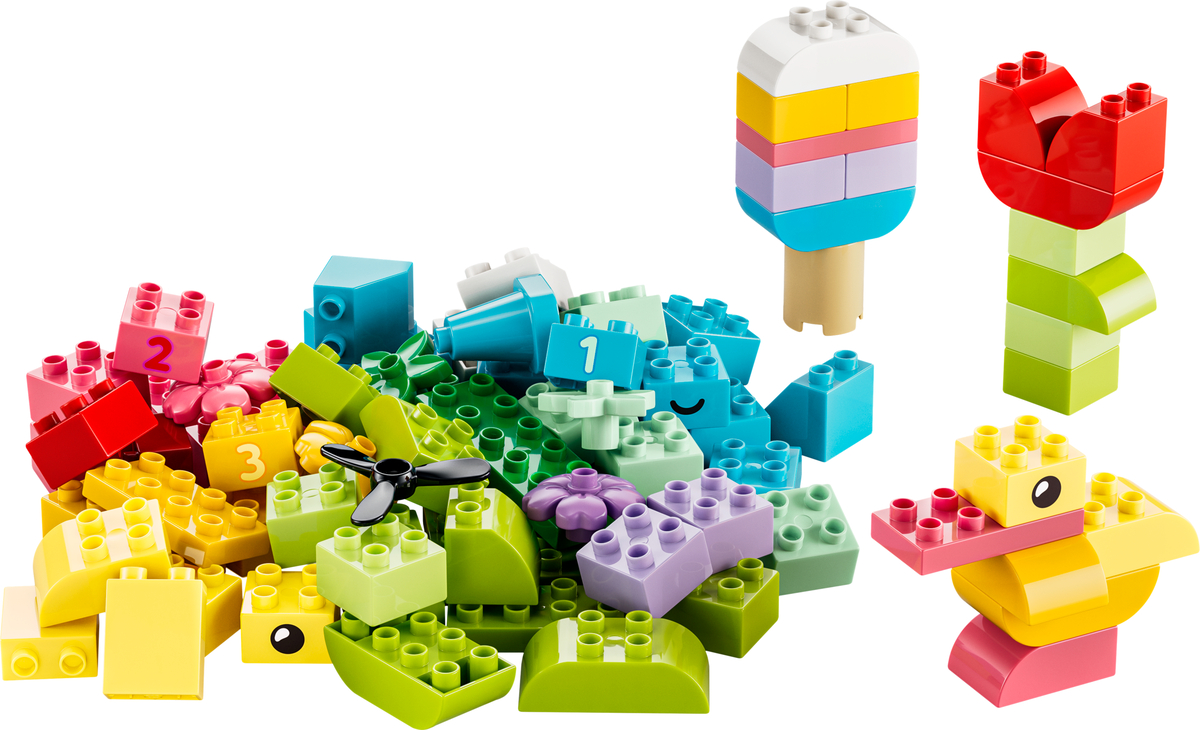
Colorful Creative Box: a tub of loose DUPLO bricks for open building, the simplest way to start.
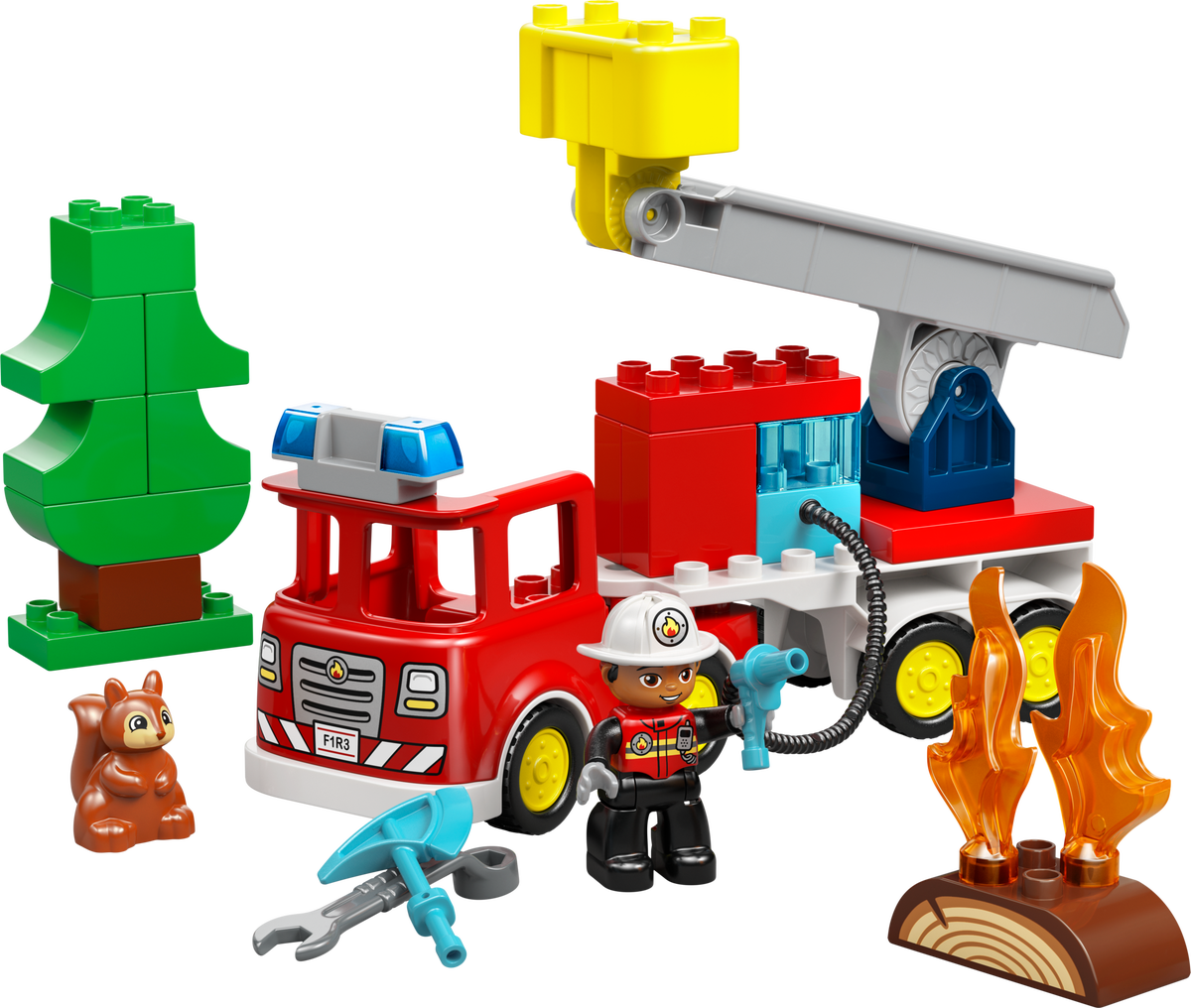
Fire Truck with Hose and Firefighter: a small vehicle set with one figure, a typical first DUPLO set.
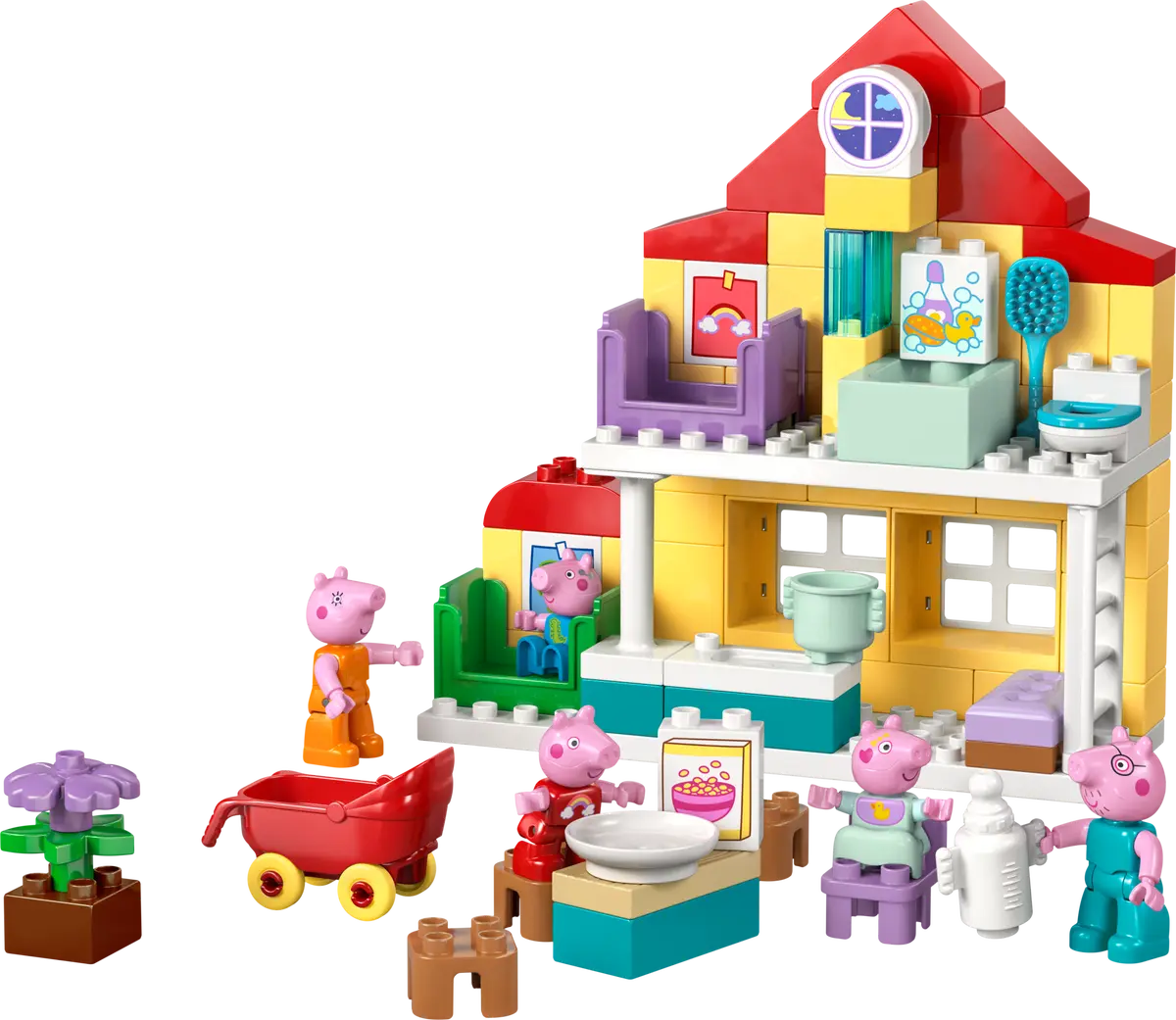
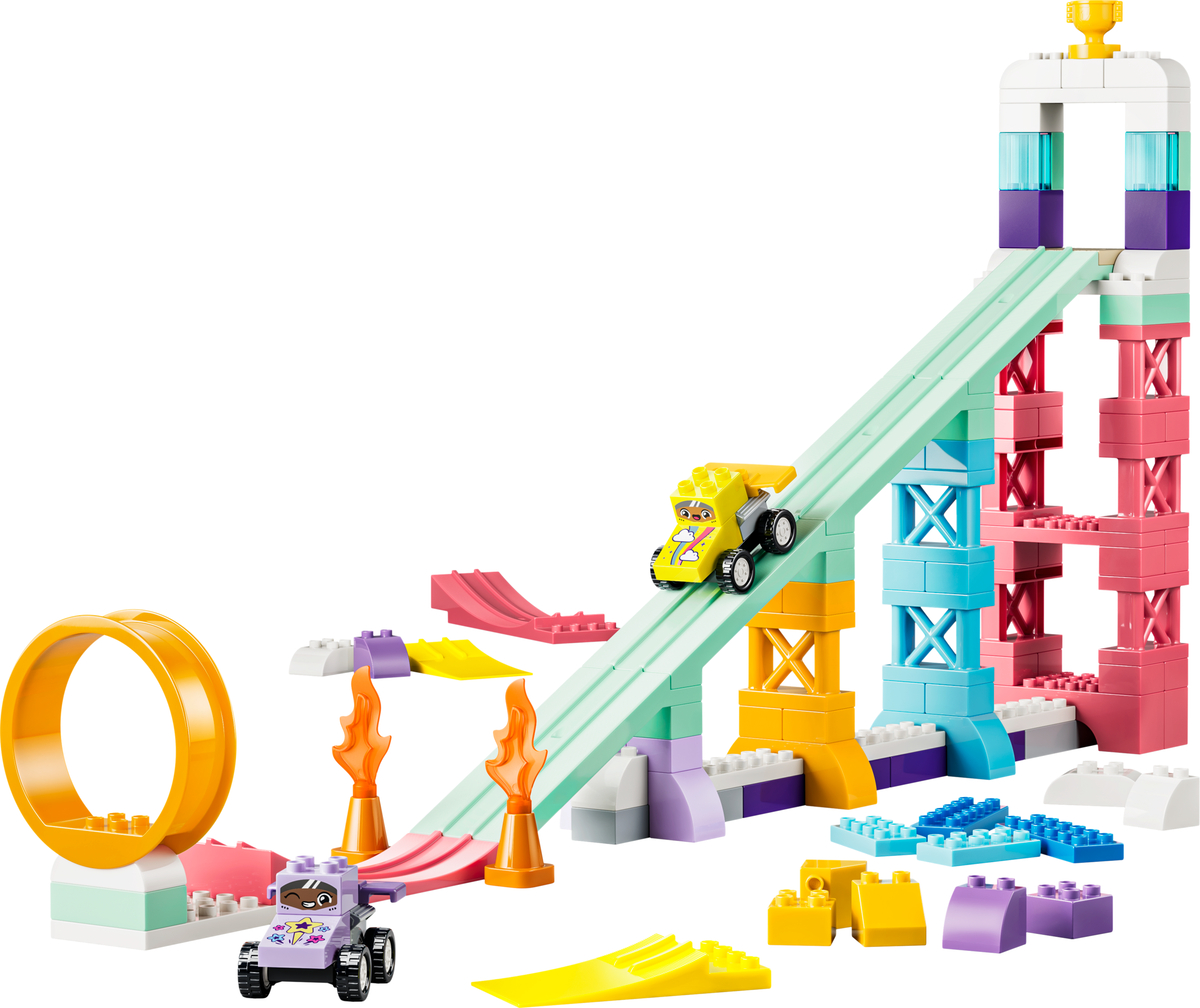
3 in 1 Creative Ramps with Vehicles: three builds from one box, for a child near the top of the DUPLO range.
What changes with regular LEGO
Regular LEGO, the System bricks most sets use, brings minifigures, far more detail and step-by-step instructions, and almost every theme a child knows from screens, from Star Wars to Bluey. LEGO's 4+ mark, which replaced the old LEGO Juniors line in 2019, labels the sets made as the first step: standard-size bricks, simpler instructions and larger starter pieces, so the model looks right even when a step goes astray.
How DUPLO and regular LEGO connect
The two systems are compatible, within limits LEGO spells out on its help pages:
- Standard pieces on DUPLO: only pieces with an even number of studs fit, so a 2x2 or 2x4 brick works, but a 1x2 or 2x3 brick does not.
- Standard bricks on top of DUPLO: they fit on DUPLO bricks that have hollow studs.
- Figures: DUPLO figures do not fit standard bricks, and minifigures do not fit DUPLO, so keep each on its own bricks.
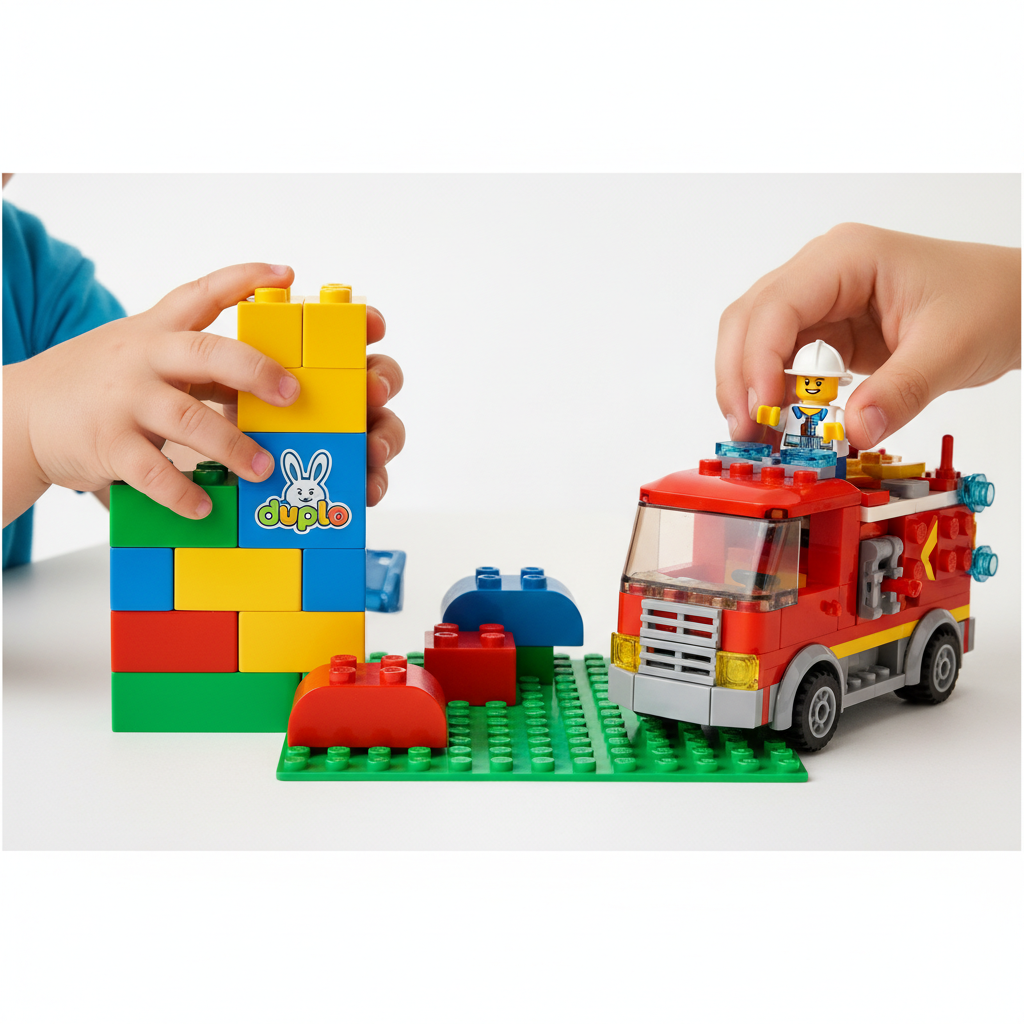
That is enough for mixed builds during the switch: a DUPLO base with standard details on top lets a child use both boxes at once instead of choosing between them.
Signs a child is ready
Ready for a first 4+ set
- No longer puts toys in their mouth
- Can pick up and press together small objects with thumb and finger
- Follows a short sequence of steps
- Asks for the sets an older sibling or friend has, or for a favourite character DUPLO does not make
- Finds DUPLO too easy or calls it a baby toy
Better to wait
- Still mouths toys now and then
- Gives up quickly when a piece does not go on first time
- A baby or toddler in the house could reach loose small pieces
Making the switch
Start with one 4+ set
- Pick a theme the child already loves, so the first standard set is a treat rather than a test.
- Build it together the first time, with the child placing the pieces.
- Keep the small pieces in their own tub, away from younger siblings.
- Leave the DUPLO out and let the child choose which to play with.
Then widen it
- Add a Classic brick box for free building alongside the instruction sets.
- Try mixed builds on a DUPLO base, using the even-stud rule above.
- Move up to sets with the next age mark when 4+ builds start to look easy.
- Store or pass on the DUPLO once it stops coming out.
First regular LEGO sets after DUPLO
These are 4+ sets on sale now, chosen for themes young children already know. Prices, piece counts and expected exit dates are on each card.
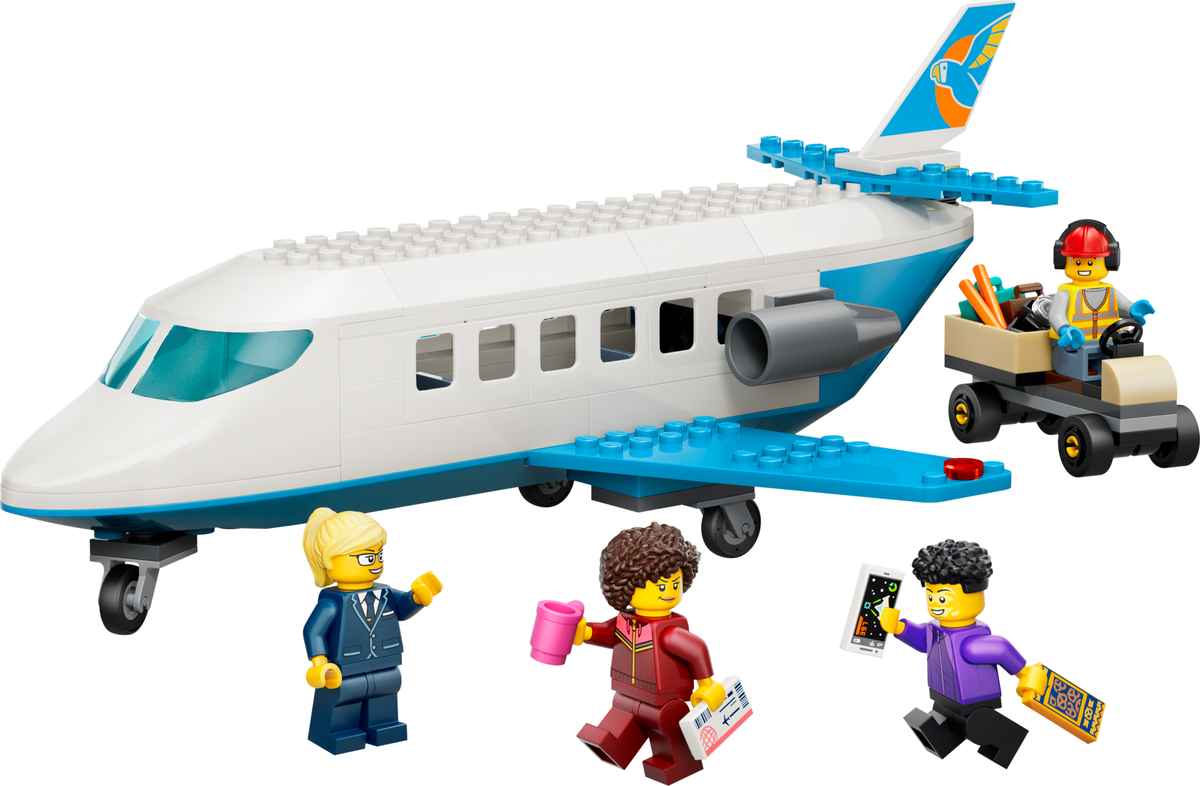
Passenger Jet: a City airliner built for small hands, with a clear, satisfying finish.
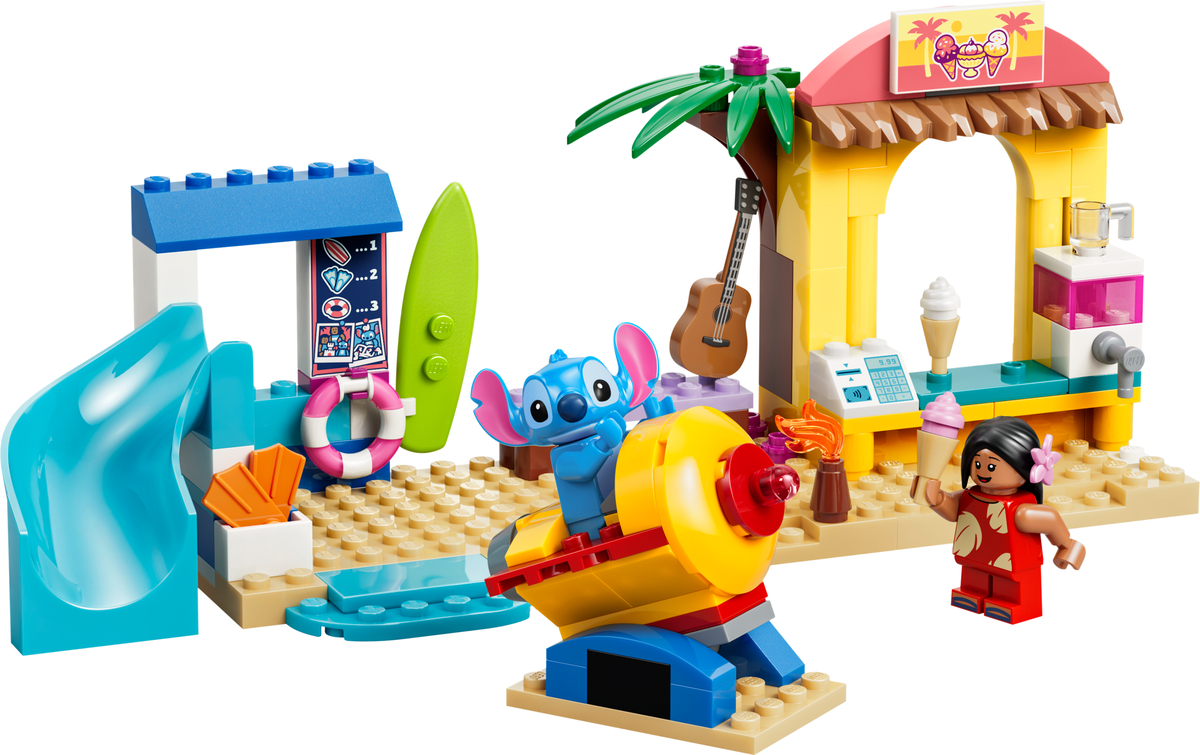
Beach Fun with Lilo and Stitch: a small Disney set for a child who loves the film.
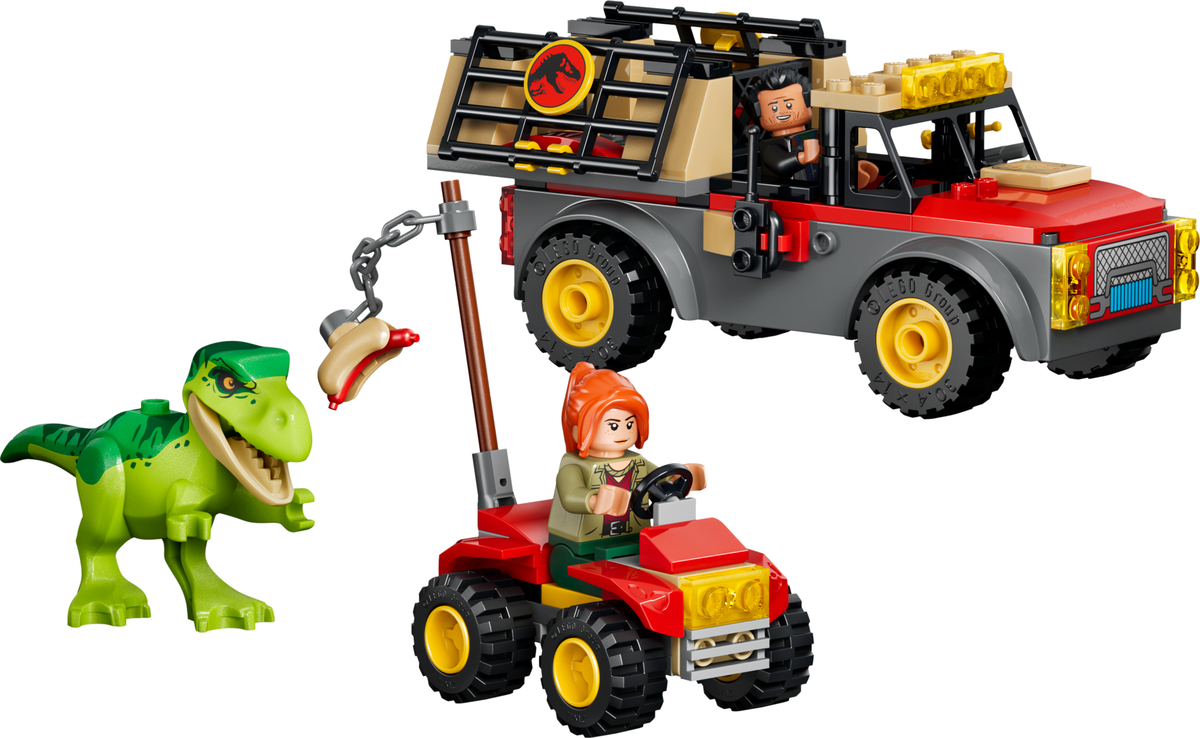
Young T. rex Transport Truck: a Jurassic World truck and dinosaur, a 4+ set with a big payoff for dinosaur fans.
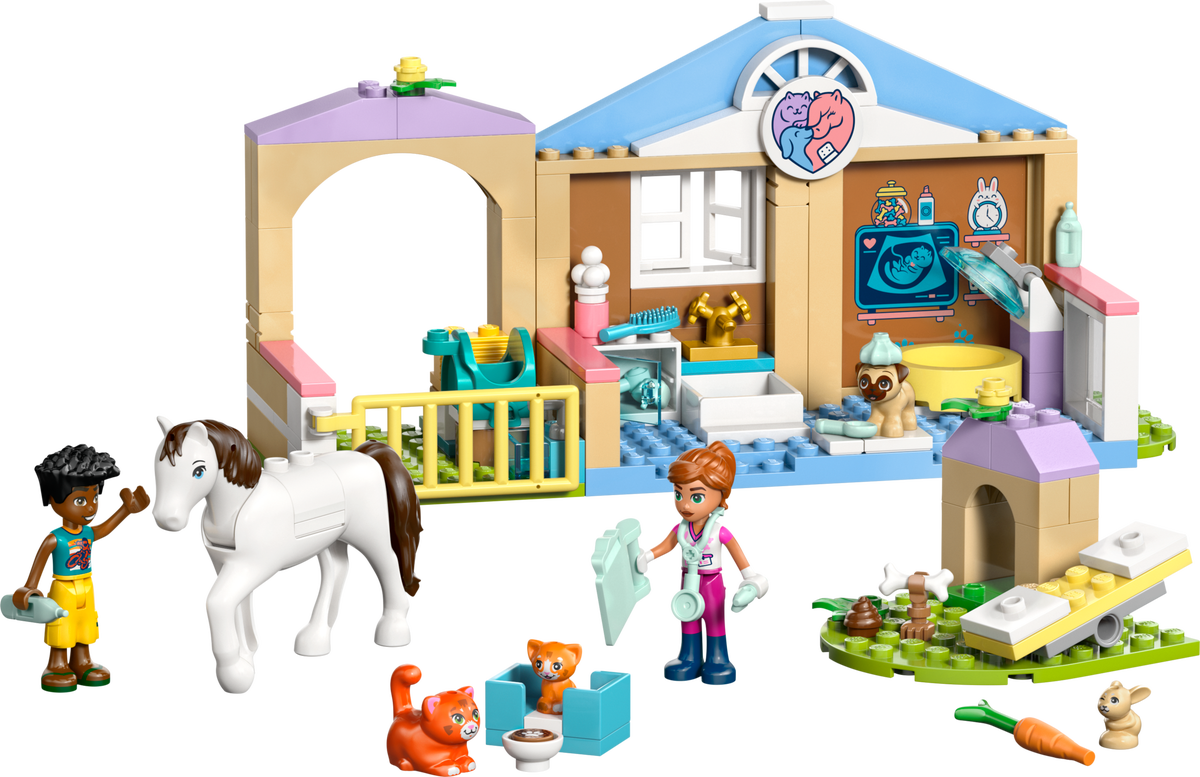
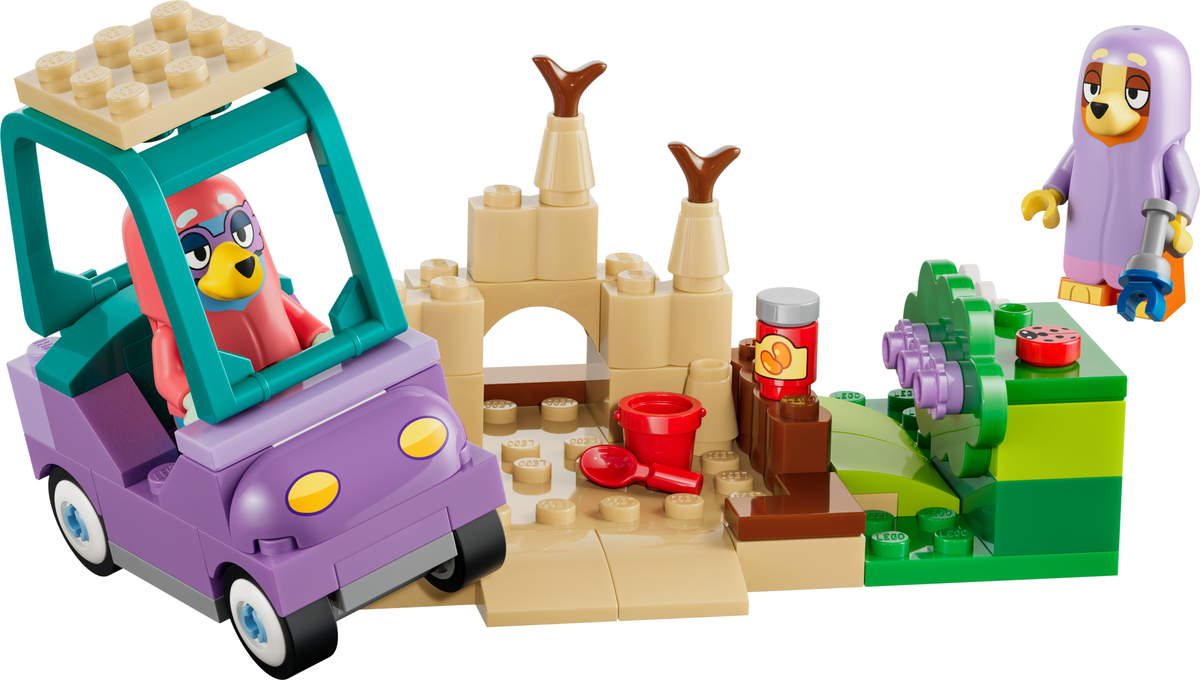
Grannies with Bingo and Bluey: a small, low-cost first set for a Bluey fan.
For free building next to the instruction sets, a Classic brick box is the standard choice:
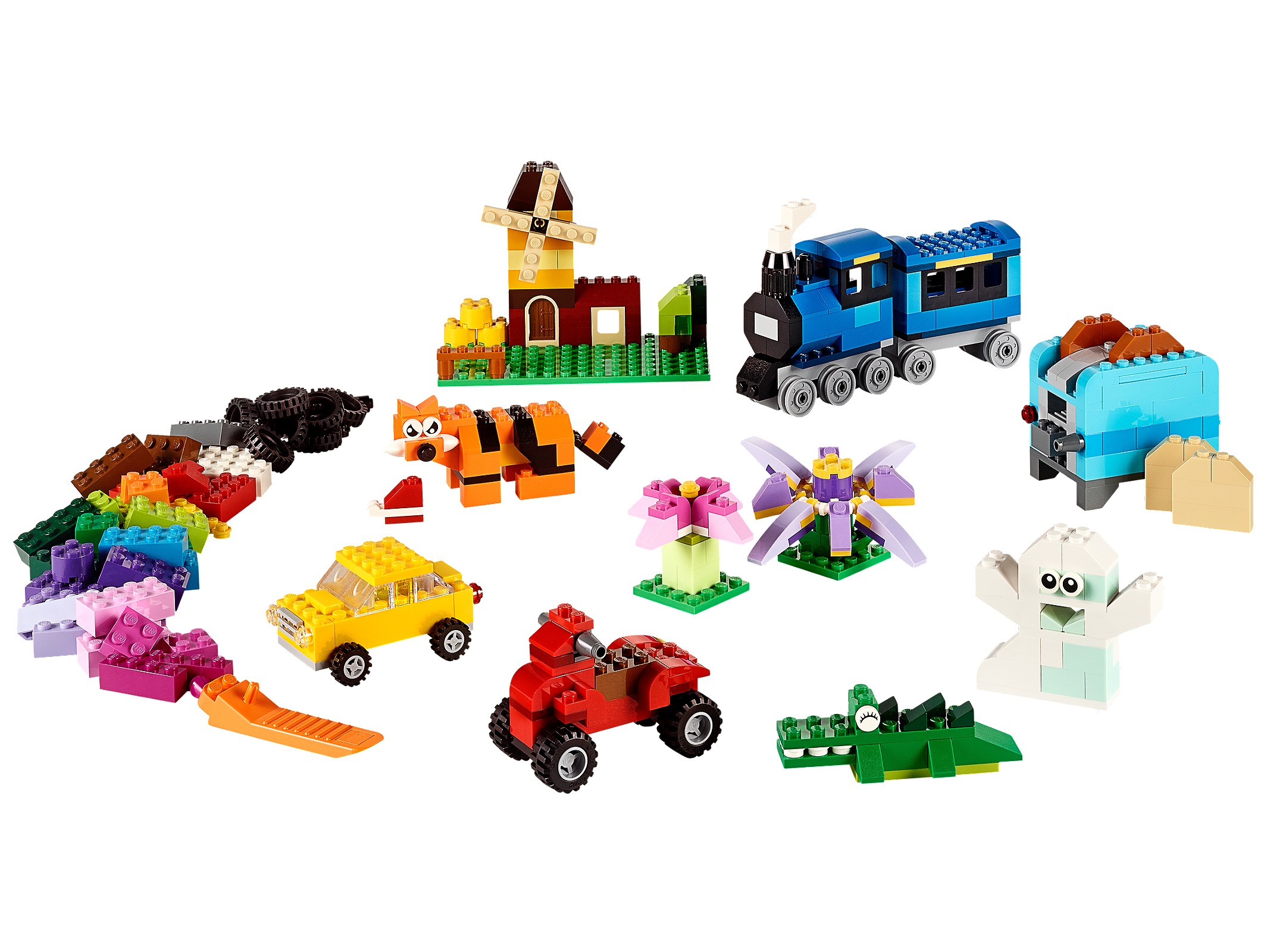
Medium Creative Brick Box: loose standard bricks in many colours, marked 4+, for building without instructions.
For more picks by age, see our LEGO age guide.
Common mistakes
Skipping straight to big sets
A large set with a high age mark is a long, fiddly build for a four-year-old, and a frustrating first experience can put a child off. Start with a 4+ set and step up when those start to look easy.
Taking the DUPLO away
Children often go back to DUPLO for quick builds while they get used to standard bricks. Leaving both out makes the switch a choice rather than a loss.
Forgetting younger siblings
Standard sets contain small parts. Keep them in a separate tub, build at a table the youngest cannot reach, and check the floor afterwards.
Building it for them
Guide and help, but let the child place the pieces. Finishing a model themselves is what makes the next set appealing.
What to do with outgrown DUPLO
- Keep some: DUPLO bricks make good bases for mixed builds and are handy for visiting younger children.
- Pass it on: to a younger sibling, a relative or a friend's child.
- Donate it: preschools, nurseries and children's waiting rooms often welcome it.
- Sell it: used DUPLO sells through local marketplace listings, especially as complete sets.
The verdict
About 18 months to 3: DUPLO only.
About 4 to 5: one 4+ set next to the DUPLO, built together at first.
About 5 to 6: regular LEGO becomes the main box; DUPLO stays available.
After that: follow the age marks and the child's interests.
Follow the child rather than the calendar. Some children are ready at 4, others closer to 6, and both are normal.
Use Our Tools to Go Further
Get more insights about the sets mentioned in this article with our free LEGO tools