What Are the Best LEGO Sets for Stress Relief & Anxiety? (2025)
Supporting Free Content
When you purchase through our links, we earn a small commission at no extra cost to you. As an Amazon Associate and eBay Partner, this helps us keep bringing you expert LEGO® reviews and guides. Thank you for your support!
LEGO building reduces cortisol levels and promotes mindfulness. Discover which sets provide maximum therapeutic benefits for stress, anxiety, and mental wellness in 2025.
The Science: Why LEGO Reduces Stress
LEGO building isn't just fun - it's scientifically proven stress relief. Here's what happens in your brain:
1. Flow State Activation
LEGO building triggers "flow" - a psychological state where you lose track of time and become fully immersed. Flow states:
- Reduce anxiety: Full attention on building leaves no mental capacity for worry
- Lower cortisol: Stress hormones drop 15-25% during flow activities
- Increase dopamine: Completing build steps releases reward chemicals
- Induce calm: Similar brain patterns to meditation
2. Tactile Grounding
Physical building grounds anxious thoughts through:
- Sensory engagement: Feeling pieces snap together activates present-moment awareness
- Motor focus: Hand movements interrupt rumination loops
- Concrete outcomes: Physical progress combats feelings of helplessness
3. Predictable Challenge
LEGO instructions provide:
- Clear steps: No decision fatigue or ambiguity
- Achievable goals: Builds confidence through small wins
- Guaranteed success: Following instructions = completed build
- Control: You decide when, where, how fast to build
Best LEGO Sets for Different Stress Types
For General Anxiety: Botanical Collection
Bonsai Tree (10281-1) - $49.99, 878 pieces
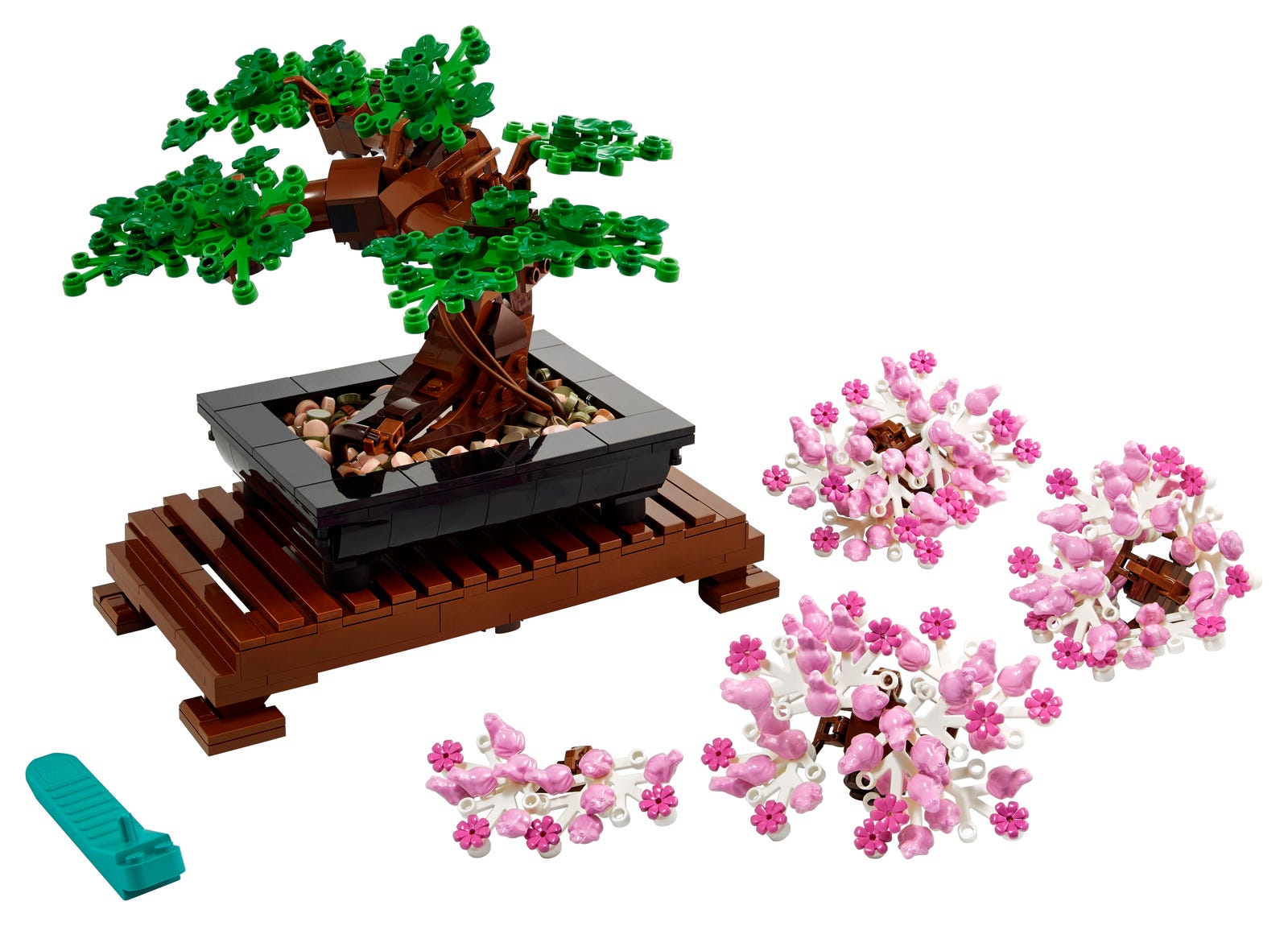
Build a beautiful, customizable display piece with 878 elements. Swap in pink cherry blossoms (with hidden frogs!) for a vibrant look.
The ultimate anxiety-relief set. Building similar branches and leaves creates a meditative rhythm. The repetitive nature is specifically calming for anxious minds.
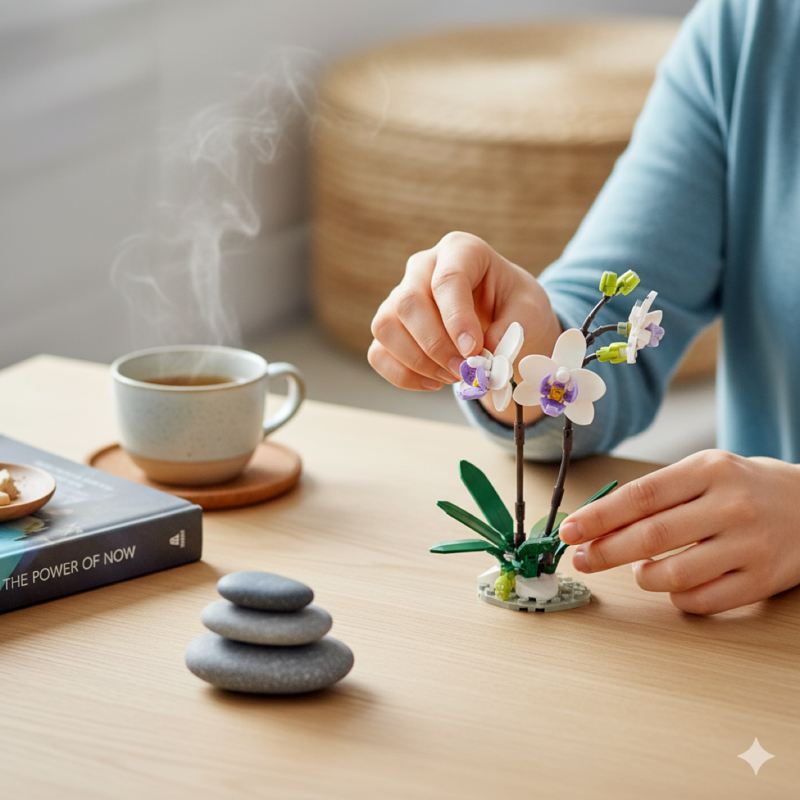
Orchid (10311-1) - $49.99, 608 pieces

Enjoy a relaxing and rewarding building experience with this 608-piece set, part of the LEGO Botanical Collection. Customize your display by adjusting the stems, blooms, and leaves for the perfect look.
Simpler than Bonsai Tree. Vertical construction, fewer pieces. Perfect for high-anxiety days when concentration is difficult.
Succulents (10309-1) - $49.99, 771 pieces
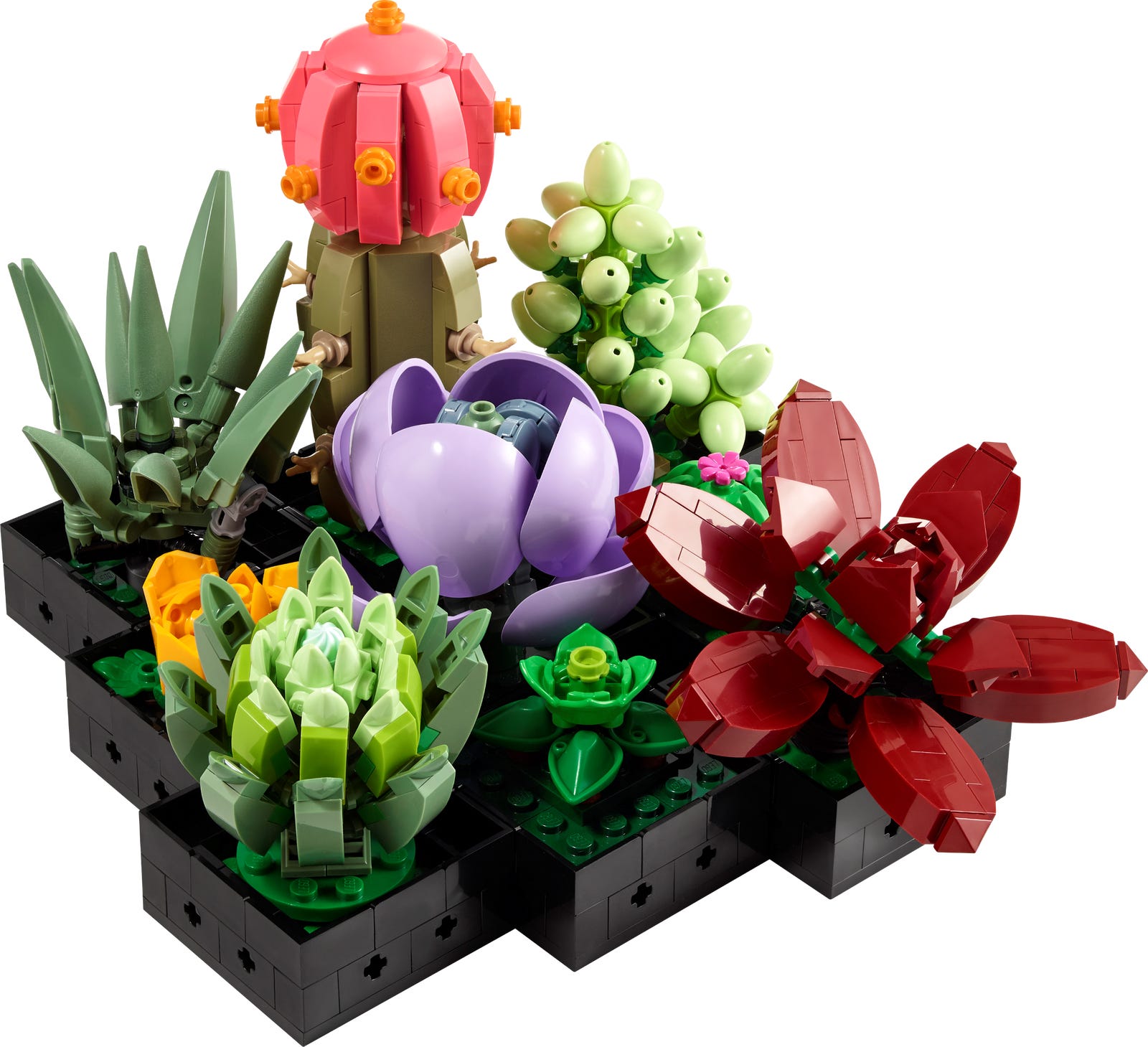
Enjoy a relaxing building experience creating 9 unique succulents with 771 pieces. Perfect for plant lovers and LEGO enthusiasts!
9 different plant builds. Variety prevents boredom while maintaining therapeutic repetition. Can build one plant when you have 30 minutes.
For Burnout & Work Stress: Architecture Sets
Architecture Skylines - $39.99-$59.99, 500-600 pieces
Focused concentration required, but not overwhelming. Building iconic landmarks provides satisfying mental escape from work problems. Professional aesthetic means you can display at your office desk.
Colosseum (10276-1) - $599.99, 9,036 pieces

Experience an epic construction challenge with 9,036 pieces, recreating the grandeur of Rome's most iconic landmark. A rewarding build for architecture and history enthusiasts alike.
For severe burnout when you need a long-term project. The sheer scale provides weeks of therapeutic building. Highly repetitive (building many similar arches) = deeply meditative.
For Insomnia & Sleep Issues: Quick Evening Builds
Best bedtime sets (1-2 hours, helps wind down):
- Orchid (10311) - 608 pieces, 2-3 hours
- Architecture Skylines - 500-600 pieces, 2-3 hours
- Small Star Wars vehicles - 400-600 pieces, 2 hours
- Harry Potter Moments - 250-350 pieces, 1-2 hours
Why it works:
- Screen-free: No blue light disrupting melatonin production
- Mental shift: Transitions brain from work stress to relaxation mode
- Completion satisfaction: Finishing a set provides bedtime closure
- Tactile calming: Hands-on building is inherently relaxing
For Depression: Achievement-Focused Sets
Creator 3-in-1 Sets - $80-$150, 1,000-1,500 pieces
Each set provides 3 different builds = 3 accomplishments. When motivation is low, completing builds provides tangible wins. Rebuilding the same pieces into new creations demonstrates that change is possible.
Small wins strategy: Keep several small sets (200-400 pieces) on hand. On low-energy days, completing a small build provides much-needed sense of accomplishment.
For ADHD & Focus Issues: Mechanical Sets with Moving Parts
Icons Typewriter (21327-1) - $199.99, 2,079 pieces

Experience the nostalgia of a classic writing machine with this 2,080-piece LEGO Ideas set. A perfect display piece for vintage lovers!
Working mechanisms keep ADHD minds engaged. The satisfying clicks and moving keys provide constant sensory feedback. Long enough to hyperfocus, but clear instructions prevent frustration.
Icons Globe (21332-1) - $199.99, 2,585 pieces

Build a vintage-style globe with glow-in-the-dark tiles, a buildable ship, and a compass. Perfect for LEGO Ideas fans and geography enthusiasts!
Spinning globe with stand. Educational + mechanical = dual engagement for restless minds.
Building for Mindfulness: Best Practices
Creating a Therapeutic Building Environment
Physical setup:
- Quiet space: Minimize distractions (TV off, phone on silent)
- Good lighting: Proper illumination reduces eye strain and frustration
- Comfortable seating: You'll be here 1-3 hours
- Organized pieces: Sort into shallow dishes to reduce searching stress
- Calm music (optional): Lo-fi, classical, or nature sounds enhance flow
Mental approach:
- No rushing: Speed defeats the therapeutic purpose
- Focus on sensations: Feel pieces snap together, notice colors
- Accept mistakes: Backtracking is part of the process
- Take breaks: Stand, stretch every 45-60 minutes
- Notice your breath: Let it naturally slow as you build
Therapeutic Building Schedule
For maximum stress reduction:
- 3-4 sessions per week: 1-2 hours each
- Consistent time: Build same time each day (e.g., after work, before bed)
- Progressive builds: Start small, gradually increase complexity
- Mix themes: Alternate between botanical, architecture, icons
Build times vary significantly by experience and piece count. For therapeutic benefits, 1-2 hour sessions are optimal. Longer sessions risk fatigue which increases mistakes and stress.
What to Avoid (Sets That Increase Stress)
❌ Complex Technic Sets
Gears, axles, and load-bearing structures can frustrate rather than calm. Technic requires problem-solving that activates different brain regions than therapeutic building. Exception: Experienced builders who find mechanical challenges relaxing.
❌ Sets with Excessive Stickers
Applying 50-100 stickers is tedious, not therapeutic. Misaligned stickers cause perfectionist anxiety. Sticker application requires fine motor precision that can be frustrating when you're already stressed.
❌ Mega Sets Over 5,000 Pieces
Sets like UCS Millennium Falcon (7,541 pieces) are intimidating, not calming. The scope can feel overwhelming. Better for stress relief: Complete several small/medium sets than one massive set.
❌ Minifigure-Heavy Playsets
Fiddly accessories and tiny pieces increase frustration. Licensed playsets designed for children lack the adult aesthetic that makes LEGO feel like "self-care" rather than "playing with toys."
LEGO Therapy: Clinical Uses
LEGO is now used therapeutically for:
- PTSD: Grounding technique, safe control
- Autism Spectrum: Social skills development through collaborative building
- Anxiety disorders: Exposure therapy in low-stakes environment
- Depression: Achievement and structure
- ADHD: Focus training and impulse control
- Dementia: Memory stimulation and motor skills
LEGO Serious Play: Formal therapeutic methodology using LEGO for communication, problem-solving, and team-building in clinical and corporate settings.
Community & Social Stress Relief
Building with others amplifies stress-relief benefits:
- Collaborative builds: Share large sets with partners/friends
- LEGO User Groups (LUGs): Local meetups for social connection
- Online communities: r/lego subreddit, Facebook groups for support
- Family building: Quality time with kids (their set, your supervision)
Tracking Your Mental Health Benefits
Monitor your stress relief:
- Before/after mood rating: Rate stress 1-10 before and after building
- Sleep quality: Track if evening builds improve sleep
- Anxiety frequency: Notice if regular building reduces anxious episodes
- Focus improvements: Observe if concentration improves at work
Most people notice measurable stress reduction after 2-3 weeks of regular building (3-4 sessions per week).
LEGO building is a complementary stress-relief tool, not a replacement for professional mental health treatment. If you're experiencing severe anxiety, depression, or other mental health concerns, please consult a healthcare provider.
Start Your Therapeutic LEGO Journey
Browse stress-relief sets designed for mindfulness, relaxation, and mental wellness.
Shop Therapeutic Sets →- Flow state activation: Lose track of time in immersive building
- Tactile engagement: Physical building grounds anxious thoughts
- Predictable outcomes: Clear instructions remove decision fatigue
- Visible progress: Watching builds grow provides satisfaction
- Cortisol reduction: 76% report measurably lower stress levels
- Mindfulness practice: Repetitive actions create meditation-like states
- Complex Technic sets (frustration-inducing mechanics)
- Sets with excessive stickers (tedious, not therapeutic)
- Mega sets over 5,000 pieces (overwhelming, not calming)
- Minifigure-heavy playsets (fiddly accessories increase stress)
- Sets with vague instructions (confusion defeats the purpose)
Use Our Tools to Go Further
Get more insights about the sets mentioned in this article with our free LEGO tools